
Global War on Terror, 2001 to 2021
After September 11
The campaign that followed the attacks of September 11, 2001, ran through Afghanistan, Iraq, Pakistan, Syria, Yemen and Somalia, and no treaty or surrender ever closed it. This history follows the decisions that widened it and gives, with dates, the disputed count of what it cost.
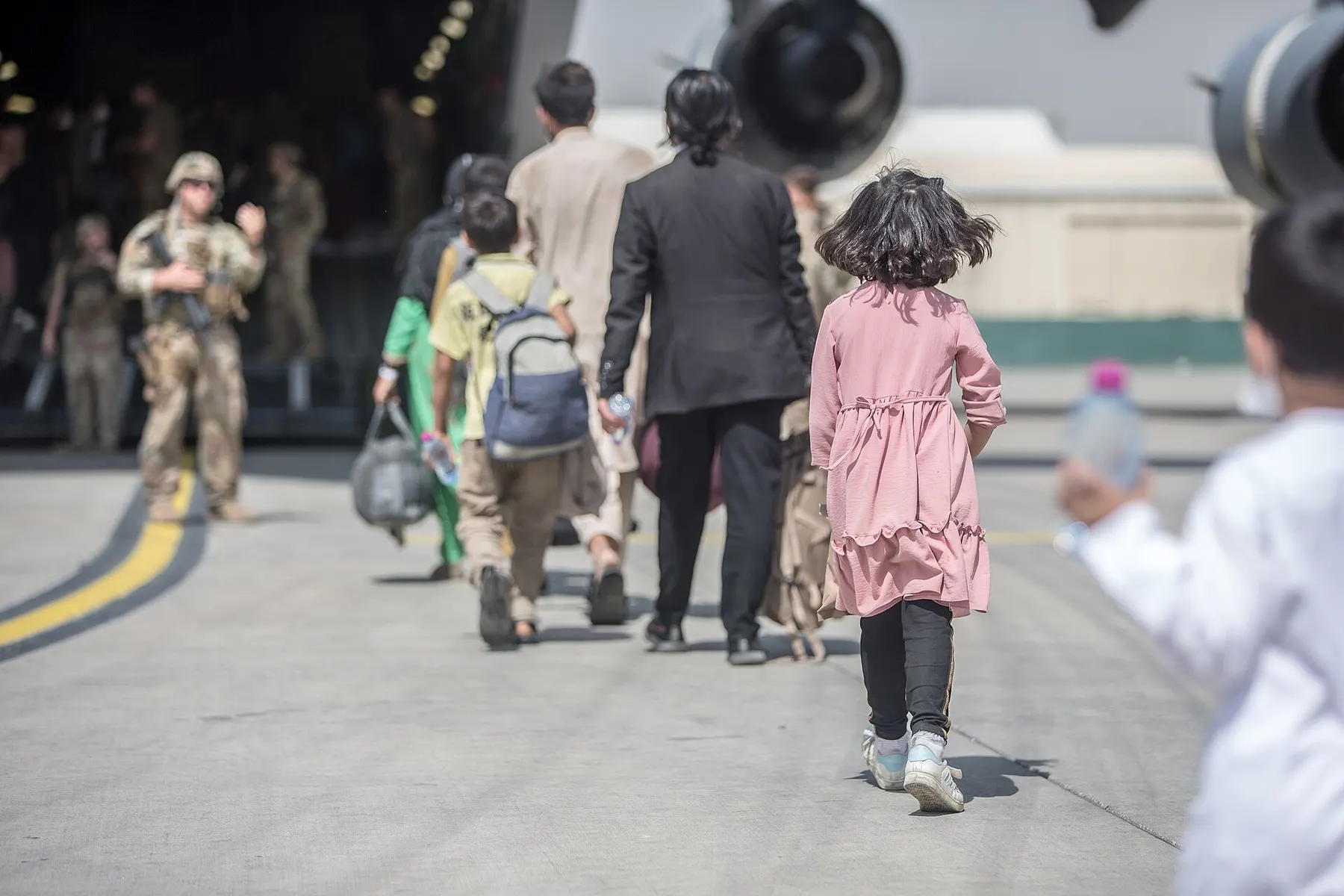
Families board a U.S. Air Force C-17 at Hamid Karzai International Airport, Kabul, on August 22, 2021, during the airlift that closed the American war in Afghanistan.
Sgt. Samuel Ruiz, U.S. Marine Corps. Public domain. SourceWar summary
Result
No formal end; mixed outcome
- No end was ever agreed; operations continued after the last U.S. troops left Afghanistan.
- The Taliban retook Afghanistan on August 15, 2021; Iraq kept an elected government.
- The Islamic State lost its last held ground on March 23, 2019, and survives as an insurgency.
- Al-Qaeda lost its founders and its pre-2001 Afghan bases; its affiliates remain active.
- Also known as
- War on Terror; the post-9/11 wars
- Date
- September 11, 2001 to August 30, 2021
- Location
- Afghanistan, Iraq, Pakistan, Syria, Yemen and Somalia, with attacks in the United States, Europe, Africa and Southeast Asia
| United States and partner governments | Al-Qaeda, the Taliban, Iraqi insurgents and the Islamic State |
|---|---|
| Belligerents | |
|
|
| Fought for | |
| To dismantle al-Qaeda, deny it sanctuary, prevent another mass-casualty attack, remove governments they saw as threats and leave behind states able to secure themselves. | By their own statements, and often against one another: al-Qaeda to drive U.S. forces from the Arabian Peninsula and topple governments it opposed, the Taliban to expel foreign troops and restore its emirate, Iraqi insurgents to end the occupation, the Islamic State to rule a caliphate. |
| Commanders and leaders | |
|
|
| Strength | |
|
|
| Military losses | |
|
|
| Civilian deaths | |
| Costs of War counts 363,939 to 387,072 civilians killed directly through August 2021 (table of September 2021) and at least 408,749 on its site as read in November 2026. The attacks of September 11, 2001, killed 2,977 people. | |
| Also involved | |
| |
Contents
- War summary
- 1A call from Flight 111996 to September 11, 2001
- 2Sixty words from CongressSeptember 2001 to March 2002
- 3The case for BaghdadOctober 2002 to May 2003
- 4Bremer's first two ordersMay 2003 to January 2005
- 5Beyond the declared frontsJanuary 2002 to 2016
- 6After the Samarra bombingNovember 2005 to December 2011
- 7The Kunar outpostsAugust 2003 to August 2017
- 8The Islamic State takes Mosul2011 to October 2019
- 9Doha to the Kabul airliftFebruary 2020 to August 2021
- 10The count after KabulSeptember 2021 to November 2026
- The arsenal
- Timeline
- After action report
- Sources
A call from Flight 11
1996 to September 11, 2001
At 8:19 on the morning of Tuesday, September 11, 2001, Betty Ong, a flight attendant on American Airlines Flight 11, was on an airphone to the airline's reservations office in Cary, North Carolina. The hijacking had begun about five minutes before she reached it. She reported that the cockpit was not answering and that someone in business class had been stabbed. At 8:21 Nydia Gonzalez, one of the employees taking the call, alerted American's operations center in Fort Worth, Texas. Ong stayed on the line for about 25 minutes, relaying what was happening in the cabin, until Gonzalez lost contact at 8:44. Flight 11 struck the North Tower of the World Trade Center at 8:46:40.
“The cockpit is not answering, somebody's stabbed in business class”
United Airlines Flight 175 hit the South Tower at 9:03:11. American Flight 77 hit the Pentagon at 9:37:46, traveling at about 530 miles an hour. Passengers on United Flight 93 learned by telephone that the country was under attack and fought back, and their plane crashed in a Pennsylvania field at 10:03:11, 125 miles from Washington. The four flights had left Boston, Newark and Washington Dulles with 19 hijackers aboard, 15 of them Saudi citizens.
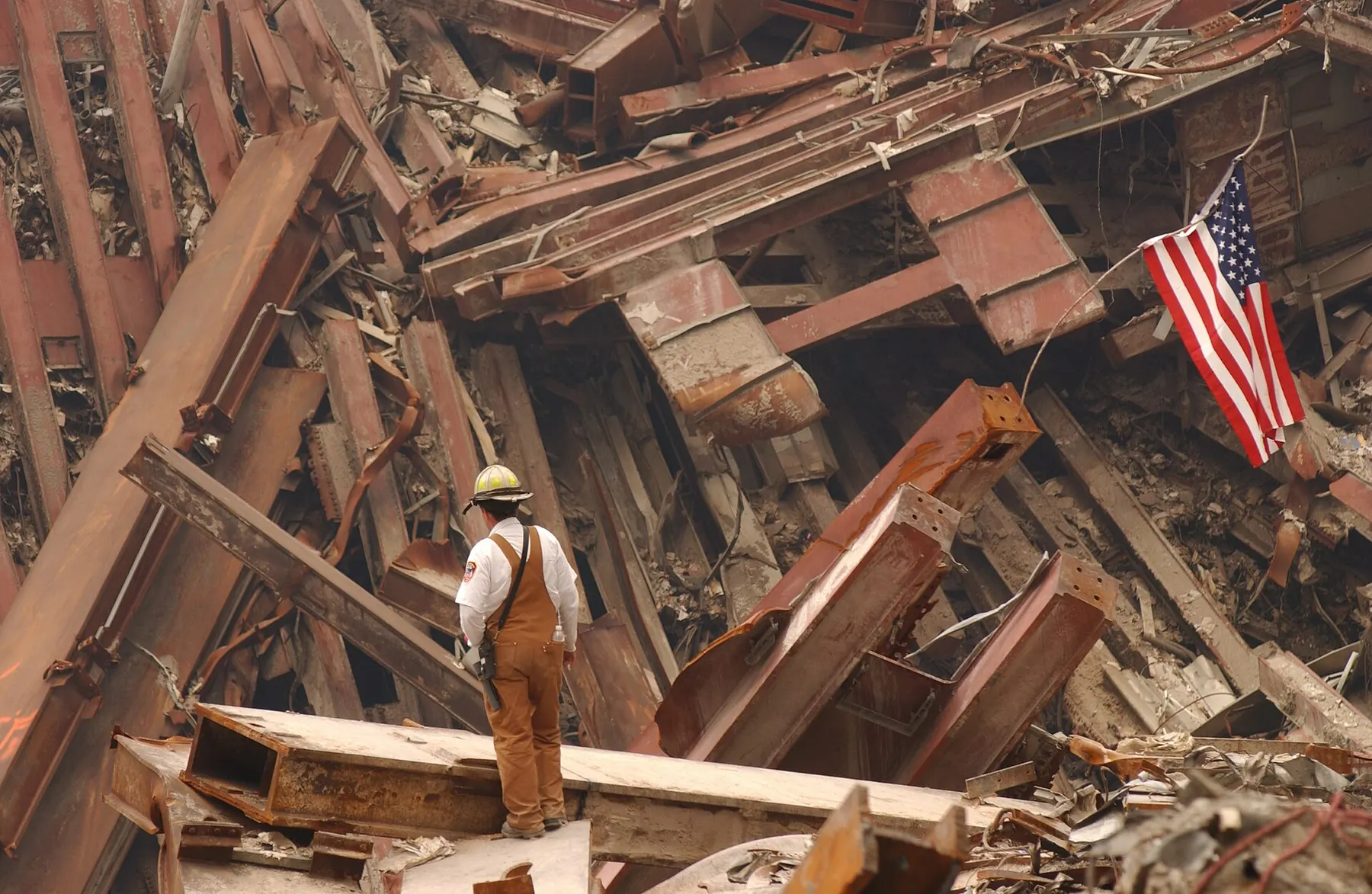
The attacks killed 2,977 people from 90 nations: 2,753 in New York, 184 at the Pentagon and 40 on Flight 93. The 9/11 Commission estimated that the operation had cost al-Qaeda between $400,000 and $500,000. Rescue and recovery workers and people who lived and worked near the towers receive care through the federal World Trade Center Health Program, which Congress has extended to 2090.
The idea had reached Osama bin Laden five years earlier. The son of a wealthy Saudi family, he had built al-Qaeda in the late 1980s among Arab veterans of the war against the Soviet occupation of Afghanistan, which ran from 1979 to 1989. Sudan pushed him out, and on May 19, 1996, he flew on a leased aircraft from Khartoum to Jalalabad, back in Afghanistan, where the Taliban came to shelter him. In mid-1996 Khalid Sheikh Mohammed met him at Tora Bora and proposed, among other schemes, training pilots to crash planes into buildings in the United States. Bin Laden approved it in late 1998 or early 1999, and inside al-Qaeda it became known as the planes operation.
His public case was set out on February 23, 1998, in "Jihad Against Jews and Crusaders," a World Islamic Front statement signed by him, the Egyptian physician Ayman al-Zawahiri and three others and published in an Arabic newspaper in London. By its own account al-Qaeda's complaints were three: American forces stationed on the Arabian Peninsula since the 1991 Gulf War, the toll on Iraqis of that war and the sanctions that followed, and U.S. policy that the signers said served Israel. The statement went on to call for killing Americans anywhere, civilians included. The 9/11 Commission set beside it the observation that most Muslims prefer a peaceful vision of their faith and are repelled by mass murder, whatever its justification.
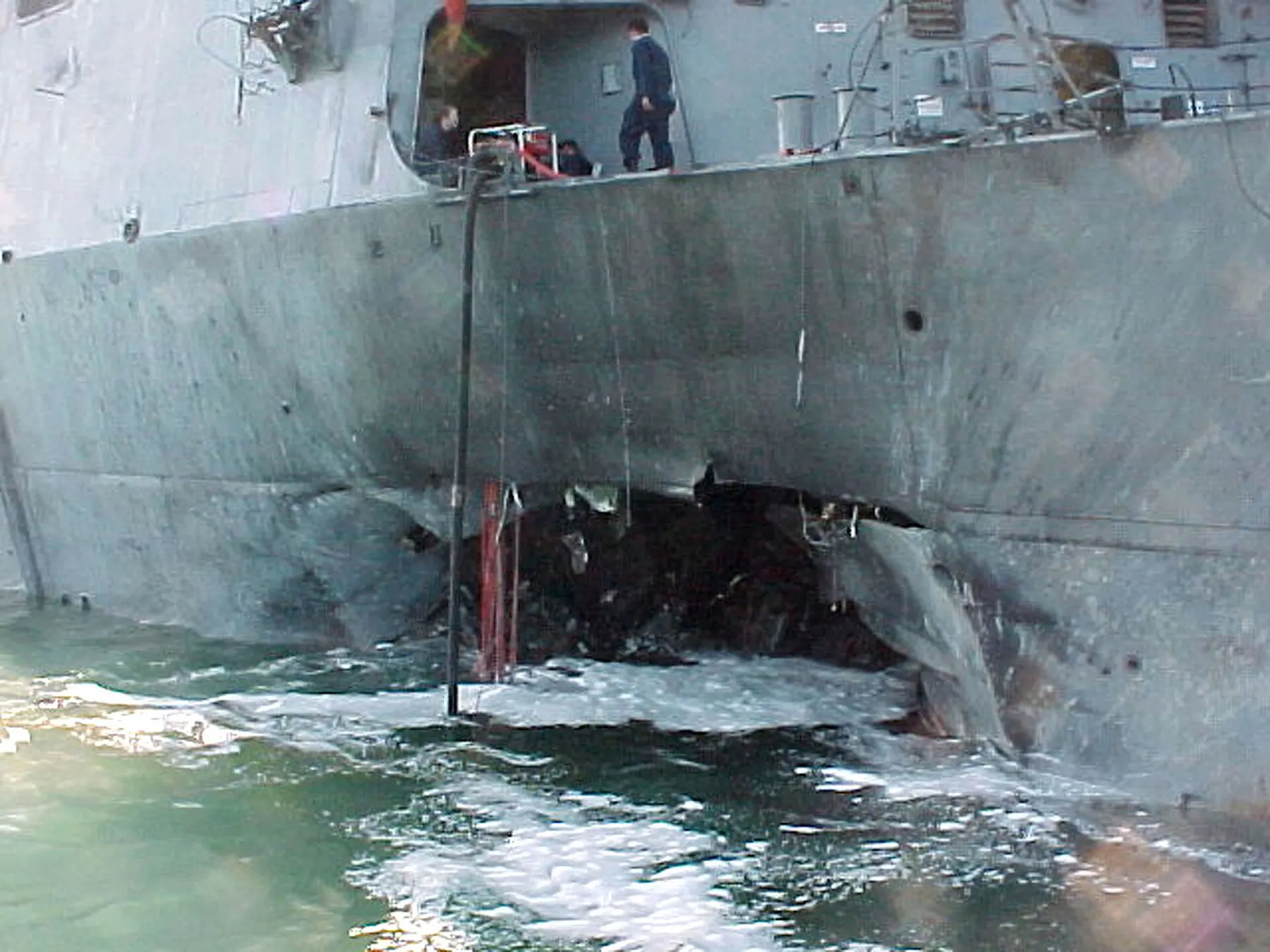
Six months later truck bombs struck the American embassies in Nairobi and Dar es Salaam, killing 224 people, 12 of them American, and wounding thousands, most of them Kenyans and Tanzanians. President Bill Clinton ordered cruise missile strikes on al-Qaeda targets in Afghanistan and Sudan. On October 12, 2000, an al-Qaeda team in Aden, Yemen, attacked the destroyer USS Cole from a small boat, killing 17 sailors and nearly sinking the ship.
George Tenet, the director of the Central Intelligence Agency (CIA), later said of the summer of 2001 that "the system was blinking red." President George W. Bush had repeatedly asked his briefers whether any of the threats pointed at the United States, and on August 6 the President's Daily Brief carried a CIA article in reply. It said bin Laden had wanted to strike inside the country since 1997 and cited about 70 Federal Bureau of Investigation inquiries, while warning that some of the more sensational threat reporting, a hijacking plot among it, had not been corroborated. The commission's report, published in 2004, faulted the government for failures of imagination, policy, capabilities and management.
“Bin Ladin Determined To Strike in US”
Sixty words from Congress
September 2001 to March 2002
Three days after the attacks the Senate voted 98 to 0 and the House 420 to 1 to authorize force. The single vote against came from Rep. Barbara Lee of California. President Bush signed the measure on September 18 as Public Law 107-40. Its operative sentence runs to 60 words, leaves it to the president to determine who is covered and sets no end date. Presidents of both parties later relied on it for operations far beyond Afghanistan.
“all necessary and appropriate force against those nations, organizations, or persons he determines planned, authorized, committed, or aided the terrorist attacks”
The North Atlantic Treaty Organization (NATO) invoked its collective defense clause that month, for the first time in its history. On September 20 Bush went before a joint session of Congress and set out how far he intended to go.
“Our war on terror begins with al Qaeda, but it does not end there.”
His phrase and its longer form, the Global War on Terror, became the label for operations from Kandahar to the Philippines. The administration described a conflict with terrorist groups of global reach and the governments that supported them, to go on until those groups were found and defeated. Critics objected that terror is a method and cannot surrender. Al-Qaeda and its allies told recruits that the campaign was a war on Muslims, although many of the people those groups killed were Muslim themselves. Researchers at Brown University's Costs of War project later settled on "post-9/11 wars," partly because the fighting in Iraq, Syria and Yemen had causes of its own that a single label hides.
U.S. bombing of Afghanistan began on October 7, 2001. Small teams of American special forces and CIA officers joined the Afghan opposition known as the Northern Alliance and directed aircraft onto Taliban lines, and the front gave way faster than most planners had expected. Kabul was captured in November and Kandahar was seized in early December. An agreement reached at Bonn, Germany, formed an interim administration under Hamid Karzai, an ethnic Pashtun, and an emergency grand council reaffirmed him as leader by June 2002.
- Afghanistan
- Pakistan
Places named in the Afghan chapters. Country shapes are today's borders (Natural Earth). Mountain outposts are shown at approximate positions.
Bin Laden retreated to the cave and bunker complex at Tora Bora, in the White Mountains near the Pakistani border. Fewer than 100 American commandos were on the scene with Afghan militias. Gary Berntsen, the CIA commander in Afghanistan, asked for 800 Army Rangers to close the escape routes and did not get them. The U.S. command relied on air strikes, the militias and Pakistan's Frontier Corps. Bin Laden wrote out his will on December 14, and on or around December 16 he walked out of Tora Bora into Pakistan's tribal areas, according to a 2009 report by the majority staff of the Senate Foreign Relations Committee, which concluded that he had been "within our grasp." Gen. Tommy Franks, who ran the war, had answered that charge in The New York Times in 2004.
“We don't know to this day whether Mr. bin Laden was at Tora Bora in December 2001”
In March 2002 more than 2,000 coalition troops went into the Shahi Kot Valley in Operation Anaconda, against an enemy that intelligence estimates had put anywhere from 50 to 1,000 fighters. On the peak called Takur Ghar a Chinook was struck by bullets and a rocket-propelled grenade and forced down. The Army's history reports a command estimate of more than 800 al-Qaeda and Taliban dead, a figure never independently confirmed, and many of the survivors crossed the border into Pakistan.
The case for Baghdad
October 2002 to May 2003
Secretary of State Colin Powell sat down at the United Nations (UN) Security Council on February 5, 2003, with satellite photographs and intercepted conversations, and argued that Saddam Hussein was hiding chemical and biological weapons. Congress had already given President Bush the authority to act, with votes of 296 to 133 in the House on October 10, 2002, and 77 to 23 in the Senate the next day.
“every statement I make today is backed up by sources, solid sources.”
The administration tied Iraq to the campaign against terrorism, and the contacts between Baghdad and al-Qaeda were real but limited. The 9/11 Commission traced feelers from bin Laden in the mid-1990s and meetings in 1998, and it recorded reports that Iraqi officials had offered him a haven, which he declined. It found no evidence that those contacts had developed into a collaborative operational relationship, or that Iraq had cooperated in any attack on the United States.
At American urging the Security Council had adopted Resolution 1441 on November 8, 2002, and from then until March 2003 UN and International Atomic Energy Agency teams carried out about 750 inspections at 550 sites and found relatively little. The United States, Britain and Spain introduced a second resolution on February 24. France said it would veto the text, and the three governments withdrew it on March 17, the day Bush gave Saddam and his sons 48 hours to leave Iraq.
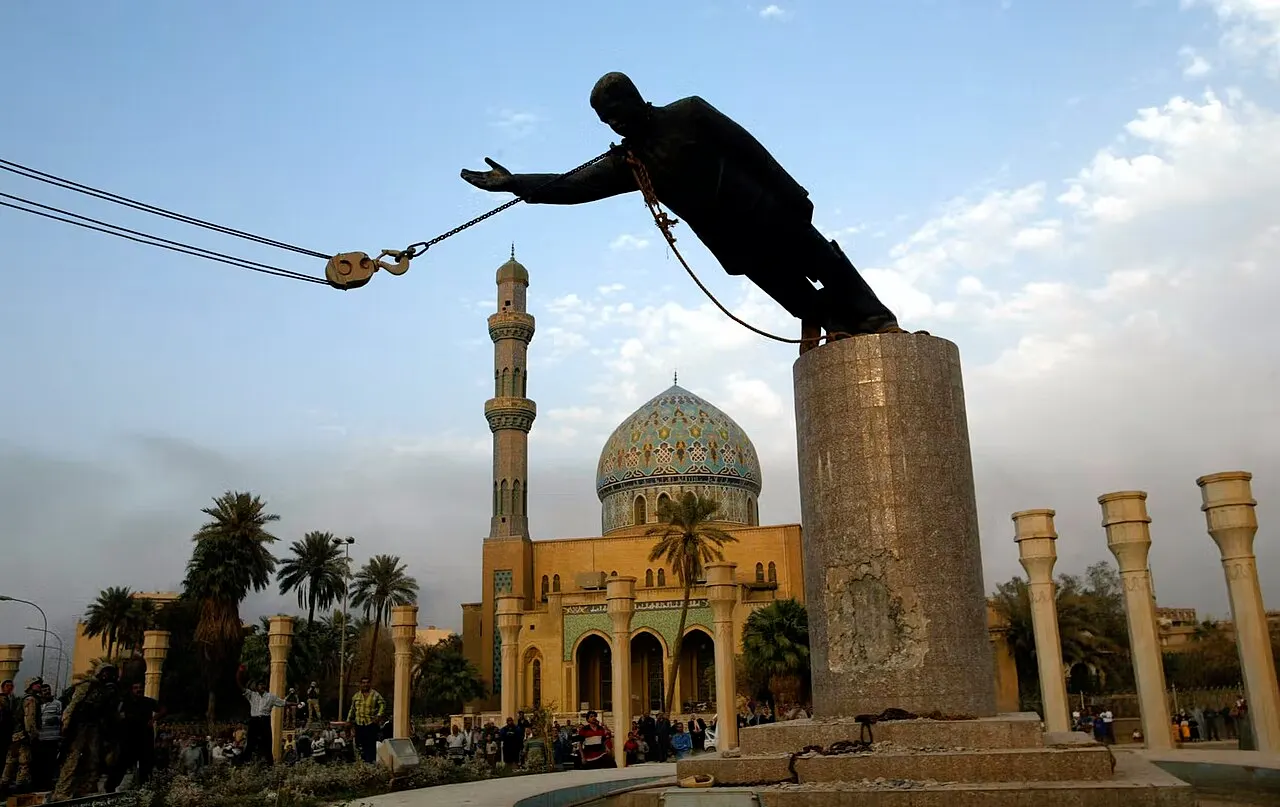
The war began on the night of March 19. U.S. personnel in the Persian Gulf region reportedly exceeded 340,000, with about 47,000 British, about 2,000 Australian and about 200 Polish personnel alongside them, and ground forces crossed from Kuwait on March 20. Tanks and Bradley Fighting Vehicles of the 3rd Infantry Division drove into Baghdad on the raids called Thunder Runs beginning April 5, and by April 9 organized resistance in the capital had collapsed. Marines helped Iraqis pull down the statue of Saddam in Firdos Square that day.
- Iraq
- Syria
Places named in the Iraq and Islamic State chapters. Country shapes are today's borders (Natural Earth).
The stockpiles Powell had described were never found. The Iraq Survey Group, the U.S. team sent to look for them, reported in 2004 that its searches had turned up no significant stocks. The same report, known by the name of its head, Charles Duelfer, found that Iraq had destroyed undeclared weapons on its own in the 1990s and that senior Iraqis believed Saddam meant to rebuild his programs once sanctions faded. Opponents of the war cite the first finding, and its defenders cite the second.
On May 1, 2003, aboard the carrier USS Abraham Lincoln off San Diego, Bush announced that major combat operations in Iraq had ended. He placed the invasion inside the campaign he had declared 20 months earlier.
“The battle of Iraq is one victory in a war on terror that began on September the 11, 2001”
Bremer's first two orders
May 2003 to January 2005
L. Paul Bremer, head of the Coalition Provisional Authority, issued his first order on May 16, 2003. It barred the top four ranks of the Baath Party from public life, a purge the Congressional Research Service puts at about 30,000 people. His second, on May 23, dissolved Iraq's military and security institutions, and the Army's official history says that left hundreds of thousands of soldiers jobless. Defense Secretary Donald Rumsfeld and other defenders of the decision argued that the old army had already disbanded itself. Its critics said the orders handed the insurgency its recruits.
The armed opposition that grew over the following months had no single command. Former regime loyalists and Sunni nationalists fought to end the occupation and recover lost power. Foreign jihadists led by the Jordanian Abu Musab al-Zarqawi, whose group took the name Al Qaeda in Iraq, attacked coalition troops, Iraqi police, the UN and Shiite crowds. The Mahdi Army of the Shiite cleric Muqtada al-Sadr fought U.S. forces, the state and Sunni rivals at different times, and the Pentagon said in 2019 that Iran-backed militants had caused at least 603 U.S. deaths in Iraq from 2003 to 2011.
Nobody could say with confidence how many fighters there were. U.S. Central Command spoke of 5,000 core fighters through 2003, and by October 2004 the coalition had raised its estimate to 12,000 to 16,000. In January 2005 Iraq's intelligence chief, Gen. Mohammad Abdullah Shahwani, gave 20,000 to 30,000 fighters and more than 200,000 supporters who were not active. Roadside bombs had appeared against coalition forces by mid-2003, and within months they displaced rockets and mortars as the leading cause of coalition casualties.
On March 31, 2004, insurgents in Fallujah killed four American contractors from the Blackwater company and mutilated their bodies. An American assault on the city that April was called off under political pressure. That same spring photographs from Abu Ghraib prison, west of Baghdad, showed American guards abusing Iraqi detainees. They are not reproduced here. Early explanations blamed a few soldiers. The Senate Armed Services Committee, reporting in 2009, found that senior officials had solicited information on aggressive techniques and that responsibility ran well beyond the cellblock.
“The abuse of detainees at Abu Ghraib in late 2003 was not simply the result of a few soldiers acting on their own.”
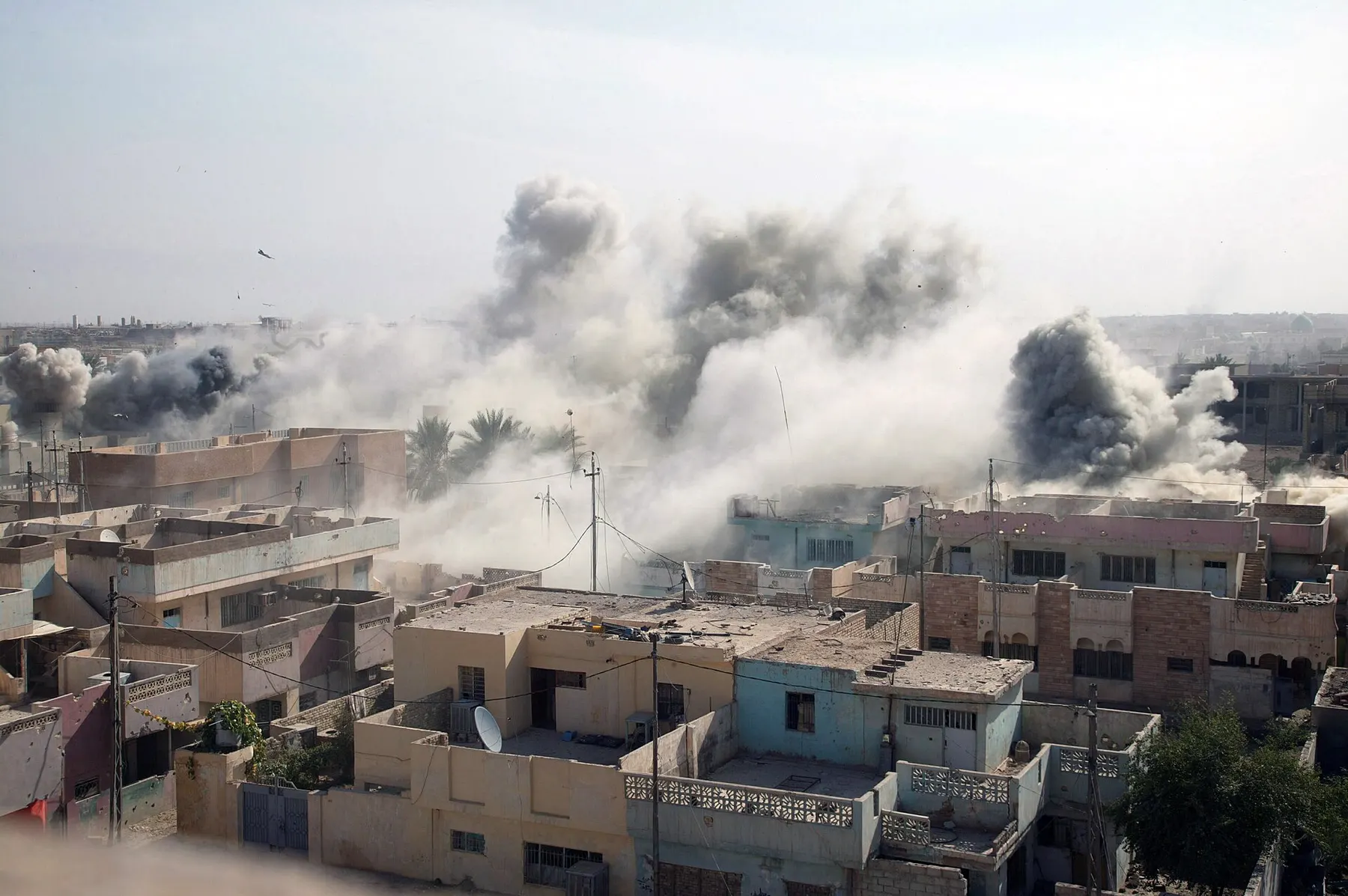
The second battle for Fallujah came in November 2004. Leaflets and broadcasts had persuaded most of the city's civilians to leave, though not all of them, and Marines and soldiers fought house to house for about two weeks. The Army's history gives the toll as 70 Americans and 7 Iraqi soldiers killed, about 600 wounded, some 2,000 insurgents killed and about 1,200 captured. The city was heavily damaged. The Pentagon acknowledged in 2005 that U.S. forces had used white phosphorus there as an incendiary weapon against enemy combatants, after first saying it had been used only for illumination, and said it had not been used against civilians.
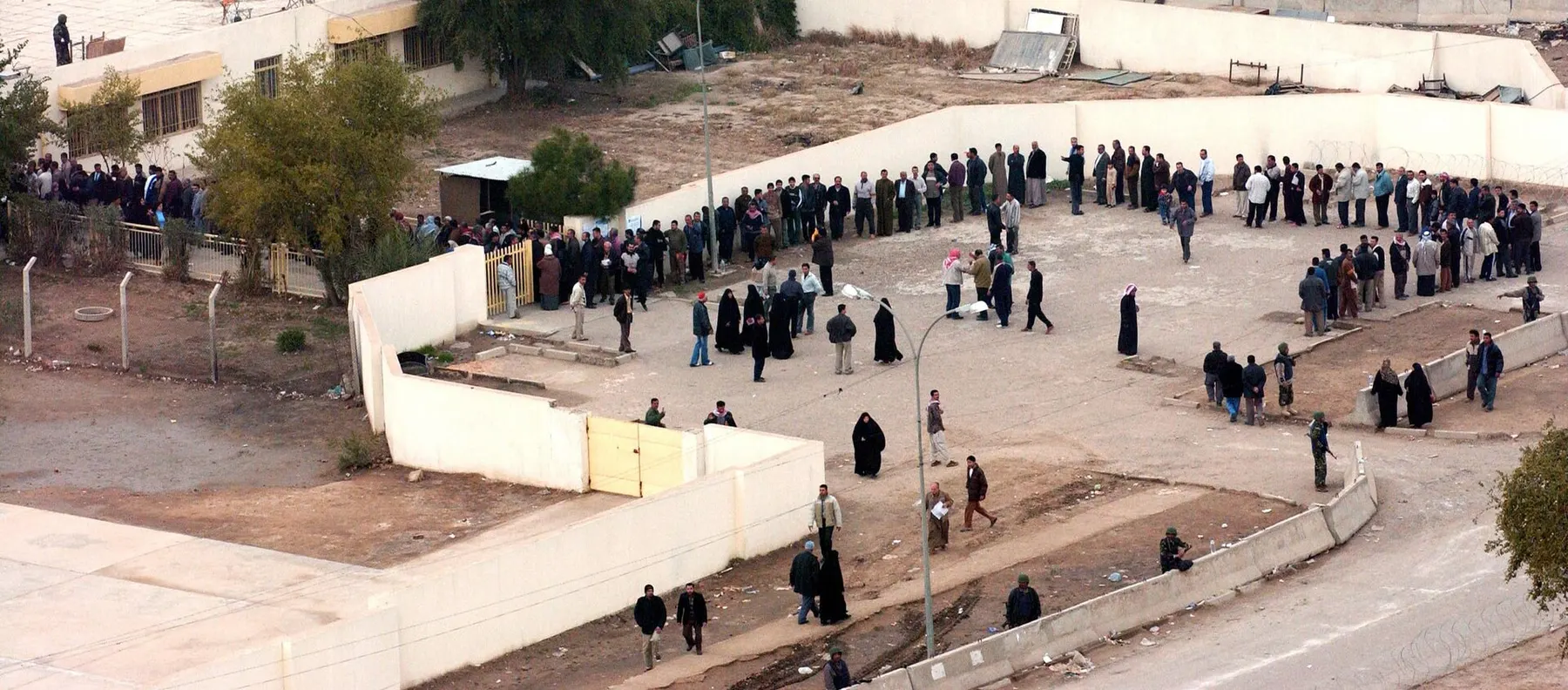
Iraqis voted for a transitional assembly on January 30, 2005, with roughly 130,000 Iraqi security personnel guarding more than 5,000 polling sites. The Iraqi Islamic Party, a leading Sunni Arab party, had withdrawn from the race.
Beyond the declared fronts
January 2002 to 2016
The first detainees reached the U.S. naval base at Guantanamo Bay, Cuba, in January 2002. About 780 men have been held there, by the New York Times count that the Congressional Research Service repeats, and 15 remained in September 2026. The camp's supporters said it kept dangerous men off the battlefield. Its critics said indefinite detention without charge was itself a wrong, and President Barack Obama told an audience in 2013 that it had become a symbol of an America that flouts the rule of law.
The CIA ran a separate, secret system. The Senate Intelligence Committee's study, whose summary was released in December 2014, reviewed 119 known detainees, identified 39 as having been subjected to what the agency called enhanced interrogation techniques and found that at least 26 of the 119 had been wrongfully held. The methods included waterboarding, sleep deprivation of up to 180 hours and confinement in small boxes. One detainee, Gul Rahman, likely died of hypothermia at a CIA site in Afghanistan in November 2002, an internal agency review found. Obama later said the United States had compromised its values by using torture. The report was printed with minority views, and the CIA acknowledged failures in how it had run the program while rejecting a central finding.
The detention record
- About 780
- men held at Guantanamo since 2002
- New York Times count, cited by the Congressional Research Service
- 15
- still held there
- Washington Examiner, September 2026
- 119
- known detainees in CIA custody
- Senate Intelligence Committee study, December 2014
- 39
- subjected to enhanced interrogation techniques
- Same study
- At least 26
- of the 119 wrongfully held
- Same study
Did the CIA program work?
Senate Intelligence Committee majority
"The CIA's use of its enhanced interrogation techniques was not an effective means of acquiring intelligence or gaining cooperation from detainees." (Finding 1, published December 2014.)
CIA Director John Brennan
"Interrogations of detainees on whom EITs were used did produce intelligence that helped thwart attack plans, capture terrorists, and save lives." He also said some officers had used methods that were unauthorized and abhorrent, and that it could not be known whether the same information would have come by other means.
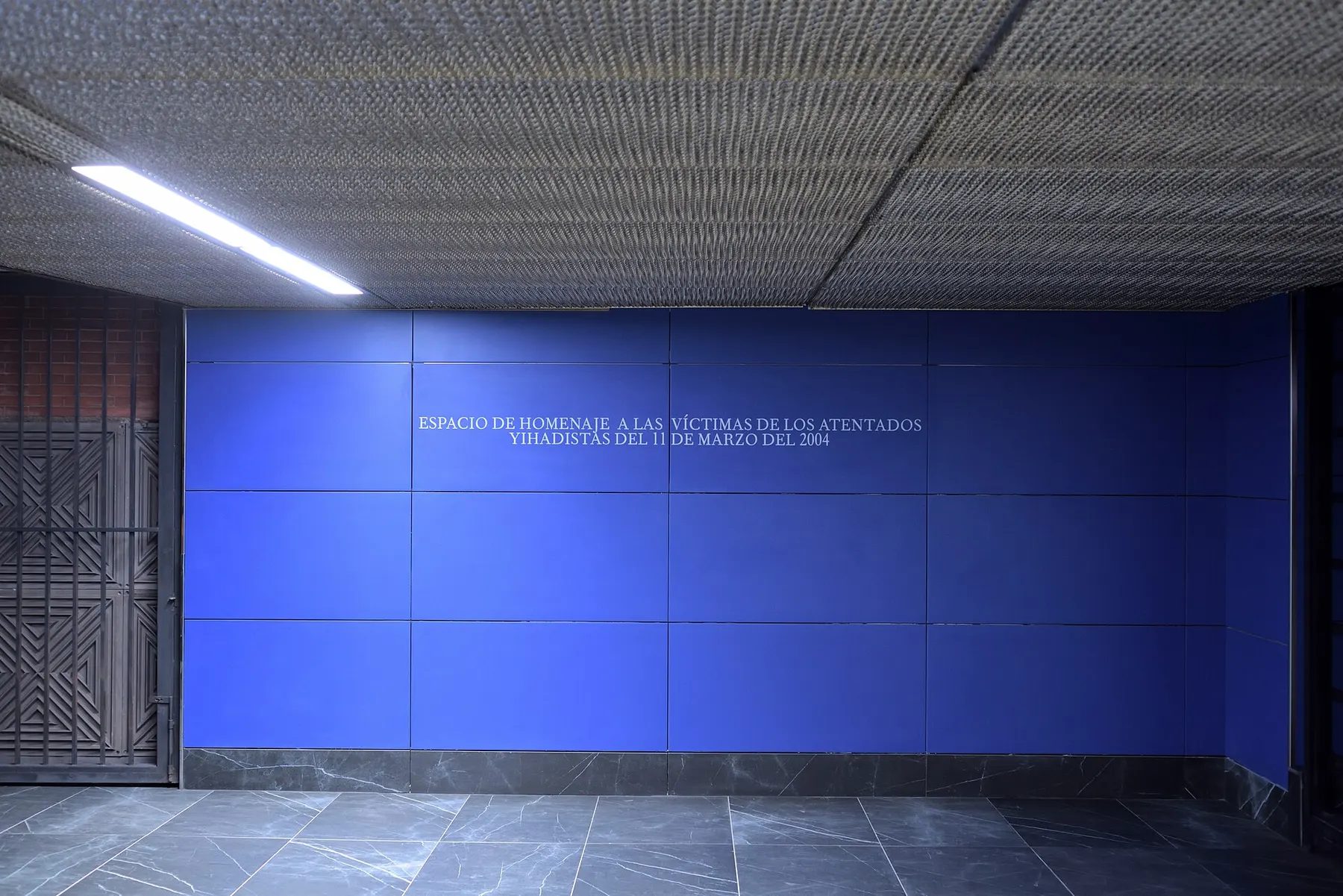
Armed groups meanwhile struck civilians far from any front. Bombs on the Indonesian island of Bali killed 202 people on October 12, 2002. Bombs on four commuter trains heading into Madrid killed 191 and injured nearly 1,800 on March 11, 2004, three days before a Spanish election. Four suicide bombers killed 52 people on the London transport system on July 7, 2005. Gunmen and bombers linked to the Islamic State killed 130 in Paris on November 13, 2015, at a concert hall, a stadium, restaurants and bars.
- U.S.-led ground wars
- U.S. strikes and other operations
Principal war zones and some of the attacks described on this page. Country shapes are today's borders (Natural Earth). Shading marks where fighting took place; it does not mean a government or people were on one side.
Against these networks Washington turned to the armed drone. A Predator had test-fired a Hellfire missile in Nevada in 2001, and on November 3, 2002, an American strike hit a car carrying six men in the Yemeni desert. Such strikes outside declared war zones stayed rare under President Bush. The Bureau of Investigative Journalism logged 57 of them in Pakistan, Yemen and Somalia during his presidency and 563, largely by drones, during Obama's two terms.
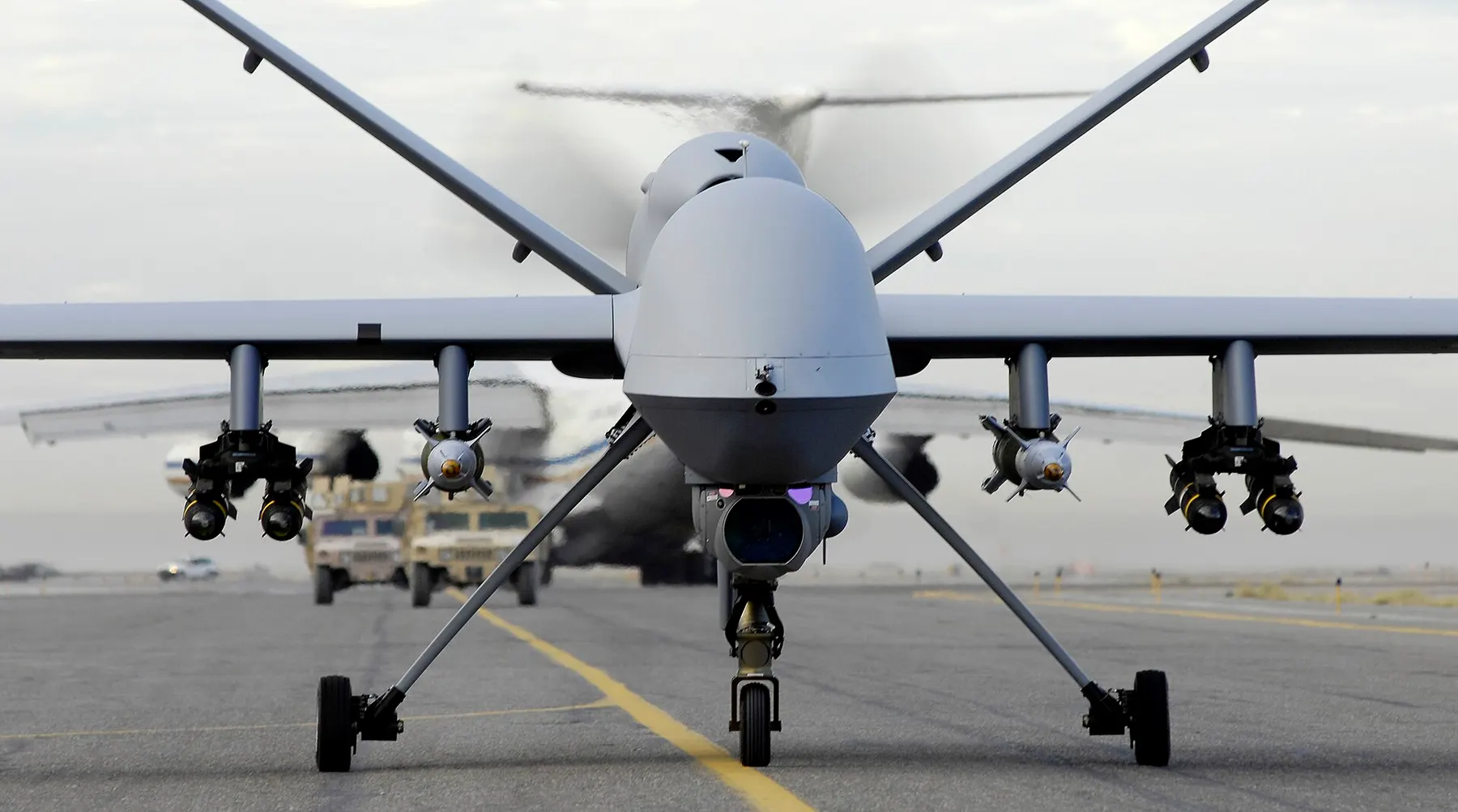
Washington published its first official total in July 2016, when the Director of National Intelligence reported 473 strikes outside areas of active hostilities from January 2009 through 2015, with 2,372 to 2,581 combatants and 64 to 116 noncombatants killed. The Bureau's count of civilians for about the same period was 380 to 801. The government said that military-age men near a strike were not automatically treated as combatants, and its classifications could not be checked from outside.
Obama had defended the program at the National Defense University in May 2013, arguing that conventional air power and missiles were far less precise and likely to kill more civilians. He conceded that any U.S. military action abroad risked creating more enemies, an argument human rights groups and some members of Congress pressed against the strikes themselves. In the same speech he retired the name Bush had given the war and promised to work with Congress to refine and in time repeal the 2001 authorization. It was not repealed, and his administration went on relying on it, as the Congressional Research Service recorded in 2015.
“we must define our effort not as a boundless "global war on terror," but rather as a series of persistent, targeted efforts to dismantle specific networks of violent extremists that threaten America.”
After the Samarra bombing
November 2005 to December 2011
Bombers destroyed the golden dome of the Al Askari shrine in Samarra, a major Shiite holy site, on February 22, 2006. The UN mission in Iraq recorded a marked deterioration afterward, with hundreds of killings, cases of torture and mass displacement, and described bodies routinely found dumped in the streets of Baghdad. Sunni insurgents and Shiite militias were now fighting a sectarian war. A U.S. strike killed al-Zarqawi that June, and the killing went on without him. The UN later put the number of civilians violently killed in Iraq in 2006 at 34,452, with 36,685 injured.
American conduct was under investigation at the same time. On November 19, 2005, after a roadside bomb killed a fellow Marine in Haditha, Marines killed 24 unarmed Iraqi civilians. Eight Marines were charged. One was acquitted and six had their cases dropped. The squad leader pleaded guilty in January 2012 to negligent dereliction of duty and served no time, telling the court that combat actions can have tragic results and that his plea did not mean his men had acted dishonorably.
Anbar Province produced the first break in the violence. In September 2006 Sunni tribal leaders under Sheikh Abdul Sattar Abu Risha announced an Awakening against Al Qaeda in Iraq, which had been running a campaign of murder and intimidation against them. On January 10, 2007, President Bush committed more than 20,000 additional American troops, most of them to Baghdad, to hold neighborhoods cleared of insurgents, and Gen. David Petraeus took command in Iraq. The Awakening councils grew into paid militias, the Sons of Iraq, at one point estimated near 100,000 men.
Violence fell steeply. Stephen Biddle, Jeffrey Friedman and Jacob Shapiro tested the rival explanations in International Security in 2012, using declassified local data and 70 interviews with coalition participants. They found little support for the claims that the Awakening alone or the completion of sectarian cleansing had done it, and concluded that the surge and the Awakening each needed the other. Other scholars challenged that finding in the same journal the next year.
- 200722,586 to 24,159
- 200810,286
- 20095,382
- 20104,167
- 20114,162
- 20124,622
- 20139,743
- 201417,049
Iraq Body Count's documented deaths from violence, as published in its annual reviews. For 2007 the upper figure of the published range is shown. These are minimum counts, built from media and official reports, and the database keeps being revised. Source: Iraq Body Count annual reviews, 2007 to 2014.
A shooting by private guards that year brought the contractors under the same scrutiny. In September 2007 guards from Blackwater opened fire at Nisour Square, a crowded Baghdad intersection. Iraqi authorities put the dead at 17, and federal prosecutors charged 14 killings. Four guards were convicted in federal court in 2014 and sentenced to terms up to life in prison. President Donald Trump pardoned all four in December 2020, and the White House cited their service to the nation.
The bomb in the road
A Congressional Research Service report in late 2007 attributed more than 70 percent of American combat casualties in Iraq, killed and wounded together, to improvised explosive devices (IEDs), and 50 percent of those in Afghanistan. The Pentagon created an organization to counter them, bought jammers by the thousands and replaced thin-skinned Humvees with armored versions. It then turned to the Mine Resistant Ambush Protected vehicle, or MRAP, a truck with a V-shaped hull. Congress appropriated $38.35 billion for MRAPs through fiscal 2011, and the program has been credited with reducing casualties.
The bomb and the answer
- Over 70%
- of U.S. combat casualties in Iraq caused by IEDs
- Congressional Research Service, November 2007; killed and wounded
- 50%
- of U.S. combat casualties in Afghanistan
- Same report and date
- Almost 14,000
- jammers funded in one year
- Congressional Research Service, 2007
- 25,700
- MRAP vehicles in the approved goal
- Congressional Research Service, August 2011
A security agreement that took effect on January 1, 2009, required U.S. forces to leave by the end of 2011. President Obama declared the American combat mission over on August 31, 2010, and the last troops left the following year. Iraq Body Count's record shows the killing down to about 4,200 civilians a year by 2010 and 2011. By the end of 2009 Prime Minister Nouri al-Maliki already faced Sunni accusations of sectarian bias, the Congressional Research Service reported, and several factions accused him of governing through intimidation by the security forces. The toll began to climb again in 2012 and reached 17,049 in 2014.
The Kunar outposts
August 2003 to August 2017
NATO took command of the International Security Assistance Force (ISAF) on August 11, 2003, and the mission spread from Kabul across the country. At its height it numbered more than 130,000 troops from about 50 nations. Karzai won the presidential election of October 9, 2004, with about 55 percent of the vote against 16 opponents. The Taliban rebuilt as an insurgency during those years, and U.S. officials pressed Pakistan to deny Afghan militants safe haven across the frontier.
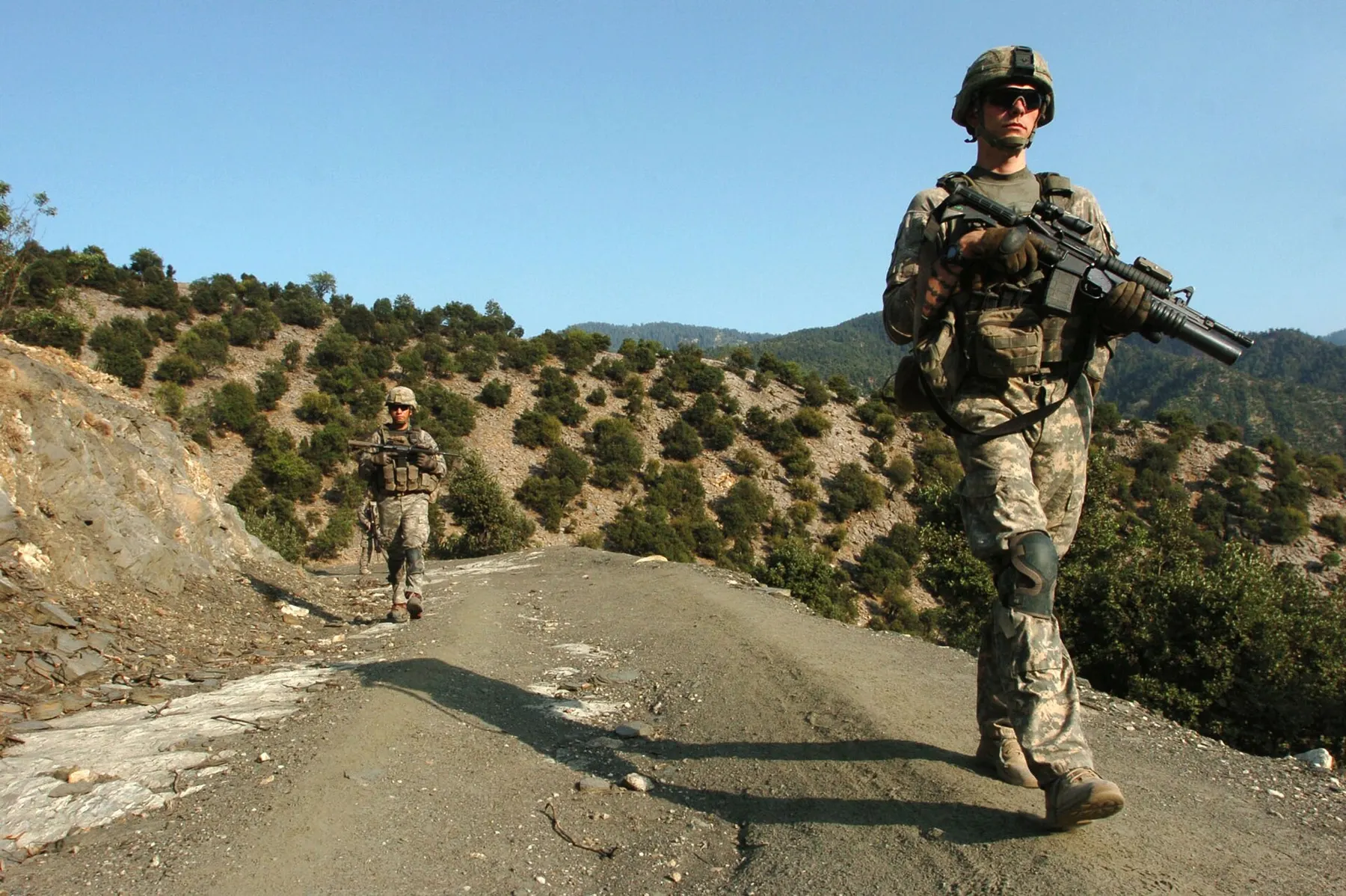
Kunar and Nuristan provinces show how that war was fought at its smallest scale. American units lived on ridgelines above narrow valleys where armed groups had long competed for timber and gemstone wealth, and accounts in the Army's study of the Wanat battle describe limited contact between the soldiers and the villagers below. On June 28, 2005, near the Korengal Valley, insurgents ambushed a four-man Navy SEAL team and killed three of its members, then shot down a Chinook sent to rescue them, killing all 16 special operations troops aboard. In October 2007 soldiers in the Korengal called an AC-130 gunship onto a residential compound in the village of Yaka China after seeing armed men run inside, and the Army's study cites the strike as one that inadvertently caused civilian casualties.
On July 13, 2008, at Wanat, the paratroopers of Chosen Company were days into building a new base when it came under attack. Four hours of close fighting followed. Nine Americans were killed and 27 wounded, and five Afghan soldiers were wounded. The Army later published a full study of how the outpost had been planned and supplied, and American forces left the Waygal Valley soon after the battle. U.S. commanders had meant such bases to separate insurgents from villagers and connect the valleys to the government. The same study records insurgent commanders presenting each American pullout as a victory and each strike that hurt civilians as a grievance, and shows them able to bring in fighters from outside the valley.
President Obama went to West Point on December 1, 2009, to announce 30,000 more American troops and to say they would begin leaving after 18 months. U.S. strength peaked near 100,000 in 2011. The new strategy concentrated forces around population centers, and on April 14, 2010, the last Americans left the main base in the Korengal.
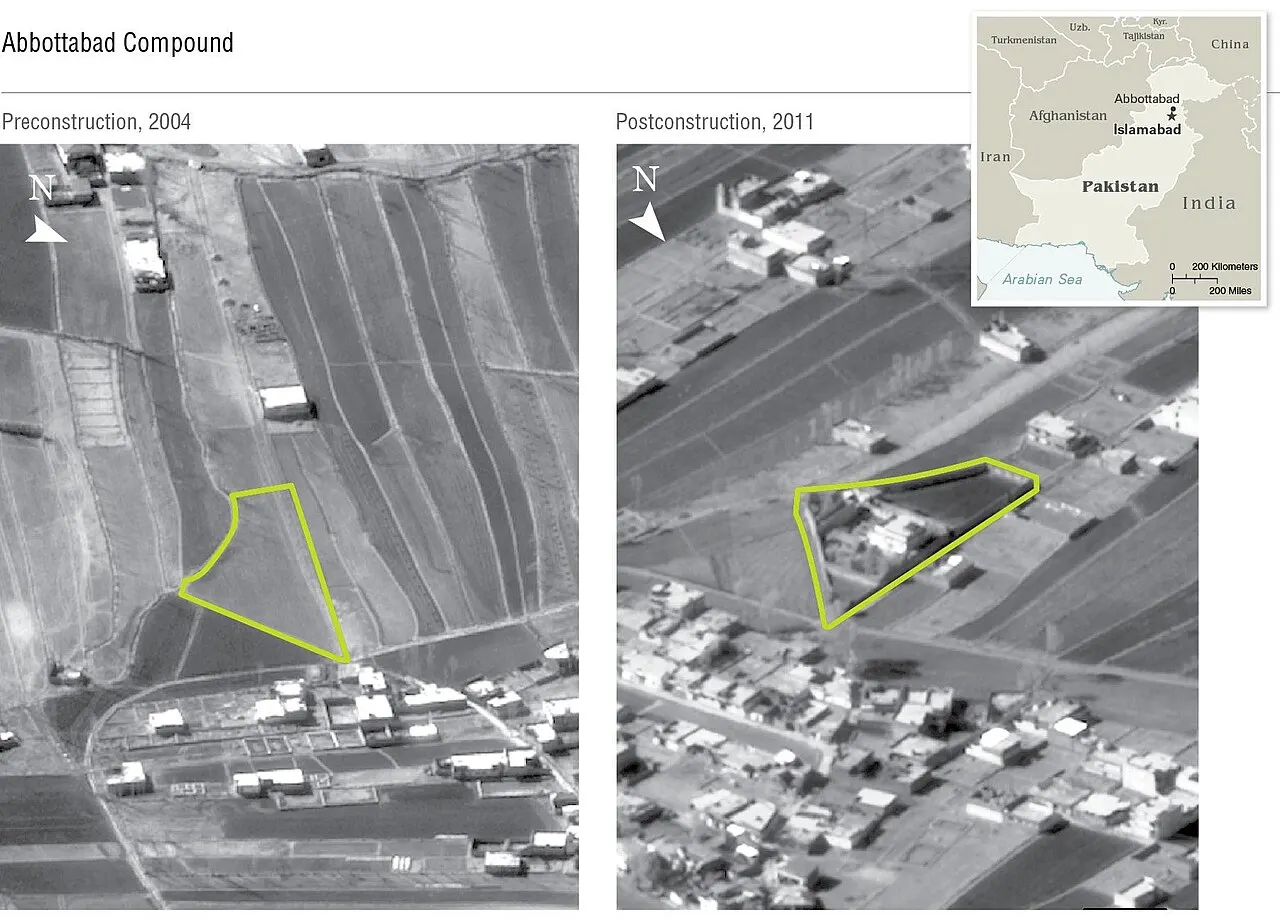
The hunt for bin Laden ended in the Pakistani garrison town of Abbottabad. On May 2, 2011, local time, a small American team flew into his walled compound and killed him after a firefight. Four months later Adm. Mike Mullen, chairman of the Joint Chiefs of Staff, told Congress that the Haqqani network, which was attacking Americans in Afghanistan, acted as "a veritable arm" of Pakistan's intelligence service. Pakistani ministers denied it and demanded evidence. Costs of War puts deaths from direct violence in Pakistan from October 2001 to August 2021 at about 67,000, including about 24,099 civilians and 9,431 soldiers and police.
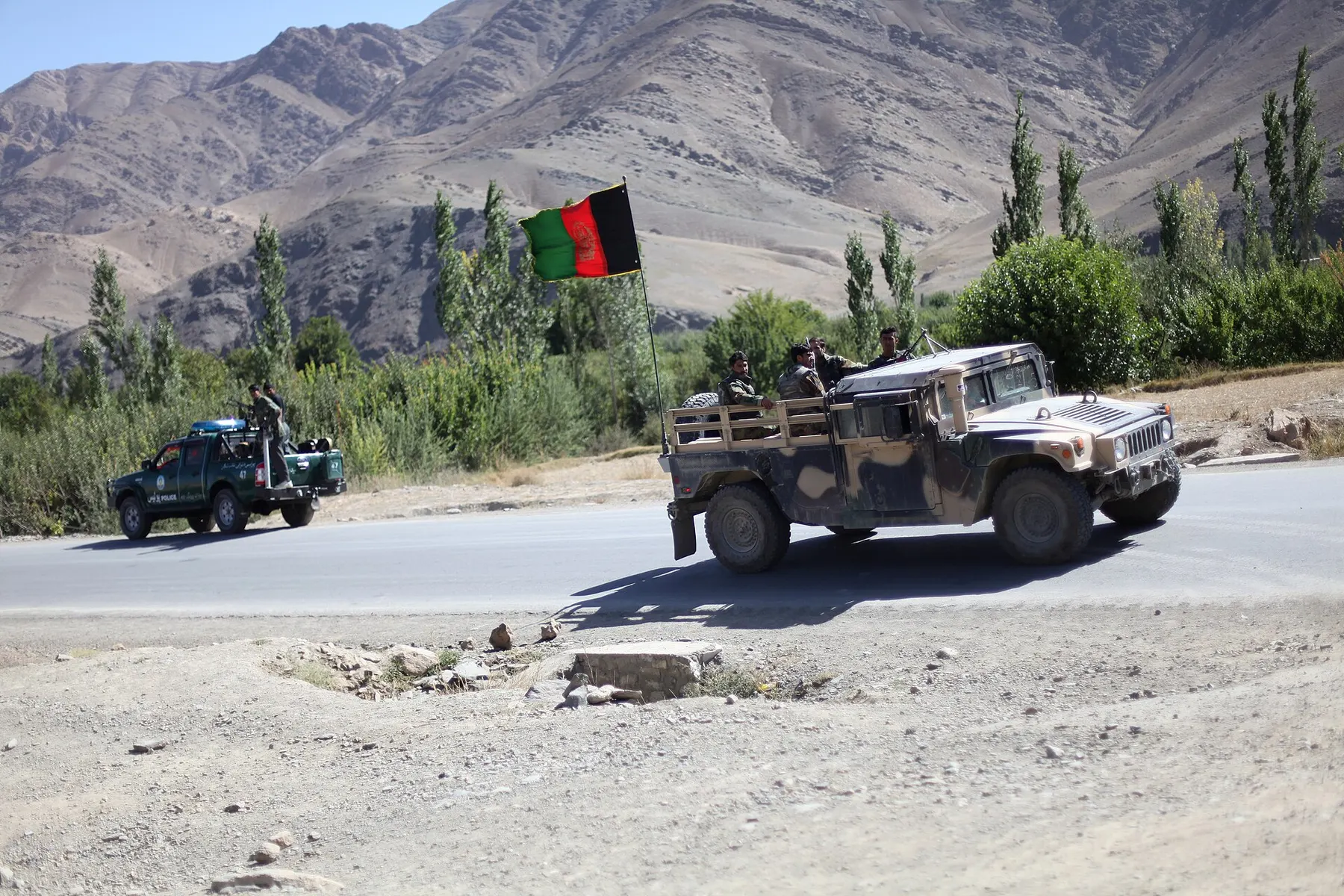
Afghan forces took the heaviest losses on the government side. Costs of War counts about 69,095 Afghan soldiers and police killed through August 2021, nearly 30 times the American military dead in Afghanistan, along with about 46,319 civilians. The United Nations Assistance Mission in Afghanistan (UNAMA) began systematic counting in 2009. For 2020 it recorded 8,820 civilian casualties, 3,035 killed and 5,785 injured, and attributed 62 percent to antigovernment groups, including 45 percent to the Taliban and 8 percent to the Islamic State's local branch, and 25 percent to pro-government forces.
ISAF closed at the end of 2014, and Afghan forces took the lead with NATO's smaller Resolute Support mission behind them. On October 3, 2015, a U.S. strike hit a Doctors Without Borders hospital in Kunduz and killed 42 people, 38 of them patients and staff by the charity's count. The Pentagon blamed human errors compounded by process and equipment failures, disciplined 16 service members and said it was not a war crime. The charity called for an independent investigation.
The insurgency was splitting and changing leaders by then. In January 2015 the Islamic State announced an Afghan affiliate, Islamic State Khorasan Province, formed from disaffected Taliban and other fighters, and the two movements became enemies. A U.S. drone strike killed the Taliban's leader, Mullah Akhtar Mansour, in May 2016. President Trump's strategy of August 2017 signaled firmer pressure on Pakistan to deny safe haven to Afghan militants, the demand American officials had been making since the insurgency began.
The Islamic State takes Mosul
2011 to October 2019
The Islamic State attacked Mosul in early June 2014 and overran Iraq's second city on June 10. An Iraqi parliamentary committee later assigned blame. Its report, sent to the judiciary by a show of hands in August 2015, named Maliki, the governor of Nineveh Province and senior commanders, and alleged that Maliki had an inaccurate picture of the threat and had chosen corrupt commanders without holding them to account. Maliki rejected the report.
The group had been badly weakened, though not eliminated, when American troops left in 2011. Known since 2006 as the Islamic State of Iraq, it rebuilt among embittered Sunnis and moved into the Syrian civil war. When its leader, Abu Bakr al-Baghdadi, announced a merger with the Syrian jihadist group Jabhat al-Nusra in April 2013, Nusra and al-Qaeda rejected it, and al-Qaeda's general command disowned him in early 2014. The group's leaders declared a caliphate that June, a claim al-Qaeda and other jihadist groups refused to accept. The CIA estimated in September 2014 that the group could muster 20,000 to 31,500 fighters across Iraq and Syria, up from an earlier figure of 10,000. U.S. officials estimated in March 2017 that as many as 40,000 people from more than 110 countries had traveled to the two countries since 2012, more than 6,600 of them from the West.
UN investigators documented how it governed. Between June 2014 and December 2017 it left 202 mass grave sites in Iraq known by 2018, holding an estimated 6,000 to more than 12,000 victims, among them people killed in the Camp Speicher massacre near Tikrit in June 2014. In the early hours of August 3, 2014, its fighters entered Sinjar, the homeland of the Yazidi religious minority. Men and older boys were killed, women and girls were taken and sold into sexual slavery, and those who reached the upper plateau of Mount Sinjar were besieged there. A UN Commission of Inquiry reported in June 2016 that more than 3,200 Yazidi women and children were still being held.
“ISIS has committed the crime of genocide as well as multiple crimes against humanity and war crimes against the Yazidis”
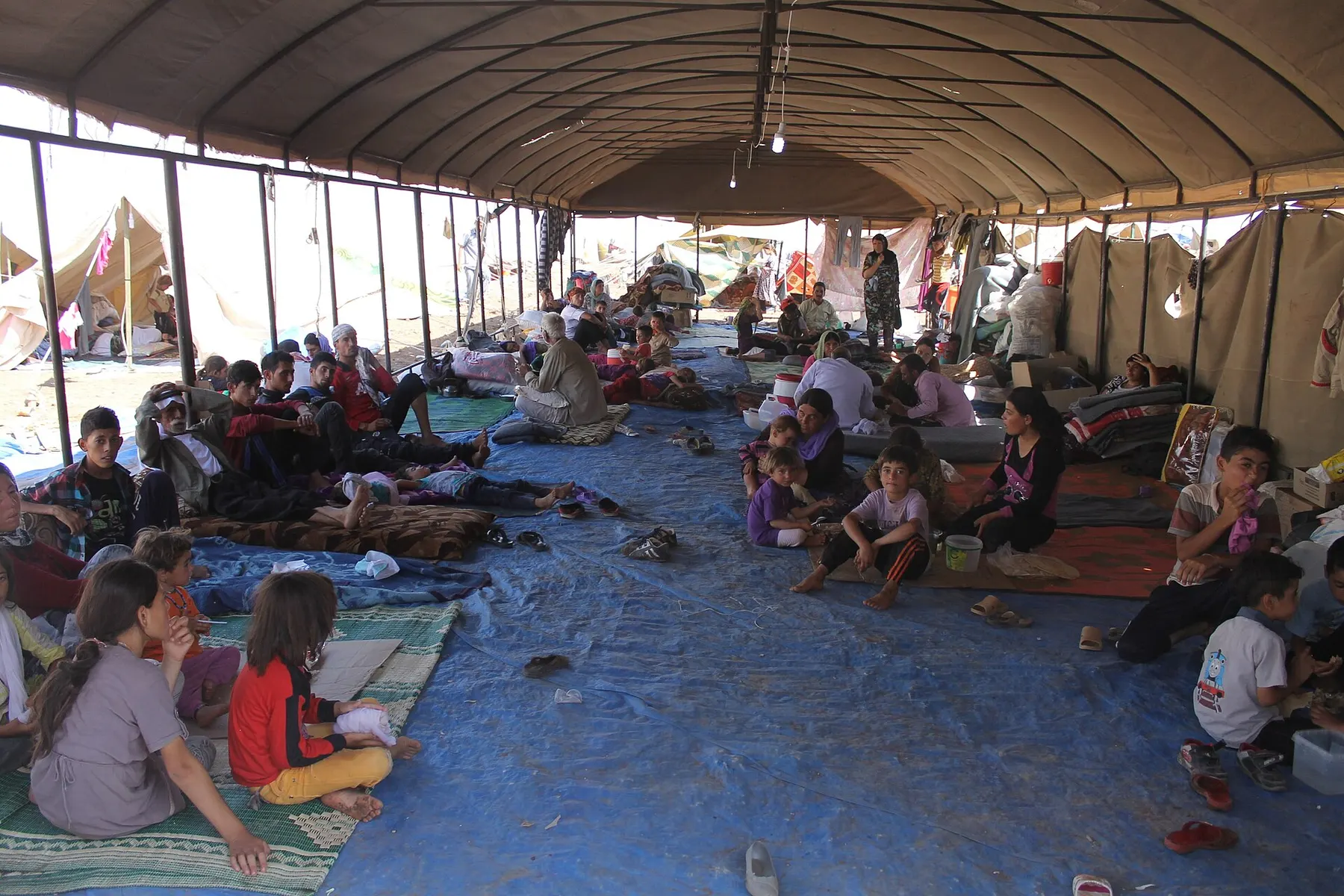
U.S. air strikes began in Iraq on August 8, 2014, five days after the assault on Sinjar, and in Syria on September 22. The coalition Washington assembled had carried out more than 24,500 strikes by August 2017, in support of Iraqi troops, Kurdish fighters and the Syrian Democratic Forces, who did most of the fighting on the ground. Mosul took nine months and left its old city in ruins. The Associated Press, working from morgue records, counted 9,000 to 11,000 dead, roughly a third attributed to coalition or Iraqi fire, about 10 times the figures in earlier official and press accounts. Raqqa fell in 2017. On March 23, 2019, the last ground the group held, at Baghuz in eastern Syria, was declared taken, and the coalition counted nearly 110,000 square kilometers (about 42,500 square miles) and 7.7 million people freed from the group's rule since 2014.
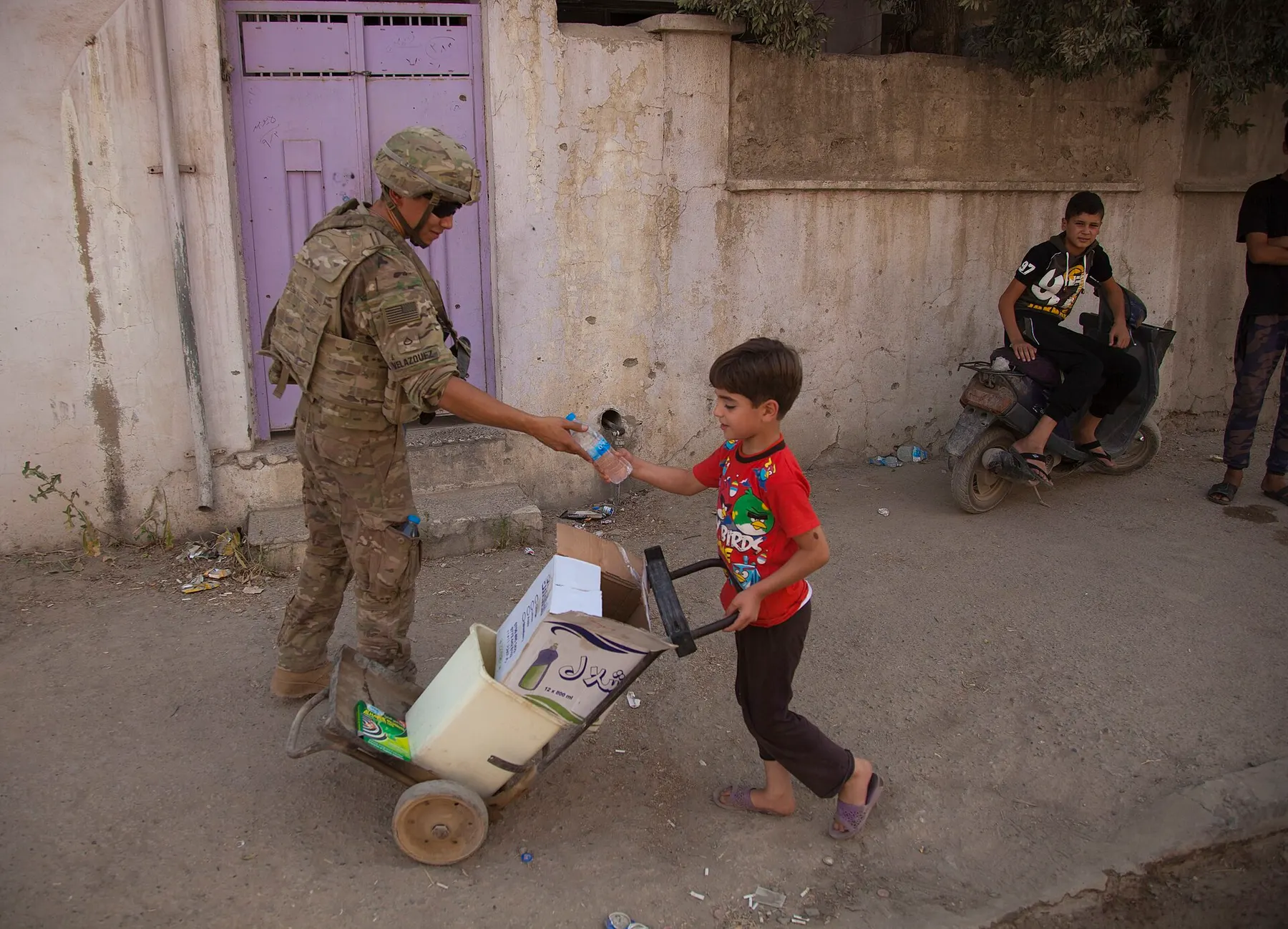
The air campaign left one of the widest gaps in the record of the war. As of November 2026 the U.S.-led coalition had confirmed 1,475 civilian deaths from its actions in Iraq and Syria, and the monitoring group Airwars estimated 8,264 to 13,360. A UN monitoring team estimated in July 2018 that 20,000 to 30,000 of its members remained in Iraq and Syria, and groups in Yemen, Egypt, Algeria, Saudi Arabia, Libya, Afghanistan and Nigeria had taken the name of its provinces. Al-Baghdadi died during an American raid in northwestern Syria on October 26, 2019.
Doha to the Kabul airlift
February 2020 to August 2021
Negotiators for the United States and the Taliban signed the Agreement for Bringing Peace to Afghanistan in Doha, Qatar, on February 29, 2020. The United States committed to withdraw all its forces and those of its allies within 14 months, beginning with a reduction to 8,600 troops in the first 135 days. The Taliban committed to prevent its members and others from using Afghan soil against the United States and to open talks with other Afghans. The Afghan government was not a party. The text refers throughout to an entity the United States did not recognize as a state, known as the Taliban.
“will not allow any of its members, other individuals or groups, including al-Qa'ida, to use the soil of Afghanistan to threaten the security of the United States and its allies”
U.S. strength had reached 2,500 by January 15, 2021. President Joe Biden announced on April 14 that the final withdrawal would begin on May 1, and on July 8 he set August 31 as the end of the military mission, saying Afghan forces had 300,000 well-equipped troops. A UN monitoring team had estimated that spring that the Taliban had 58,000 to 100,000 fighters. The movement took its first provincial capital on August 6 and half of the country's provincial capitals within the following week, and on August 15 its fighters entered Kabul as President Ashraf Ghani left the country.
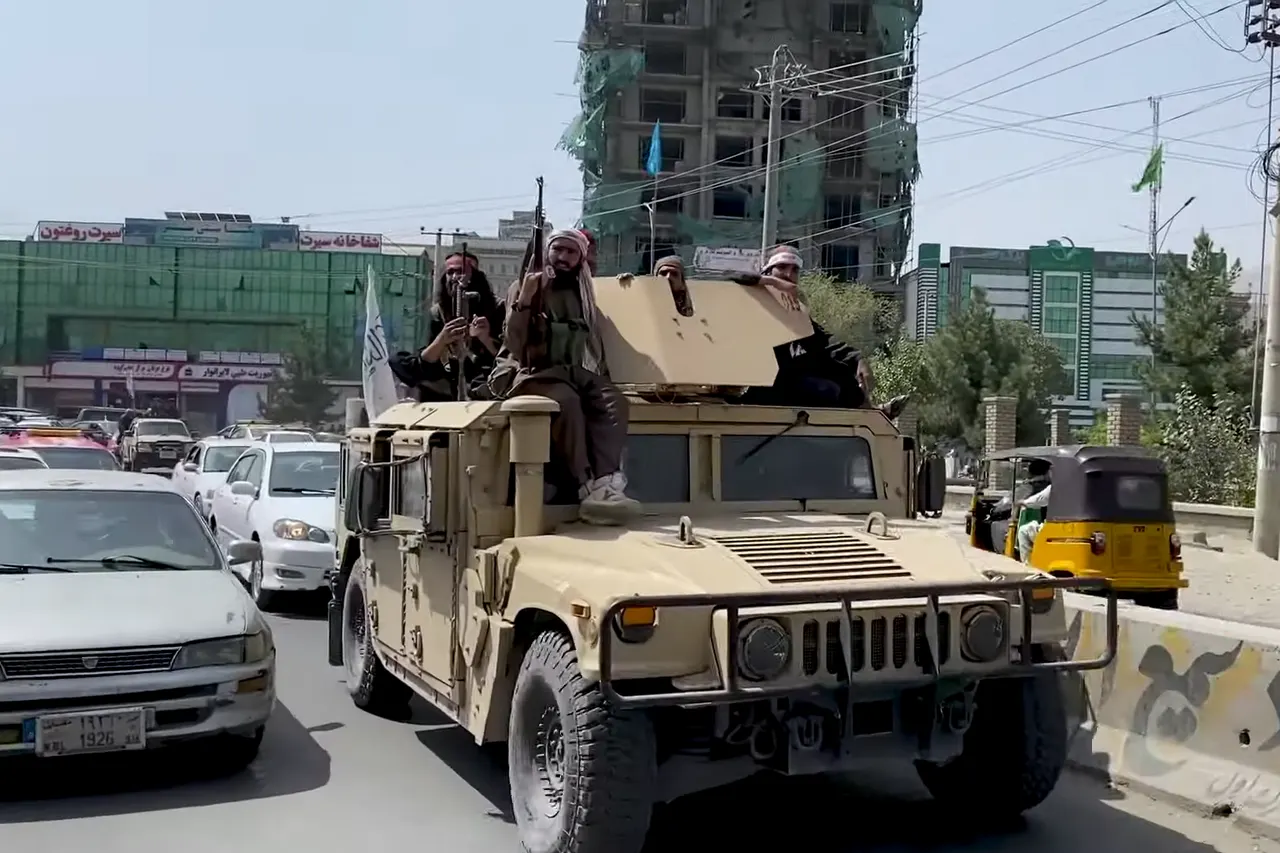
The Special Inspector General for Afghanistan Reconstruction (SIGAR) calculated that $144.7 billion had been appropriated for reconstruction from 2002 to mid-2021. In its final report it said nearly $90 billion in American security assistance had produced forces that collapsed quickly without sustained U.S. support, and that the United States left behind billions of dollars in equipment. Taliban leaders described the outcome as the defeat of a foreign occupation after 20 years. At his first news conference in Kabul their spokesman offered assurances that UN investigators later tested against the record.
“We don't want any internal enemies and any external enemies.”
Who is responsible for the fall of Kabul?
President Biden
The deal he inherited left a choice between leaving and sending more troops, and no further American generation should fight a war whose purpose had run out. He argued that any exit would have brought a rush to the airport.
Gen. Kenneth McKenzie and Gen. Mark Milley
McKenzie told the House on September 29, 2021, that the Doha agreement had "a really pernicious effect" on the Afghan government and military, and that he had long expected collapse if U.S. advisers fell below 2,500. Milley told the Senate the day before that the result was "a strategic failure" built over 20 years.
Critics of the withdrawal held that a small residual force had been containing the Taliban at modest cost, and that removing it, along with the contractors and air support the Afghan military relied on, made collapse certain. Critics of the Doha deal held that negotiating over the head of the Afghan government had legitimized the Taliban, and some of those SIGAR interviewed said it had shattered Afghan morale. Afghan soldiers had taken the heaviest losses of any force on the government side and had been built around American support that was now leaving.
The evacuation ran through Hamid Karzai International Airport for the next two weeks. More than 5,000 American service members held its perimeter while U.S. and coalition aircraft carried out more than 123,000 civilians. U.S. military planes took more than 79,000 of them, about 6,000 Americans and more than 73,500 Afghans and citizens of other countries, and Gen. Kenneth McKenzie, head of U.S. Central Command, called it the largest noncombatant evacuation the American military had ever run.
On August 26 a suicide bomber from the Islamic State's Afghan branch detonated at the airport's Abbey Gate, where crowds pressed toward Marines checking papers. Thirteen U.S. service members and roughly 170 Afghan civilians died. Three days later an American drone strike in Kabul, aimed at what officials believed was a further threat, hit the car of an aid worker, Zemari Ahmadi. Gen. Mark Milley, chairman of the Joint Chiefs, called it a "righteous strike." On September 17 McKenzie acknowledged that it had killed as many as 10 civilians, up to seven of them children, that those killed were unlikely to have been linked to the Islamic State, and that it was a tragic mistake, and he apologized.
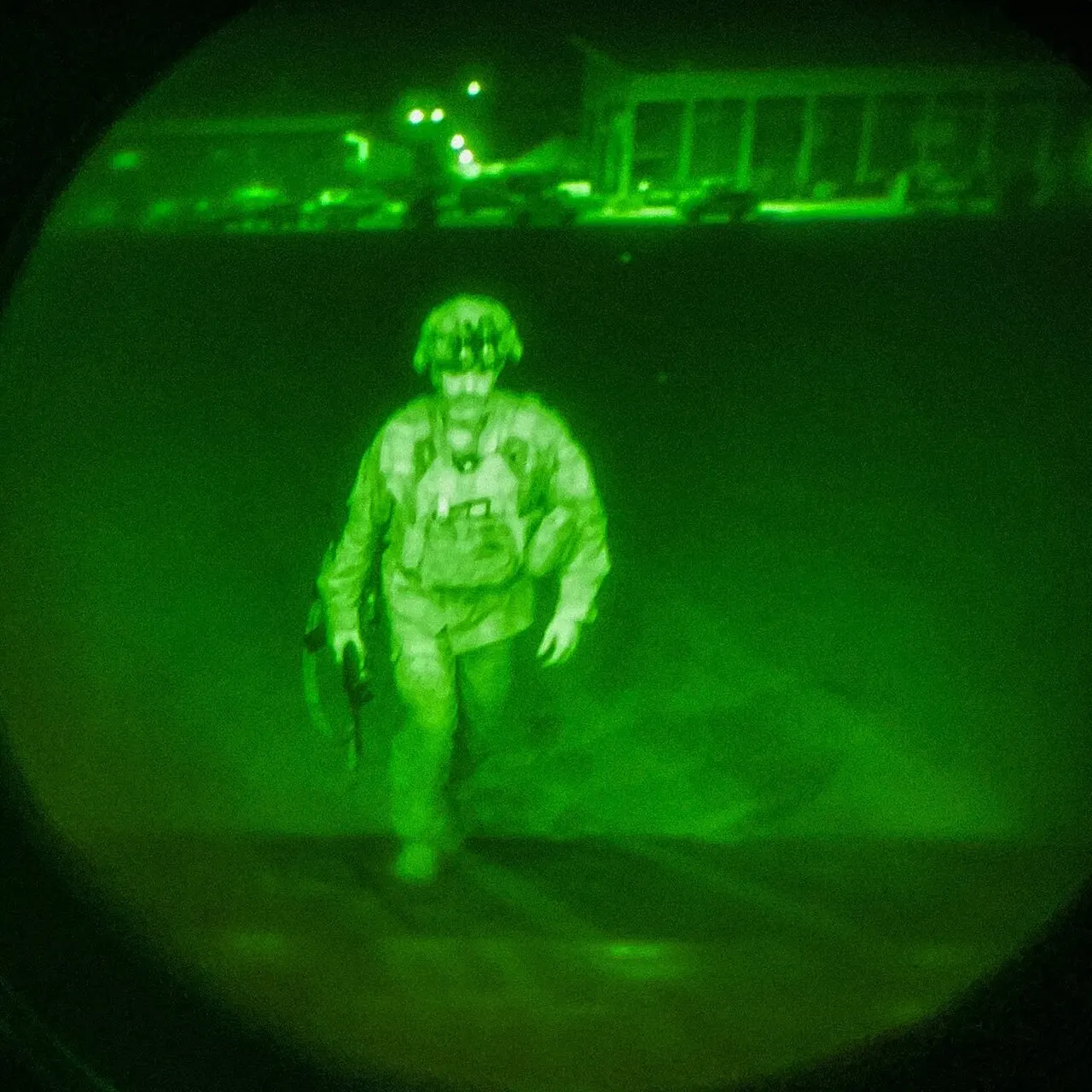
Maj. Gen. Chris Donahue, commander of the 82nd Airborne Division, was the last American soldier to board. He walked up the ramp of a C-17 late on August 30 with his rifle in hand, and a night-vision camera recorded him. The senior U.S. diplomat in Afghanistan, Ross Wilson, rode out on the same plane. It lifted off at 11:59 p.m. in Kabul, which was 3:29 in the afternoon on the American East Coast.
“The last C-17 lifted off from Hamid Karzai International Airport on August 30, this afternoon, at 3:29 p.m., East Coast time”
The count after Kabul
September 2021 to November 2026
Neta Crawford and Catherine Lutz of the Costs of War project published the most widely cited table of the dead on September 1, 2021. It gave 897,000 to 929,000 direct deaths in the main war zones, and the project's site read at least 940,000 in November 2026. The figures combine sources of unequal quality and have boundaries a reader should notice. The Syria column starts in September 2014, and the Yemen column does not capture that country's whole civil war, which is why larger UN figures for both countries exist beside it.
The ledger, with the date of each count
- 2,977
- killed on September 11, 2001
- 9/11 Memorial & Museum; excludes the 19 hijackers
- 940,000+
- direct deaths in the post-9/11 war zones
- Costs of War, site figure read November 2026
- 3.6 to 3.8 million
- estimated indirect deaths
- Costs of War, May 2023; a model-based estimate
- 38 million
- people displaced
- Costs of War, read November 2026
- About $8 trillion
- U.S. cost of the post-9/11 wars
- Costs of War, read November 2026
- Iraq275,087 to 306,495
- Syria266,325
- Afghanistan176,206
- Yemen112,092
- Pakistan66,650
All categories: soldiers, police, civilians, opposition fighters, contractors, journalists and aid workers. Afghanistan and Pakistan October 2001 to August 2021; Iraq March 2003 to August 2021; Syria September 2014 to May 2021; Yemen October 2002 to August 2021. For Iraq the upper bound is drawn. Source: Crawford and Lutz, Costs of War, September 1, 2021.
- Iraq185,831 to 208,964
- Syria95,000
- Afghanistan46,319
- Pakistan24,099
- Yemen12,690
Same table and dates. The project's site gave a combined minimum of 408,749 civilians for these five countries as read in November 2026. UN figures for all of Syria's war, from 2011, are far higher (see the after action report). Source: Crawford and Lutz, Costs of War, September 1, 2021.
Iraq shows how far counting methods can diverge. Iraq Body Count tallies documented deaths from press, hospital and official records, and in November 2026 it listed 200,065 to 226,628 civilians, a floor because many deaths go unreported. Household surveys estimate the missing deaths by sampling families and can overshoot if the sample is small or unrepresentative. A team writing in The Lancet in 2006 estimated 601,027 violent deaths through mid-2006 from 1,849 households. The Iraq Family Health Survey, with 9,345 households, put the same period at about 151,000. A 2013 study in PLOS Medicine estimated about 405,000 excess deaths through mid-2011, with a margin of 48,000 to 751,000.
- Iraq Body Count (documented)47,668
- Iraq Family Health Survey151,000
- Lancet survey601,027
Violent deaths. Iraq Body Count counts documented civilians. The two surveys estimate all violent deaths from household samples, so they are not measuring exactly the same thing. Source: As compared in the Iraq Family Health Survey, New England Journal of Medicine, 2008; Burnham and others, The Lancet, 2006.
War also kills through wrecked clinics, water systems and food supplies, for years after the fighting moves on. In May 2023 Costs of War estimated 3.6 to 3.8 million indirect deaths across the post-9/11 war zones, for a possible total of 4.5 to 4.7 million. The project presents that as an estimate drawn from research on how wars kill indirectly and says the precise figure is unknown, and it is hard to separate what the American-led wars caused from what local civil wars and governments such as Syria's would have caused anyway. The UN Development Programme projected 377,000 deaths in Yemen's war by the end of 2021, about 60 percent of them from indirect causes.
- Iraqi Freedom (Iraq, 2003 to 2010)4,418
- Enduring Freedom (mainly Afghanistan, 2001 to 2014)2,349
- Inherent Resolve (anti-ISIS, from 2014)96
- Freedom's Sentinel (Afghanistan, from 2015)93
- New Dawn (Iraq, 2010 to 2011)74
Hostile and nonhostile deaths as of July 16, 2020, the last date in the source. These tables predate the 13 service members killed at Abbey Gate in 2021. Source: Defense Casualty Analysis System, in Congressional Research Service report RL32492.
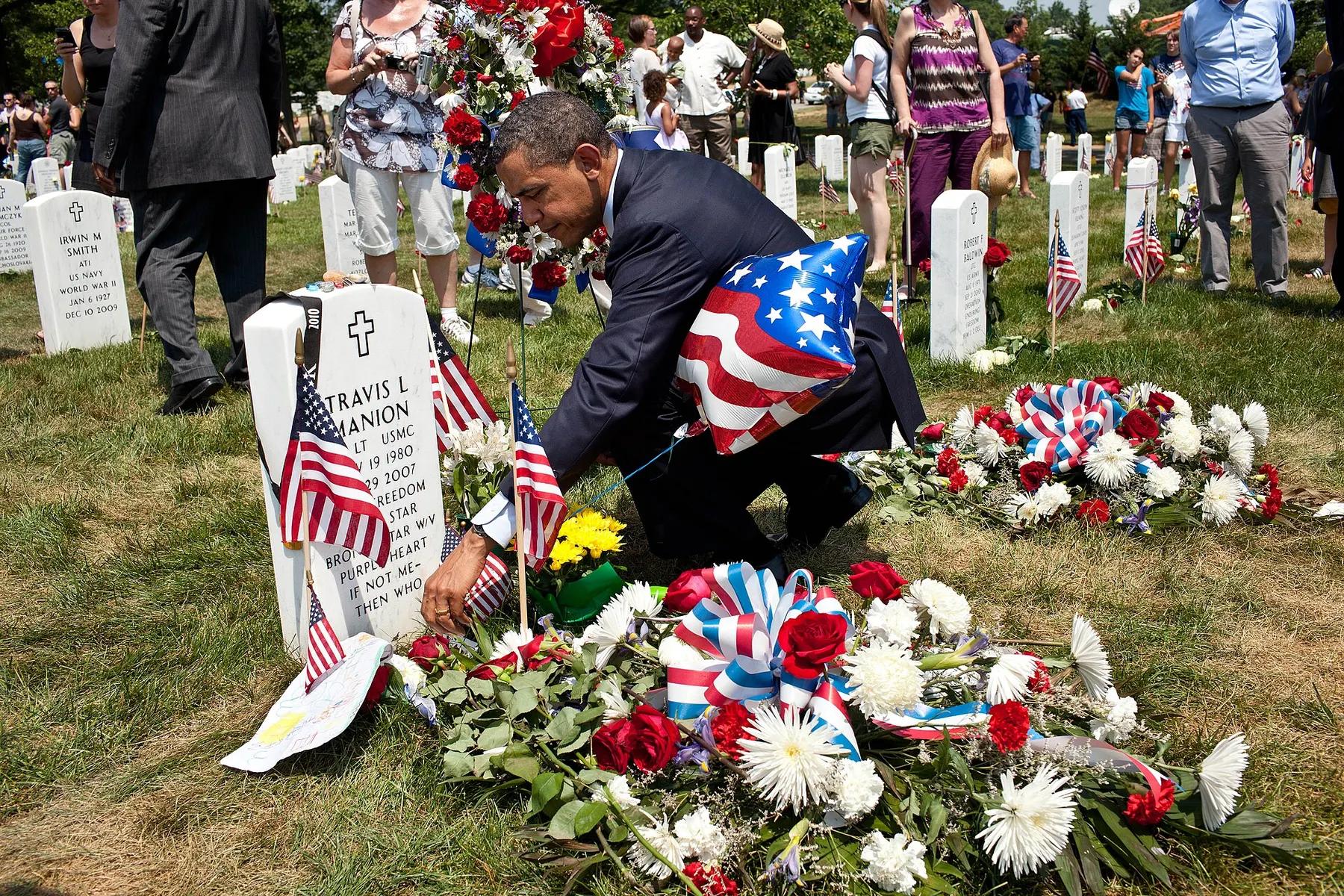
The ones who came home
Battlefield medicine changed what a wound meant. Army historians recorded that American soldiers hit by enemy fire in the first 18 months in Iraq had a survival rate above 90 percent, and Pentagon tables list more than 53,000 wounded in action across the named operations as of July 2020. Many survivors carry amputations, burns, brain injuries and post-traumatic stress. Costs of War reported in June 2025 that more than 1.8 million veterans of these wars have an officially recognized disability, and it projects the cost of their care at $2.2 trillion to $2.5 trillion by 2050.
The same project estimates that at least four times as many post-9/11 service members and veterans have died by suicide as died in combat. The Department of Veterans Affairs recorded 6,407 suicides among American veterans of every era in 2022. The causes reach well beyond deployment, and researchers warn against drawing a straight line from combat to any single death. Iraqi and Afghan veterans of the same wars have no comparable statistics.
Afghans who stayed, and those who left
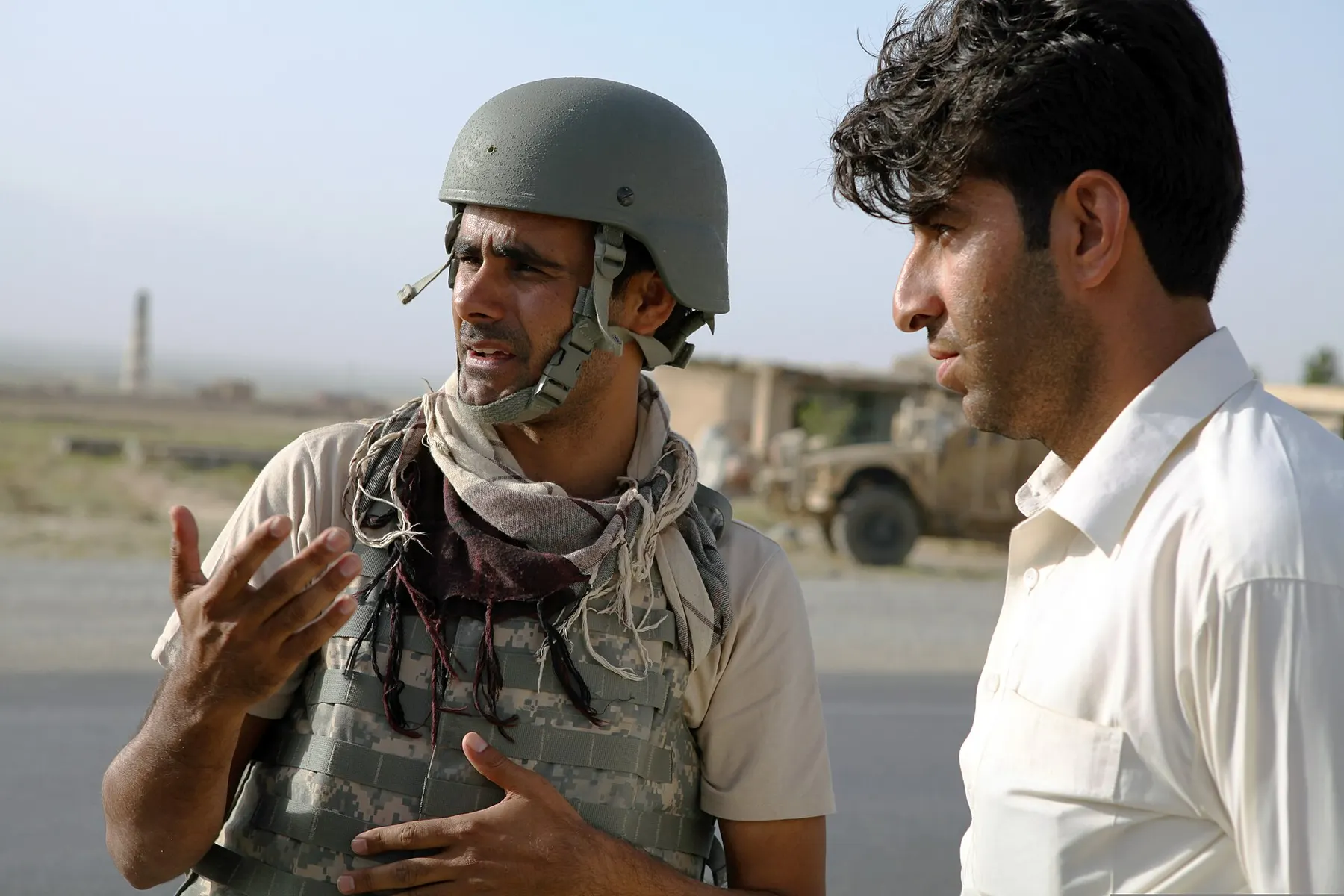
Congress had created special immigrant visas years earlier for interpreters and others who had worked with American forces, and the Congressional Research Service counted about 170,000 Iraqis and Afghans who had received that status by 2024, about 47,000 principal applicants and about 123,000 family members. Applications were still pending years after the Taliban took over. The Taliban had announced a general amnesty, but UNAMA reported in August 2023 at least 218 extrajudicial killings of former officials and security personnel between August 15, 2021, and June 30, 2023. SIGAR later reported that Taliban restrictions had erased health gains for women and girls.
The campaign went on in other forms. The coalition against the Islamic State declared its combat role in Iraq over on December 9, 2021, with about 2,500 U.S. troops staying on as advisers and officials acknowledging that the group survived as an underground insurgency and through affiliates abroad. On July 31, 2022, a U.S. air strike killed Ayman al-Zawahiri in Kabul, under the government that had undertaken at Doha to keep al-Qaeda from using Afghan soil against the United States. Costs of War counted U.S. counterterrorism activity in 78 countries when its site was read in November 2026.
Congress returned to its own part of the record in the fiscal 2026 defense authorization law, which President Trump signed on December 18, 2025. It repealed the 1991 and 2002 authorizations for war with Iraq. The authorization of September 2001 was left out of the repeal, and a bill by Reps. Pramila Jayapal and Thomas Massie to end it was described by Roll Call that month as a long shot.
The arsenal
The soldier
American infantry carried optics, body armor and night vision that their opponents mostly lacked, while insurgents relied on Soviet-pattern weapons that were cheap and everywhere. In the Afghan mountains much of that gap closed for the side holding the high ground and choosing the hour, as the fight at Wanat in 2008 showed.
United States and partner governments
M4 carbine
5.56 mm carbine. U.S. Army and Marines
Standard at Wanat, where each fire team carried two. One paratrooper told Army historians his weapon was overheating after about 12 magazines in roughly half an hour of fighting.
M249 squad automatic weapon
light machine gun. U.S. forces
One per fire team at Wanat. During the fight for the observation post, one jammed and needed a barrel change.
M240 machine gun
medium machine gun. U.S. forces
Two three-man teams manned M240s at Wanat, and the Marine advisers with the Afghan platoon brought another.
Interceptor Body Armor
armored vest with ceramic plates. U.S. forces
Issue had been planned over 2000 to 2007. When the Iraq invasion began not every soldier had it, and even the deputy coalition commander wore an older flak vest.
Night vision goggles
image-intensifying optics. U.S. and coalition forces
An edge on most nights but not all. AN/AVS-6 goggles used by CH-47 pilots needed at least 25 percent lunar illumination, which shaped when the Wanat move could be flown.
Al-Qaeda, the Taliban, Iraqi insurgents and the Islamic State
AK-pattern rifles
7.62 mm assault rifle. Taliban, al-Qaeda, Iraqi insurgents; also Afghan and Iraqi forces
The Army's history of 2001 describes Taliban units as generally armed with them. Soldiers at Wanat recalled heavy AK fire.
PK and PKM
7.62 mm general-purpose machine gun. Taliban and other insurgents
Standard Taliban support weapon in 2001 and a main source of the fire at Wanat in 2008.
RPG-7
shoulder-fired rocket launcher. Insurgents on every front
In 2005 a rocket-propelled grenade downed a Chinook in Kunar, killing 16 special operations troops. An RPG also struck the Chinook forced down on Takur Ghar in 2002.
DShK
12.7 mm heavy machine gun. Taliban and al-Qaeda; also Afghan government forces
Planners expected a few at Shahi Kot in 2002. Coalition estimates after Anaconda list 15 destroyed or captured.
Land
The roadside bomb set the terms of the ground war. U.S. forces armored their light vehicles and then replaced many of them with MRAPs, while their tanks dominated the open fights and city raids of 2003. Insurgents had no armor to match and moved in pickup trucks that disappeared into ordinary traffic.
United States and partner governments
M1114 up-armored Humvee
armored light utility vehicle. U.S. forces
The only armored logistics vehicle in production when the Iraq war began. Output rose from 30 a month in May 2003 to 400 by December 2004 and 650 by September 2005.
MRAP family
mine-resistant armored truck. U.S. forces
The Pentagon approved a goal of 25,700. Congress appropriated $38.35 billion through fiscal 2011.
M-ATV
all-terrain MRAP. U.S. forces in Afghanistan
Built for Afghan terrain. By July 21, 2011, 14,749 MRAPs had reached Afghanistan, 6,980 of them M-ATVs.
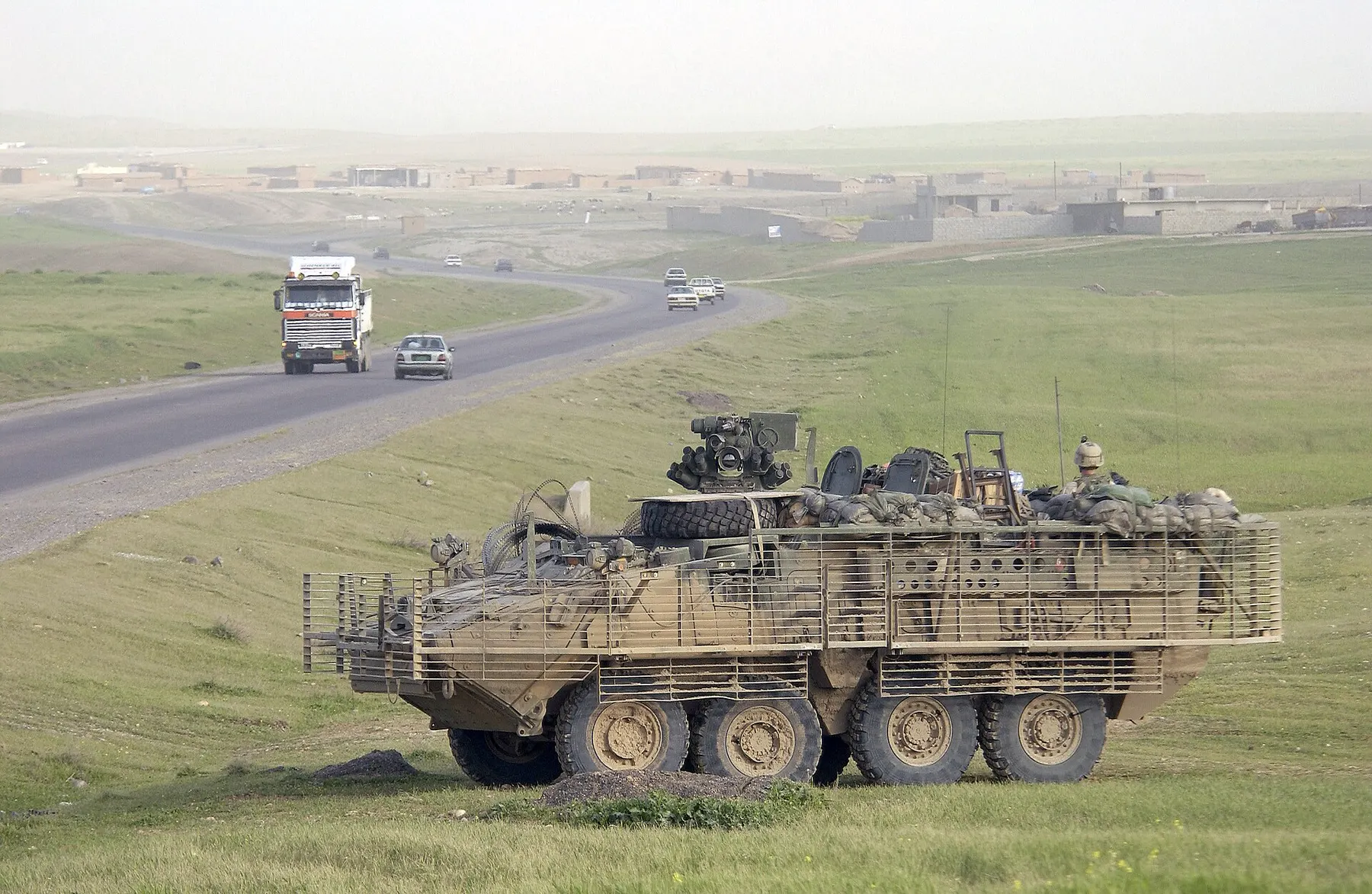
M1126 Stryker
eight-wheeled infantry carrier. U.S. Army
Served in northern Iraq, including Mosul. This one wears a cage of slat armor.
Tech. Sgt. Mike Buytas, U.S. Air Force. Public domain. SourceM1 Abrams
main battle tank. U.S. Army and Marines
Led the Thunder Runs into Baghdad from April 5, 2003. The Army judged it lethal and survivable in cities, and added an urban survivability kit.
M2 Bradley
infantry fighting vehicle. U.S. Army
Fought alongside tanks in the Baghdad raids and in Fallujah, where Army tank and Bradley sections were attached to Marine units.
Al-Qaeda, the Taliban, Iraqi insurgents and the Islamic State
Armed pickup trucks
improvised fighting vehicle, known as a technical. Taliban, ISIS and many militias; also Afghan and Iraqi forces
The Army's 2001 history lists makeshift armed vehicles in Taliban units. Early Iraqi security forces also patrolled in pickups.
Captured U.S.-supplied vehicles
seized military equipment. Taliban after August 2021
SIGAR's final report says the United States left behind billions of dollars in military equipment when it withdrew.
Voice of America. Public domain. Source
Air
Air power let small U.S. teams call in bombers and let helicopters reach outposts with no road, and it caused many of the civilian deaths that inflamed the wars. The armed groups had no air force. Their answer was ground fire at helicopters on the approach to the mountain positions.
United States and partner governments
UH-60 Black Hawk
utility and medical evacuation helicopter. U.S. Army
Two were on call as medical evacuation aircraft for the Wanat sector in 2008.
CH-47 Chinook
heavy-lift helicopter. U.S. Army and special operations
The lifeline of mountain outposts. One battalion commander at Anaconda was given only three for his initial lift in 2002.
AH-64 Apache
attack helicopter. U.S. Army
Flew close support at Anaconda and over Wanat, where crews' thermal sights found fighters concealed in brush.
A-10 Thunderbolt II
close air support aircraft. U.S. Air Force
Worked with Apaches to end one of the Anaconda ridgeline fights, and flew over the Kunar valleys.
B-1B Lancer
long-range bomber. U.S. Air Force
Flew from Diego Garcia and the Gulf in 2001. A B-1 was the first aircraft over Wanat, at 4:58 a.m., and dropped two bombs.
AC-130 gunship
side-firing attack aircraft. U.S. Air Force
Its October 2007 strike on a compound at Yaka China in the Korengal is recorded in the Army's Wanat study among incidents bound up with civilian casualties.
MQ-1 Predator
armed remotely piloted aircraft. U.S. Air Force and CIA
Flew 135,750 sorties and more than 2 million hours before the Air Force retired it in March 2018. About 92 percent of those hours were in combat.
MQ-9 Reaper
armed remotely piloted aircraft. U.S. Air Force
Successor to the Predator and a main instrument of strikes in Afghanistan, Iraq and Syria.
Staff Sgt. Brian Ferguson, U.S. Air Force. Public domain. Source
Al-Qaeda, the Taliban, Iraqi insurgents and the Islamic State
Ground fire against helicopters
machine guns and rocket-propelled grenades. Taliban and al-Qaeda
The only answer the armed groups had in the air war. It forced down a Chinook on Takur Ghar in 2002 and destroyed another in Kunar in 2005.
Sea
The U.S. Navy operated unopposed except for the attack on USS Cole in Aden harbor in 2000. Its carriers and cruise missiles opened the campaign against landlocked Afghanistan and supplied much of the air war over it.
United States and partner governments
USS Cole
guided-missile destroyer. U.S. Navy
Attacked at Aden on October 12, 2000. Seventeen sailors died and the ship nearly sank.
U.S. Department of Defense. Public domain. SourceAircraft carriers
floating air bases. U.S. Navy
USS Carl Vinson and USS Enterprise were in the Indian Ocean on September 11. Theodore Roosevelt and Kitty Hawk were ordered to the region by September 18.
Tomahawk land attack missile
ship-launched cruise missile. U.S. Navy
Range about 870 miles, per the Army's history. Cruise missiles struck al-Qaeda sites after the 1998 embassy bombings, and Tomahawks were scheduled for the opening strikes of October 2001.
USS Peleliu
amphibious assault ship. U.S. Navy and Marines
Stationed in the Arabian Sea in 2001, it received at least one early prisoner moved from Camp Rhino in southern Afghanistan.
Al-Qaeda, the Taliban, Iraqi insurgents and the Islamic State
Small boat at Aden
suicide attack craft. Al-Qaeda
The 9/11 Commission's account of the attack on the Cole. The destroyer was hit during a brief refueling stop in Aden harbor.
Support and strategic
The U.S. side answered the roadside bomb with jammers, robots, biometric databases and faster trauma care, at great cost. The armed groups' main assets were the bomb itself and the frontier that gave them room to recover. How improvised bombs are built is left out of this page.
United States and partner governments
Electronic jammers
counter-IED equipment. U.S. Army and Marines
The Pentagon's counter-IED organization funded almost 14,000 for Army and Marine units in a single year around 2006 to 2007.
Bomb disposal robots
remote handling equipment. U.S. explosive ordnance teams
Bought under the same counter-IED program, letting technicians examine suspect objects from a distance.
Biometric enrollment systems
fingerprint and identity databases. U.S. Department of Defense
The Government Accountability Office reported in 2017 that biometrics and forensics had helped capture or kill 1,700 people and keep 92,000 off military bases since 2008.
Forward trauma care and medical evacuation
battlefield medicine. U.S. military medicine
Soldiers wounded by enemy fire in the first 18 months in Iraq had a survival rate above 90 percent, and above 97 percent once they reached advanced care.
Interpreters
language and local knowledge. Iraqi and Afghan civilians working with U.S. forces
About 170,000 people, counting principal applicants and families, had received U.S. special immigrant status by 2024.
Spc. Ryan D. Green, U.S. Army. Public domain. SourceContractors
logistics, security and maintenance. U.S. government
Costs of War counts 8,189 U.S. contractors killed through August 2021, more than the 7,052 U.S. troops in the same table.
Al-Qaeda, the Taliban, Iraqi insurgents and the Islamic State
Improvised explosive devices
roadside and vehicle bombs. Insurgents in Iraq and Afghanistan
By late 2007 they accounted for over 70 percent of American combat casualties in Iraq and 50 percent in Afghanistan, per the Congressional Research Service. They killed far more local civilians and police.
Cross-border sanctuary
safe haven in Pakistan's frontier areas. Taliban and allied networks
Bin Laden crossed into it around December 16, 2001. Adm. Mike Mullen's testimony of September 2011 tied the Haqqani network to Pakistani intelligence, which Pakistan denied.
Timeline
1998
February. Bin Laden's declaration
Osama bin Laden, Ayman al-Zawahiri and others publish a statement in an Arabic newspaper in London calling for attacks on Americans.
August. Embassy bombings
Truck bombs in Nairobi and Dar es Salaam kill 224 people, 12 of them American, and the United States answers with cruise missiles on targets in Afghanistan and Sudan.
2000
October 12. USS Cole
An al-Qaeda team attacks the destroyer in Aden harbor, Yemen, and kills 17 sailors.
2001
September 11. The attacks
Nineteen hijackers seize four airliners and kill 2,977 people from 90 nations in New York, at the Pentagon and in Pennsylvania.
September 14. Congress authorizes force
The Senate votes 98 to 0 and the House 420 to 1, and NATO has invoked its collective defense clause for the first time.
October 7. War in Afghanistan
U.S. bombing begins, and Afghan opposition forces working with American special forces take Kabul in November and Kandahar in early December.
December. Tora Bora
Fewer than 100 American commandos fight alongside Afghan militias, and bin Laden escapes into Pakistan around December 16.
2002
January. Guantanamo opens
The first detainees reach the U.S. base in Cuba, where about 780 men have since been held.
March. Operation Anaconda
More than 2,000 coalition ground troops enter the Shahi Kot Valley in eastern Afghanistan.
2003
March 20. Invasion of Iraq
U.S.-led forces cross from Kuwait, and Baghdad falls on April 9.
May. Occupation orders
The Coalition Provisional Authority bars senior Baath Party members from public life and dissolves Iraq's military.
2004
April and November 2004. Abu Ghraib and Fallujah
The prison abuses become public in the spring, and the second battle for Fallujah in November costs 70 American lives.
2006
February 22. Samarra shrine bombed
Sectarian killing accelerates, and the UN later reports 34,452 civilians killed in Iraq that year.
2007
January 10. The surge
President Bush commits more than 20,000 additional troops to Iraq as Sunni tribal Awakening councils turn on Al Qaeda in Iraq.
2008
July 13. Wanat
Nine American soldiers die and 27 are wounded defending a new outpost in Afghanistan's Waygal Valley.
2009
December 1. Afghan surge
President Obama orders 30,000 more troops to Afghanistan and says withdrawals will begin after 18 months.
2010
August 31. U.S. combat in Iraq ends
Operation Iraqi Freedom closes, and the last U.S. forces leave the country in 2011.
2011
May 2. Bin Laden killed
A small American team kills him at a compound in the Pakistani garrison town of Abbottabad.
2014
June. Mosul and the caliphate
The Islamic State overruns Mosul on June 10, declares a caliphate later that month and attacks the Yazidis of Sinjar in August.
December. ISAF ends
Afghan forces take lead responsibility for security, and NATO's smaller Resolute Support mission begins on January 1, 2015.
2017
July. Mosul retaken
Iraqi forces and the coalition end a nine-month battle in which an Associated Press count puts the dead at 9,000 to 11,000.
2019
March 23. Baghuz
The last ground held by the Islamic State in Syria falls, and Abu Bakr al-Baghdadi is killed in a U.S. raid that October.
2020
February 29. Doha agreement
The United States and the Taliban agree terms for a full foreign withdrawal within 14 months.
2021
August 15. Kabul falls
Taliban fighters enter the capital nine days after taking their first provincial capital.
August 26. Abbey Gate
A suicide bomber from the Islamic State's Afghan branch kills 13 U.S. service members and roughly 170 Afghan civilians at the Kabul airport.
August 30. Last flight
The final U.S. C-17 leaves Kabul one minute before midnight, local time.
December 9. Coalition combat role ends
The anti-Islamic State coalition completes its shift to advising in Iraq, where about 2,500 U.S. troops remain.
2022
July 31. Al-Zawahiri killed
A U.S. air strike kills the al-Qaeda leader in Kabul, 11 months after American forces left the city.
2025
December 18. Iraq authorizations repealed
A defense law ends the 1991 and 2002 war authorizations for Iraq and leaves the 2001 authorization in place.
After action report
No party won the war outright, and no treaty ended it.
Al-Qaeda's original leadership was killed or scattered, the Islamic State lost its territory, and no attack on the scale of September 11 has followed in the United States. The Taliban retook Afghanistan in 2021, and Iraq's outcome is mixed.
- On the battlefield
- U.S.-led forces won nearly every large engagement, removed two governments and killed the leaders of al-Qaeda and the Islamic State. They did not defeat the Taliban, which held the field in Afghanistan when foreign troops left in August 2021. The Islamic State lost all its territory by March 2019 and survives as an insurgency, and affiliates of both it and al-Qaeda remain active in several countries.
- In the political outcome
- The Taliban achieved the political result it fought for. The United States achieved its narrowest aim, preventing a repeat of September 11 on American soil to date, and failed in its largest, a stable allied government in Afghanistan. Iraq has an elected government and outlasted the Islamic State, with militias and sectarian strain in its politics. Al-Qaeda brought down none of the governments it targeted.
- How it ended
- No formal end, no treaty and no surrender. The U.S. combat mission in Iraq ended on August 31, 2010, and U.S. forces left in 2011. They returned in 2014, and the coalition's combat role ended on December 9, 2021. NATO's ISAF mission ended in December 2014. The last U.S. troops left Afghanistan on August 30, 2021, under the February 2020 Doha agreement. Congress repealed the 2002 Iraq authorization in December 2025 and left the 2001 authorization in place.
The attacks of September 11, 2001, killed 2,977 people and set off two decades of war from North Africa to Pakistan.
The United States and its partners destroyed al-Qaeda's original leadership and the Islamic State's territorial state, and lost the longest contest when the Taliban retook Kabul on August 15, 2021.
Costs of War counted at least 940,000 direct deaths as read in November 2026 and estimated 3.6 to 3.8 million indirect deaths in 2023, most of them people of the countries where the fighting took place.
Armed groups massacred civilians by design, state forces tortured prisoners and killed civilians in strikes and raids, and governments and monitors disagree on how many died at each hand.
Objectives, side by side
United States and partner governments
Partly achieved
Destroy al-Qaeda's capacity to mount another attack like September 11
Core leadership was killed or scattered and no comparable attack has occurred in the United States. Affiliates survive in several regions.
Not achieved
Remove the Taliban and build a lasting Afghan state
The Taliban was removed in 2001 and returned in 2021, despite about $144.7 billion in appropriated reconstruction funds.
Partly achieved
Remove Saddam Hussein, eliminate Iraqi weapons of mass destruction and leave behind a free Iraq
The regime fell in weeks. No significant stockpiles were found, and years of insurgency and civil war followed.
Achieved
Destroy the Islamic State's territorial caliphate
Its last territory fell in March 2019. The group persists underground.
Not achieved
Secure a sovereign, constitutional state
The government collapsed in August 2021.
Partly achieved
Survive and establish state authority
The state survived civil war and the Islamic State. Militias and corruption limit its authority.
Al-Qaeda, the Taliban, Iraqi insurgents and the Islamic State
Not achieved
By its own statements, force the United States out of the Muslim world and bring down allied governments
It drew the United States into costly wars and lost its founder and its pre-2001 Afghan bases.
Achieved
By its own statements, expel foreign forces and restore the Islamic Emirate
Foreign forces left and the Taliban took Kabul in August 2021.
Partly achieved
End the occupation and, for many Sunni groups, recover lost power
U.S. forces left in 2011 under an agreement with Baghdad. Sunni parties did not regain the power they held before 2003.
Not achieved
By its own statements, build and hold a caliphate
The coalition counted nearly 110,000 square kilometers (about 42,500 square miles) retaken from it by March 2019, when it lost the last of its ground.
Estimated deaths
- Military
- Roughly 530,000 to 540,000 soldiers, police, opposition fighters and contractors through August 2021, worked from the Costs of War table of September 2021 (national forces 204,645 to 207,845; opposition 296,858 to 301,933; allied troops 14,874; U.S. military 7,052; U.S. contractors 8,189).
- Civilian
- 363,939 to 387,072 direct civilian deaths through August 2021 in the same table, and at least 408,749 on the project's site as read in November 2026. Add 2,977 killed on September 11, 2001. Survey-based estimates for Iraq alone run much higher.
All direct deaths: 897,000 to 929,000 in the table of September 2021, at least 940,000 on the project's site as read in November 2026. Estimated indirect deaths of 3.6 to 3.8 million (May 2023) would bring the total to 4.5 to 4.7 million. These counts keep moving, so each is given with its date. Each bar spans the low and high estimates on a logarithmic scale, where every step is ten times the last, so small and very large losses fit one chart.
Military
United States and partner governments
U.S. military, all post-9/11 operations
about 7,050
53,241 wounded in action across the five named operations, as of July 16, 2020
How this was counted
Pentagon tables as of July 2020 sum to 7,030 (Iraqi Freedom 4,418; Enduring Freedom 2,349; Inherent Resolve 96; Freedom's Sentinel 93; New Dawn 74), and Costs of War gives 7,052 through August 2021. Includes hostile and nonhostile deaths. Suicides after service are not included.
Defense Casualty Analysis System via Congressional Research Service RL32492; Costs of War
U.S. contractors
about 8,189
How this was counted
Through August 2021, in a table dated September 2021. Reporting is incomplete, so this is likely a minimum.
Other allied troops
12,468 to 14,874
How this was counted
The September 2021 table gives 14,874, of which 13,407 are listed in the Syria column, chiefly partner forces in the anti-ISIS war. Another page of the project gives 12,468 for 2001 to 2023.
Afghan soldiers and police
about 69,095
How this was counted
October 2001 to August 2021. An approximation built from several sources.
Iraqi soldiers and police
45,519 to 48,719
How this was counted
March 2003 to August 2021.
Al-Qaeda, the Taliban, Iraqi insurgents and the Islamic State
Opposition fighters, all theaters
296,858 to 301,933
How this was counted
Through August 2021: Afghanistan 52,893; Pakistan 32,838; Iraq 34,806 to 39,881; Syria 77,000 (from September 2014, to May 2021); Yemen 99,321. These are the weakest numbers on the page. They often rest on claims by opposing forces, and combatant status is disputed.
Also involved
Syrian national forces
about 80,600
How this was counted
The Syria column of the table, September 2014 to May 2021. These forces were not U.S. partners, and most of Syria's war lies outside this campaign.
Pakistani soldiers and police
about 9,431
How this was counted
October 2001 to August 2021.
Civilian
Victims of the September 11 attacks
2,977
Thousands of responders and residents remain under federal health monitoring
How this was counted
New York 2,753; Pentagon 184; Flight 93, 40. Excludes the 19 hijackers. Includes some military personnel at the Pentagon.
Afghan civilians
about 46,319 directly
UNAMA for 2020 alone: 3,035 killed, 5,785 injured
How this was counted
Costs of War, October 2001 to August 2021. UNAMA's systematic documentation began only in 2009, so earlier years rest on other sources.
Pakistani civilians
about 24,099
How this was counted
October 2001 to August 2021.
Iraqi civilians, documented
185,831 to 226,628
How this was counted
Costs of War's range through August 2021 is 185,831 to 208,964. Iraq Body Count's running total read 200,065 to 226,628 in November 2026. Both are counts of recorded deaths and are minimums.
Iraq, violent deaths to June 2006, civilians and combatants (survey estimates)
151,000 to 601,027
How this was counted
The Iraq Family Health Survey estimated 151,000 (range 104,000 to 223,000 in its published interval); the 2006 Lancet study estimated 601,027. They cover civilians and combatants alike. The gap between them turns on sample size and on how each team handled unreported deaths.
Iraq, excess deaths to mid-2011, all Iraqis
about 405,000 (48,000 to 751,000)
How this was counted
Household survey including nonviolent excess mortality, March 2003 to mid-2011. The authors add about 56,000 for families who migrated, for roughly 461,000.
Syrian civilians
95,000 to 306,887
How this was counted
Costs of War's 95,000 covers September 2014 to May 2021. The UN's 306,887 covers the entire civil war, March 2011 to March 2021, most of which was not part of the campaign described here.
Yemeni civilians
about 12,690 directly
UNDP projected 377,000 total deaths, direct and indirect, by the end of 2021
How this was counted
Costs of War, October 2002 to August 2021. Yemen's war is largely a civil and regional conflict. The UN projection covers all causes, with about 60 percent indirect.
Journalists and aid workers
680 journalists; 892 aid workers
How this was counted
Sum of the two categories across all theaters, through August 2021.
Indirect deaths, five main war zones
3.6 to 3.8 million (estimate)
How this was counted
From disease, hunger and wrecked health systems. A projection published in May 2023, and not a count. Attribution to these wars, as opposed to local conflicts, is disputed.
Kill and loss ratios
A ratio compares reported losses. It depends on who did the counting, it does not measure who was right, and it often says little about who won.
About 29 to 1
Calculated here
Second battle of Fallujah, November 2004
Insurgents reported killed for each American service member killed.
2,000 insurgents killed divided by 70 Americans killed = 28.6, from the Army's On Point II. An interim U.S. figure during the battle, 1,200 insurgents and 51 Americans, gives 23.5.
Caution: The insurgent count is a U.S. estimate that could not be checked, and some of those counted may have been civilians. It leaves out the battle's political cost and the destruction of the city, and it does not score who fought better.
About 20 to 40 combatants per noncombatant
Calculated here
U.S. strikes outside active war zones, 2009 to 2015, official figures
Combatants reported killed for each noncombatant, by the U.S. government's count.
2,372 / 116 = 20.4 at the low end; 2,581 / 64 = 40.3 at the high end, from the 2016 Director of National Intelligence summary.
Caution: The classification of the dead is the government's own and is not open to outside checking. Monitors dispute who was counted as a combatant.
About 3 to 7 per civilian
Calculated here
The same strikes, using an independent civilian count
Government-counted combatants for each civilian in the Bureau of Investigative Journalism's count.
2,372 / 801 = 3.0; 2,581 / 380 = 6.8. This pairs the U.S. combatant figure with the Bureau's civilian range of 380 to 801.
Caution: It mixes two sources with different methods and slightly different coverage, so it only illustrates how much the answer depends on who is counting.
About 0.7 to 1
Calculated here
Afghanistan, 2001 to 2021, all pro-government forces
Opposition fighters killed for each soldier or police officer killed on the government side.
52,893 opposition deaths / (2,324 U.S. + 1,144 allied + 69,095 Afghan = 72,563) = 0.73, from Costs of War.
Caution: Opposition counts in Afghanistan are especially poor. The figure says more about who was exposed to the fighting than about skill.
About 0.65 to 0.8 to 1
Calculated here
Iraq, 2003 to 2021, all pro-government forces
Opposition fighters killed for each soldier or police officer killed on the government side.
34,806 / (4,598 + 323 + 48,719 = 53,640) = 0.65; 39,881 / (4,598 + 323 + 45,519 = 50,440) = 0.79.
Caution: Includes very different phases and enemies, and insurgent deaths are poorly recorded. It should not be read as a measure of who was winning.
What it cost
- About $8 trillion
- U.S. cost of the post-9/11 wars
- Costs of War, as read in November 2026, excluding future interest.
- $1.6 trillion
- Congressional war appropriations through 2014
- Congressional Research Service. A narrower measure, which is why it differs so much from the figure above.
- $2.2 to $2.5 trillion by 2050
- Future veterans' care
- Costs of War.
- $144.7 billion through mid-2021
- Afghanistan reconstruction
- SIGAR; its later accounting reaches $148.2 billion. Nearly $90 billion went to the security sector.
- $26.0 to $29.2 billion
- Waste, fraud and abuse identified in Afghanistan
- SIGAR final report, December 2025.
- $38.35 billion through fiscal 2011
- MRAP program
- Congressional Research Service.
- At least 38 million
- People displaced
- Costs of War, across Afghanistan, Iraq, Pakistan, Yemen, Somalia, the Philippines, Libya and Syria.
- More than 1.8 million
- Veterans with a recognized disability
- Costs of War, updated June 2025.
- 78
- Countries with U.S. counterterrorism activity
- Costs of War, as read in November 2026.
Lessons drawn
- U.S. military: quick victories left the hard part undone
- Army histories of both wars return to the same point. Kabul and Baghdad fell within weeks, and planning for what followed fell short.
- U.S. military: adaptation under fire
- Armor, jammers, biometrics and trauma care all changed within years, driven by casualties. The MRAP is cited both as a model of urgent procurement and as evidence of how slowly the system had moved before.
- Partner forces: dependence is a vulnerability
- SIGAR's reporting holds that Afghan forces were built around American air power, contractors and logistics and could not stand once those left.
- Insurgent groups: time and sanctuary
- The Taliban outlasted foreign political will from a frontier that U.S. officials complained, repeatedly and on the record, gave Afghan militants safe haven.
- Jihadist groups: fixed territory could be retaken
- Declaring a state brought the Islamic State recruits, as the CIA's estimate of September 2014 reflected, and it gave the coalition fixed ground to retake city by city.
- Governments: civilian counts carry weight
- From Mosul to the Kabul strike of August 2021, official figures were revised upward after outside investigators and reporters checked them.
Still disputed
- Was the Iraq War justified?
- Its defenders point to Saddam Hussein's record of aggression and repression and to the Iraq Survey Group's finding that he meant to rebuild his weapons programs. Its opponents point to the absence of stockpiles, the lack of an operational link to September 11 and the cost in Iraqi lives. Officials who made the case have called the intelligence an honest failure, and critics hold that it was shaped to fit a decision already made.
- Did the CIA's interrogation program produce vital intelligence?
- The Senate Intelligence Committee majority says no. The CIA and committee Republicans say it contributed, though CIA Director John Brennan also said it cannot be known whether the same information could have been gained otherwise.
- How many Iraqis died?
- Iraq Body Count documents 200,065 to 226,628 civilians as of November 2026 and treats that as a minimum. For March 2003 to June 2006, the Iraq Family Health Survey estimated 151,000 violent deaths and the Lancet team 601,027. The dispute turns on sampling, reporting gaps and how indirect deaths are counted.
- Could bin Laden have been caught at Tora Bora?
- The Senate Foreign Relations Committee majority staff said in 2009 that he was within reach had more troops been sent, and CIA commander Gary Berntsen had asked for 800 Rangers. Gen. Tommy Franks wrote in 2004 that intelligence on his presence was inconclusive.
- Did the surge or the Awakening reduce violence in Iraq?
- Stephen Biddle, Jeffrey Friedman and Jacob Shapiro concluded in 2012 that both were necessary and neither was sufficient. Other scholars replied in International Security in 2013, disputing how far the evidence supports that synergy.
- Who is responsible for the fall of Kabul?
- President Biden pointed to the deal he inherited and said any exit would have been chaotic. Gen. Kenneth McKenzie told Congress the Doha agreement had a pernicious effect on Afghan forces and that he had warned against falling below 2,500 advisers. Gen. Mark Milley called the outcome a strategic failure built over 20 years. SIGAR stressed Afghan dependence on U.S. support.
- Are the wars over?
- U.S. forces left Afghanistan in 2021, and Congress repealed the Iraq authorizations in December 2025. The 2001 authorization remained in place, and Costs of War counted U.S. counterterrorism activity in 78 countries as read in November 2026.
Sources
Figures for wars are estimates, and many are disputed. Where credible sources differ, this page gives the range and says who counts what. Maps are drawn from Natural Earth country shapes, which show today's borders.
- The 9/11 Commission Report, National Commission on Terrorist Attacks Upon the United States
- The 9/11 Commission Report, Chapter 1, National Commission on Terrorist Attacks Upon the United States
- The 9/11 Commission Report, Chapter 2, National Commission on Terrorist Attacks Upon the United States
- The 9/11 Commission Report, Chapter 5, National Commission on Terrorist Attacks Upon the United States
- The 9/11 Commission Report, Chapter 8, National Commission on Terrorist Attacks Upon the United States
- World Islamic Front statement, February 23, 1998, with editorial note, Federation of American Scientists
- Human Cost of Post-9/11 Wars: Direct War Deaths in Major War Zones, Costs of War, Brown University (Crawford and Lutz, 2021)
- Findings, Costs of War, Brown University
- How Death Outlives War, Costs of War, Brown University (Savell, 2023)
- U.S. Military, Veterans, Contractors and Allies, Costs of War, Brown University
- American War and Military Operations Casualties: Lists and Statistics (RL32492), Congressional Research Service
- Iraq Body Count database, Iraq Body Count
- Violence-Related Mortality in Iraq from 2002 to 2006, New England Journal of Medicine, via PubMed
- Mortality after the 2003 invasion of Iraq: a cross-sectional cluster sample survey, The Lancet, via PubMed
- Mortality in Iraq Associated with the 2003 to 2011 War and Occupation, PLOS Medicine
- Afghanistan: Protection of Civilians in Armed Conflict, Annual Report 2020, United Nations Assistance Mission in Afghanistan
- Committee Study of the CIA's Detention and Interrogation Program, U.S. Senate Select Committee on Intelligence
- Statement from Director Brennan on the SSCI Study, Central Intelligence Agency, via Just Security
- Inquiry into the Treatment of Detainees in U.S. Custody, U.S. Senate Armed Services Committee
- Tora Bora Revisited, U.S. Senate Committee on Foreign Relations, majority staff, November 2009
- A Different Kind of War, U.S. Army Combat Studies Institute
- Wanat: Combat Action in Afghanistan, 2008, U.S. Army Combat Studies Institute
- On Point II: Transition to the New Campaign, U.S. Army Combat Studies Institute
- Operation AL FAJR: A Study in Army and Marine Corps Joint Operations, U.S. Army Combat Studies Institute
- Comprehensive Report of the Special Advisor to the DCI on Iraq's WMD, Iraq Survey Group, via GovInfo
- Final Report, Special Inspector General for Afghanistan Reconstruction, December 2025
- Agreement for Bringing Peace to Afghanistan, U.S. Department of State
- U.S. Military Withdrawal and Taliban Takeover in Afghanistan: FAQ (R46879), Congressional Research Service
- U.S. Armed Forces Abroad: Selected Congressional Votes Since 1982 (RL31693), Congressional Research Service
- Iraq War: Background and Issues Overview (RL31715), Congressional Research Service
- Afghanistan: Post-Taliban Governance, Security, and U.S. Policy (RL30588), Congressional Research Service
- Mine-Resistant, Ambush-Protected Vehicles (RS22707), Congressional Research Service
- Improvised Explosive Devices in Iraq and Afghanistan (RS22330), Congressional Research Service
- Iraq: Post-Saddam Governance and Security (RL31339), Congressional Research Service
- The Islamic State and U.S. Policy (R43612), Congressional Research Service
- They came to destroy: ISIS Crimes Against the Yazidis, UN Commission of Inquiry on Syria
- Unearthing Atrocities: Mass Graves in Territory Formerly Controlled by ISIL, UNAMI and OHCHR
- Twelfth report of the Analytical Support and Sanctions Monitoring Team (S/2021/486), UN Security Council, June 2021
- Afghanistan's Taliban responsible for revenge killings, torture of former officials, UN News, August 2023
- Obama's covert drone war in numbers, Bureau of Investigative Journalism
- U.S. Releases Documents on Civilian Casualties from Counterterrorism Strikes, American Society of International Law
- Remarks by the President at the National Defense University, The White House, May 23, 2013
- Coalition in Iraq and Syria, Airwars
- Coalition, partner forces liberate last territory held by Daesh, Global Coalition against Daesh, March 23, 2019
- CIA says IS numbers underestimated, Al Jazeera, September 2014
- Iraqi MPs vote to bring men who failed Mosul to justice, Al Jazeera, August 2015
- Conflicting intelligence clouds assessment of Iraqi insurgency, Royal United Services Institute, November 2007
- 10 years on, Iraq scarred from attack on Shiite shrine, Associated Press via The Herald, February 2016
- Testing the Surge: Why Did Violence Decline in Iraq in 2007?, International Security, Summer 2012, via Belfer Center
- The Pentagon says Iran killed 603 US troops during the Iraq War, Task & Purpose, April 2019
- Pakistan's alleged ties to Haqqani terror network rock alliance with U.S., PBS NewsHour, September 2011
- US general: Afghan collapse rooted in 2020 deal with Taliban, Associated Press via WJLA, September 2021
- Afghanistan drone strike the Pentagon previously described as righteous killed as many as 10 civilians, CBS News, September 2021
- Military phase of evacuation ends, as does America's longest war, U.S. Army
- Defense Biometrics and Forensics (GAO-17-580), U.S. Government Accountability Office
- US used white phosphorus in Iraq, BBC News, November 2005
- Kunduz hospital attack, Doctors Without Borders
- Pentagon: Afghan Hospital Bombing Not a War Crime, Voice of America, April 2016
- Interview with Col. David Perkins, PBS Frontline
- U.S. to continue Afghan assistance after withdrawal, Radio Free Europe/Radio Liberty, June 2021
- Terrorist Attack on USS Cole: Background and Issues for Congress (RS20721), Congressional Research Service
- Justice Department brings new charges in Blackwater shootings, CBS News, October 2013
- Remarks on a successful counterterrorism operation in Afghanistan, The White House, August 1, 2022
- Pentagon Report Says Airstrike On Afghan Hospital Wasn't A War Crime, NPR via KPBS, April 2016
- President Bush Announces Major Combat Operations in Iraq Have Ended, The White House, May 1, 2003
- Here's who's left in Guantanamo Bay, Washington Examiner, September 2026
- Congress inches toward reclaiming war powers with AUMF repeals, Roll Call, December 2025