
Cold War, 1945 to 1991
The Long Standoff
For 46 years the United States and the Soviet Union armed against each other across a divided Europe without fighting a declared war. This history follows the decisions behind that standoff, and the wars in Korea, Hungary, Afghanistan and elsewhere where the rivalry killed people.
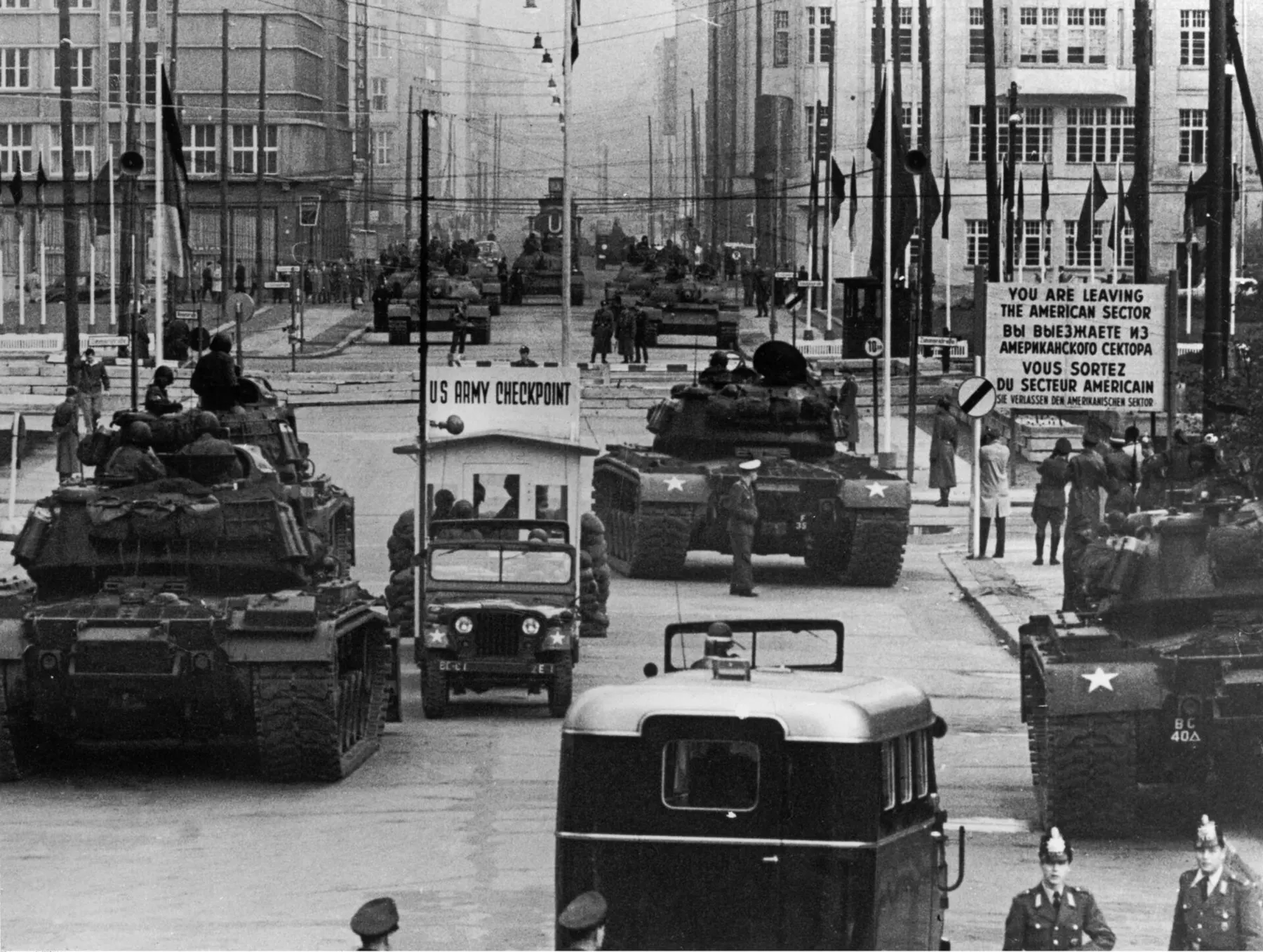
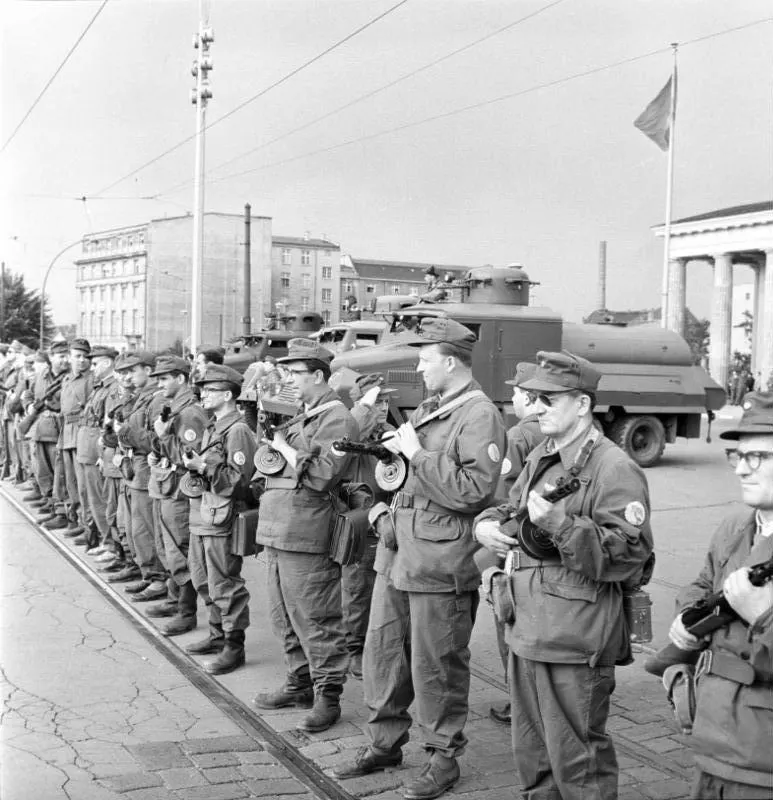
Checkpoint Charlie, Friedrichstrasse, Berlin, October 1961. American tanks stand in the foreground beside the U.S. Army booth, with Soviet armor facing them up the street past the sector sign. West Berlin police watch at lower right.
U.S. Army photo, U.S. Army Military History Institute. Public domain. SourceWar summary
Result
Soviet bloc dissolved; Western alliance endured
- No declared war between the United States and the Soviet Union
- Germany reunited inside NATO on October 3, 1990
- Warsaw Pact dissolved in stages by July 1991; NATO survived
- Gorbachev resigned on December 25, 1991, and the Soviet flag came down over the Kremlin
- Date
- 1945 to 1991
- Location
- Divided Europe, with wars and coups in Asia, Africa, Latin America and the Middle East
| United States and NATO | Soviet Union and Warsaw Pact |
|---|---|
| Belligerents | |
|
|
| Fought for | |
| Contain Soviet expansion, defend Western Europe and North America collectively and support governments resisting communist takeover. | Prevent another invasion from the West, block a rearmed West Germany, protect socialist governments and deal with NATO as an equal. |
| Commanders and leaders | |
|
|
| Strength | |
|
|
| Military losses | |
|
|
| Civilian deaths | |
| Estimates for all wars linked to the Cold War run from about 14 million to more than 20 million dead, soldiers included and civilians the majority. They include about 2 million Korean civilians and 800,000 to 2 million Afghans, most of them civilians. | |
| Also involved | |
| |
Contents
- War summary
- 1Truman tells Stalin at PotsdamJuly 1945 to June 1947
- 2Flying coal into West BerlinJune 1948 to September 1949
- 3North Korea crosses the parallelApril 1950 to July 1953
- 4Soviet tanks return to BudapestMay 1955 to June 1958
- 5East Germany seals BerlinNovember 1958 to October 1961
- 6Soviet missiles reach CubaJuly to December 1962
- 7Prague under Warsaw Pact occupationJanuary 1968 to April 1969
- 8Arms talks during the buildupNovember 1969 to December 1983
- 9Far from the Central Front1953 to 1989
- 10The bloc comes apartMarch 1985 to August 1994
- The arsenal
- Timeline
- After action report
- Sources
Truman tells Stalin at Potsdam
July 1945 to June 1947
On the evening of July 24, 1945, at the Potsdam conference outside Berlin, President Harry Truman approached Joseph Stalin without an interpreter and, as casually as he could, told him the United States had a "new weapon of unusual destructive force." Stalin showed little interest and said he hoped the Americans would make "good use of it against the Japanese." Truman later wrote on the back of a conference photograph that Stalin had not known about the bomb. He was mistaken: according to the Department of Energy's history of the Manhattan Project, Soviet intelligence had been receiving information about the American program since the fall of 1941.
The two governments had just won a war together, and they were already guarding secrets from each other. Germany had surrendered in May. The United States, the Soviet Union, Britain and France divided it into four zones of occupation and cut Berlin, deep inside the Soviet zone, into four sectors of its own. A U.S. Army history says joint administration worked reasonably well in 1945 and 1946, then broke down as the occupiers failed to agree on Germany's future.
Moscow's position in those talks came out of what the war had cost. In 1990 Mikhail Gorbachev put Soviet deaths at 26.6 million, a figure from a demographic study of excess deaths that Western scholars have largely confirmed at 26 million to 27 million. The Soviet government said it meant to prevent another invasion from the West, and its armies stood across Eastern Europe when the shooting stopped. Governments in Washington and London looked at the same armies and saw a power that might keep moving.
On February 22, 1946, George Kennan, the American charge d'affaires in Moscow, sent the State Department the analysis known as the Long Telegram. He traced Soviet conduct to Russian history as much as to Marxism, and he told Washington it faced a rival that believed no lasting accommodation with the United States was possible.
“At bottom of Kremlin's neurotic view of world affairs is traditional and instinctive Russian sense of insecurity.”
Eleven days later Winston Churchill, out of office since the British election of 1945, gave the division of Europe the name it kept. He spoke at Westminster College in Fulton, Missouri, with Truman in the audience.
“From Stettin in the Baltic to Trieste in the Adriatic, an iron curtain has descended across the Continent.”
Moscow received its own version of the Long Telegram that September. Nikolai Novikov, the Soviet ambassador in Washington, reported on American policy in terms as stark as Kennan's, reading overseas naval and air bases, a larger peacetime military and the arms race as evidence of a drive for world dominance.
“The foreign policy of the United States, which reflects the imperialist tendencies of American monopolistic capital, is characterized in the postwar period by a striving for world supremacy.”
Washington turned its reading into policy the next year. In March 1947, with Britain no longer able to carry the burden in the eastern Mediterranean, Truman asked Congress for aid to Greece and Turkey and stated a principle that reached well past those two countries.
“it must be the policy of the United States to support free peoples who are resisting attempted subjugation by armed minorities or by outside pressures”
That summer Kennan published an unsigned article in the journal Foreign Affairs setting out the idea that took the name containment. The United States should block Soviet expansion, mainly by protecting the world's great industrial centers, and wait for the Soviet system to change. Kennan favored economic aid and political warfare over military force. John Foster Dulles and others wanted rollback, an effort to push Soviet power back instead of holding it in place, but containment stayed at the center of American strategy until communism collapsed in Eastern Europe.
“long-term, patient but firm and vigilant containment of Russian expansive tendencies”
In June 1947 Secretary of State George Marshall proposed a European recovery program that eventually sent more than $12 billion to rebuild Western Europe. Soviet and Eastern European participation was possible on paper. Moscow opposed it, worried that American money would bring American economic control over its neighbors, and Stalin refused to open his society to Western administrators. The State Department's history says those objections doomed Eastern participation. The Soviet leadership watched the revival of Western Europe, and of the western zones of Germany above all, with growing suspicion, and in Berlin the two economic systems shared one city.
Flying coal into West Berlin
June 1948 to September 1949
Gen. Lucius Clay, the U.S. military governor in Germany, had already decided what Berlin was worth when the crisis there was still building. Two months before the Soviet blockade began, he put his view in one sentence.
“If we mean that we are to hold Europe against communism, we must not budge.”
The dispute that brought the blockade was about money and the shape of a future German state. The American and British zones had merged into a single economic unit, Bizonia, on January 1, 1947, and by early 1948 the Western powers were planning a new West German government. The Soviets walked out of the Allied Control Council, the four-power governing body, in March. In June the Western powers told Marshal Vasily Sokolovsky, the Soviet commander, that they would introduce the Deutschmark in their zones. Moscow issued its own currency, the Western powers extended theirs to West Berlin and, by June 24, Soviet forces had blocked the road, rail and canal links to the Western sectors, where some 2.3 million people lived.
Washington and London could withdraw or try a military push down the highways. They chose a third course, built on the three air corridors the Soviets had agreed to in writing. The first American flights landed on June 26 with 80 tons. Planners set a ration of about 1,500 calories per person per day.
Early operations were ragged and short of both aircraft and experience. Lt. Gen. William Tunner, who took over the combined American and British transport fleet, imposed strict schedules and a steady rhythm, and on one August day the fleet passed 4,500 tons for the first time. West Berliners added capacity on the ground. Roughly 19,000 workers built a new airfield at Tegel, in the French sector, in about three months, and the first plane landed there on November 5, 1948.
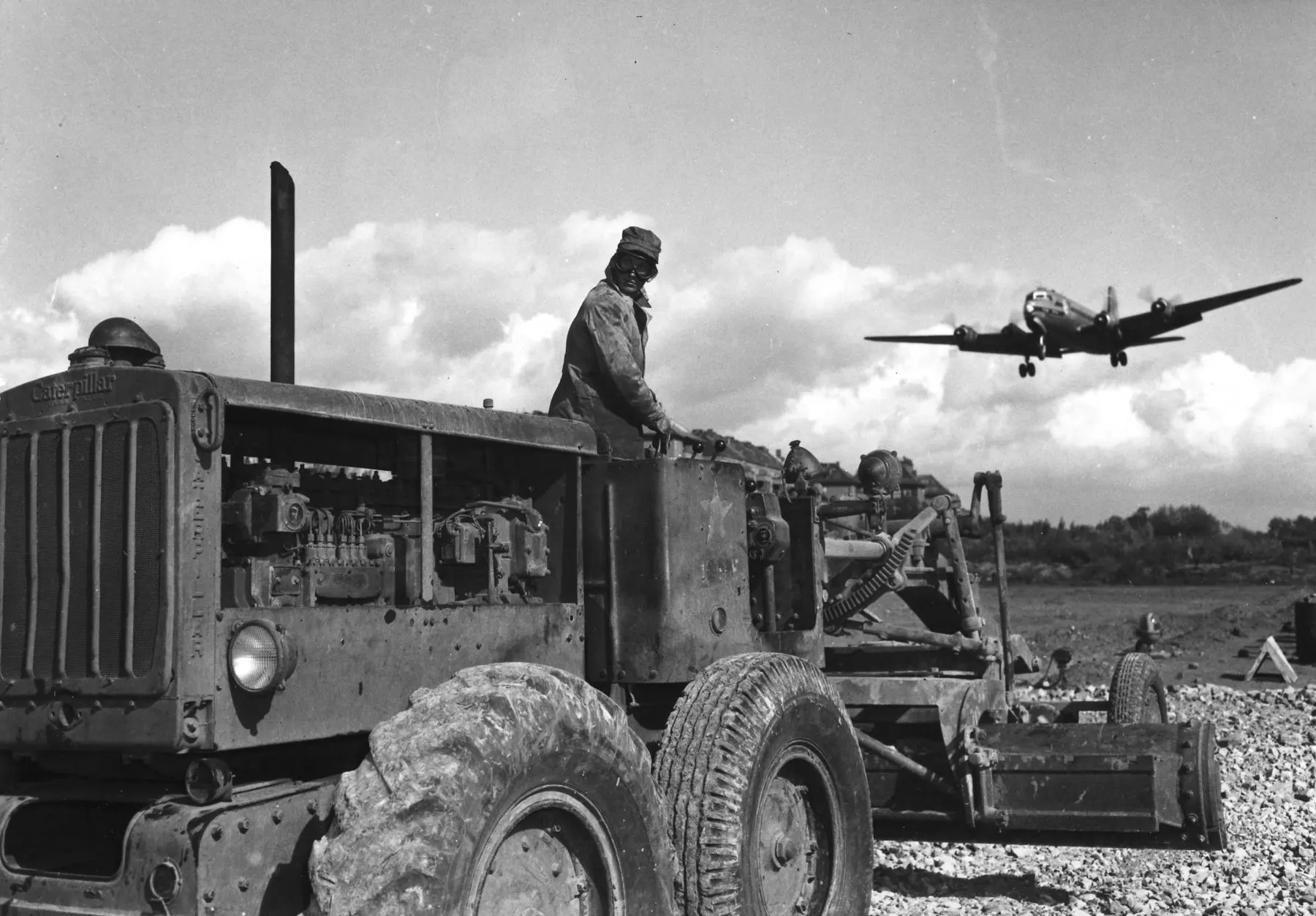
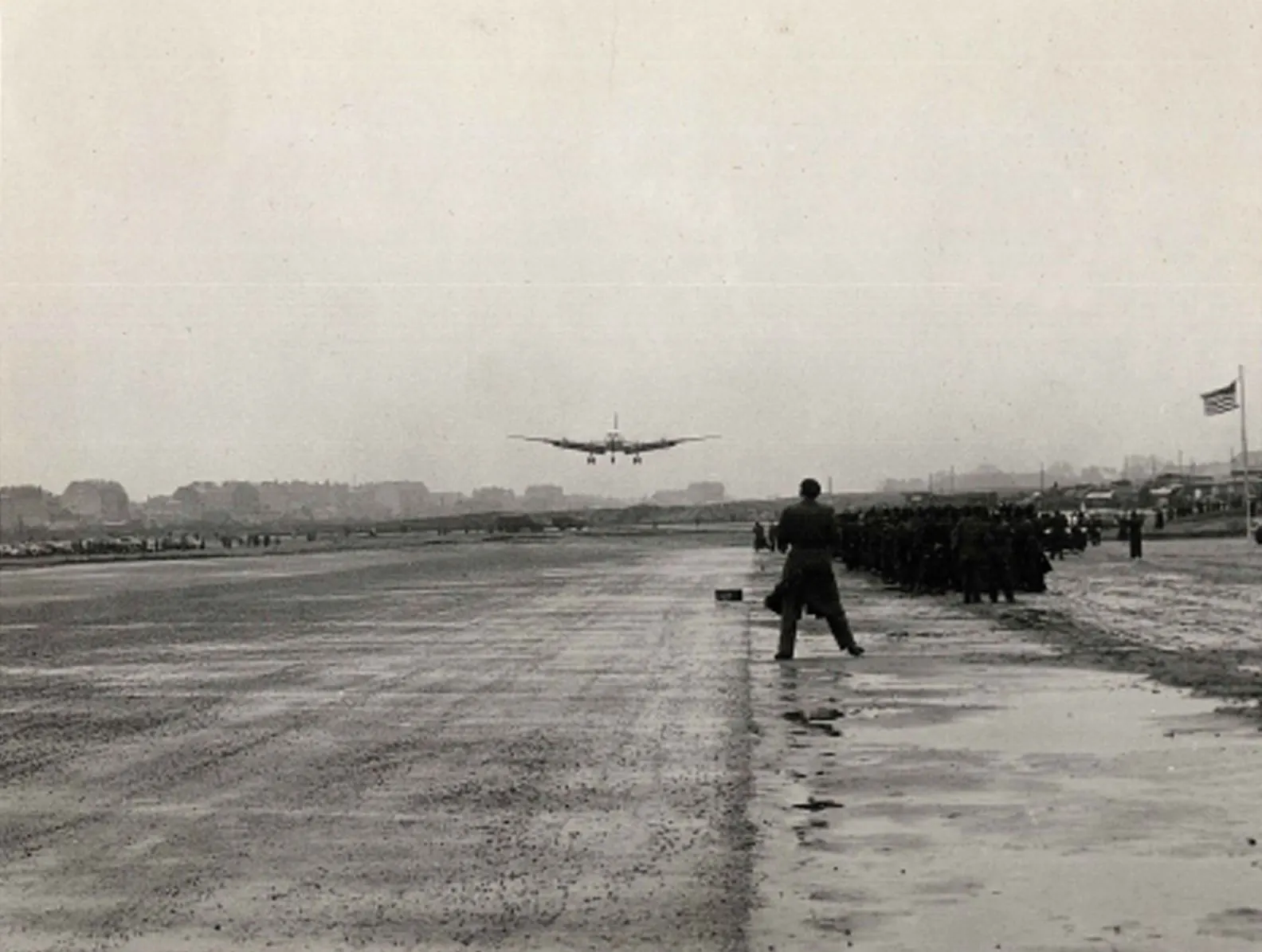
Coal made up most of the load, because a city without it had neither heat nor power. A U.S. Army tally based on German and Air Force records lists about 1.59 million short tons of coal and 538,000 of food in a total of roughly 2.33 million, and Britain carried about 23 percent of the tonnage. The peak came on April 16, 1949, the so-called Easter Parade, when 1,398 flights in 24 hours delivered close to 13,000 short tons, a loaded aircraft about every 62 seconds.
The airlift in numbers
- 2.3 million
- people in the Western sectors
- 2.33 million
- short tons delivered
- U.S. Army fact sheet total
- 555,370
- flights in and out
- Counted one way, so about 277,700 round trips
- 78 to 86
- deaths recorded
- The Tempelhof memorial names at least 78; the Army sheet gives 86
The blockade was still in force when the Western governments made their commitment formal. On April 4, 1949, 12 nations signed the North Atlantic Treaty in Washington and founded the North Atlantic Treaty Organization, or NATO. Each pledged to treat an attack on one member in Europe or North America as an attack on all.
One blockade, two accounts
Western powers
A city's civilians were being squeezed to force the Allies out, so feeding them by air defended both Berliners and the Western position in Germany without firing on anyone.
Soviet Union
The Western powers had broken the shared administration of Germany by merging their zones, planning a separate West German state and issuing a separate currency. Controlling access was a response to that split.
Moscow lifted the blockade in May 1949; sources give both May 11 and May 12. Flying went on to build reserves, with the last American flight on September 30 and the last Royal Air Force flight on October 6. Before those crews finished, the American monopoly on the bomb had ended. The Soviet Union tested its first atomic device in August 1949, and the Department of Energy's history notes how closely it resembled the American plutonium design, thanks to espionage.
North Korea crosses the parallel
April 1950 to July 1953
Kim Il Sung went to Moscow in secret in April 1950 to ask for a war. Stalin had refused him before. On this trip, by the account historians have drawn from Soviet records, he approved the attack on condition that South Korea could be overrun so quickly, in a matter of a few weeks, that the United States would have no time to save it. The scholars Kim Donggil and William Stueck read his reasons differently. Kim argues that Stalin planned from the start on a conflict that would draw in China, and that Chinese intervention was a precondition of his approval. Stueck argues that Stalin's insistence on a quick victory shows he hoped the Americans would stay out, with China held in reserve as a counterweight.
North Korea attacked on June 25, 1950. United Nations forces under American command entered the war, and China joined it that autumn. The fighting changed the Western alliance on the other side of the world. A planning paper known as NSC 68, written that year, had called for extending containment across the globe and for a large military buildup. NATO members moved to integrate their forces under a central headquarters, and on December 19, 1950, the North Atlantic Council appointed Gen. Dwight Eisenhower its first Supreme Allied Commander Europe.
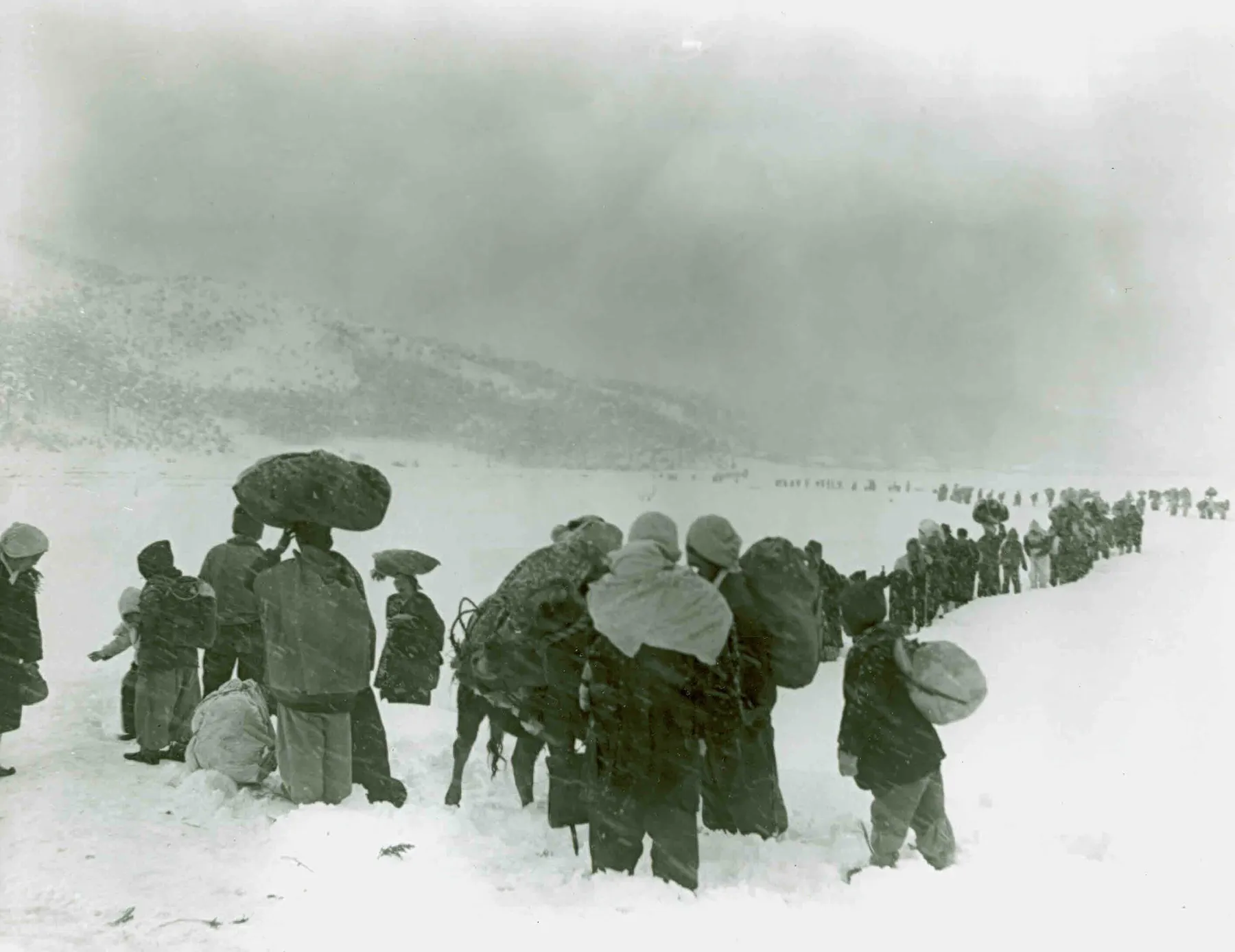
Fighting ended with an armistice at Panmunjom on July 27, 1953. The United States counts 36,574 deaths in the theater, 33,739 of them in battle, with 103,284 wounded. Britain's National Army Museum records more than 1,100 British dead, more than 110,000 Chinese killed and at least half a million killed or wounded in each of the North Korean and South Korean forces. China's official count, reported by its state media, is 197,653. The museum estimates about 2 million civilian deaths. Soviet pilots, among them the ace Nikolai Sutyagin, flew against Americans over the north, the closest the two powers came to open combat in the whole Cold War.
Many of the dead were killed far from any battle. South Korea's Truth and Reconciliation Commission verified 4,934 victims of the government's executions of suspected leftists in mid-1950, and the historian Kim Dong-choon estimates 60,000 to 110,000 dead. The commission also confirmed that North Korean occupation forces and southern leftists killed rightists, including police and officials, in lower numbers. American troops killed refugees at No Gun Ri, where survivors estimate about 400 died. American bombing devastated the North, and Gen. Curtis LeMay later said U.S. aircraft had burned down every town there.
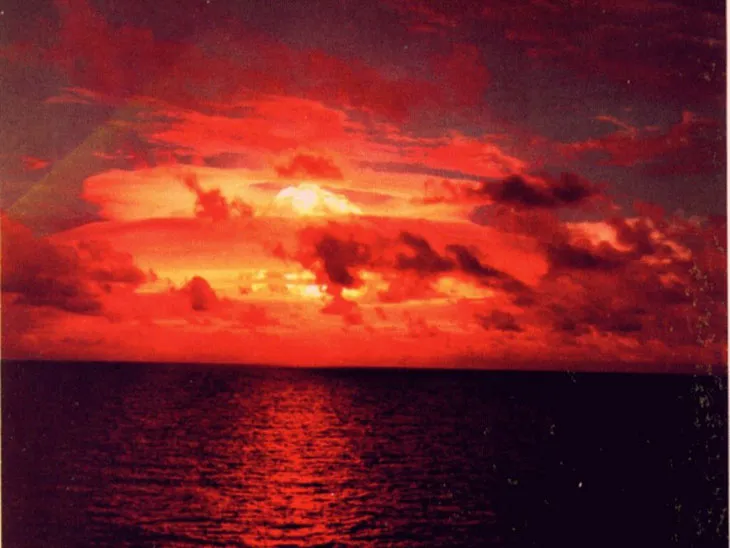
The hydrogen bomb arrived during the war. The United States exploded the first thermonuclear device on November 1, 1952, with a force equal to more than 10 million tons of TNT, and the Soviet Union tested its first true thermonuclear weapon in November 1955. Stalin died in March 1953, four months before the armistice. Less than two years after the armistice, his successors bound Eastern Europe into a formal military alliance.
Soviet tanks return to Budapest
May 1955 to June 1958
The treaty signed in Warsaw on May 14, 1955, gave its reason in its preamble. West Germany had joined NATO that month, 10 years after its defeat, and the Soviet Union and seven Eastern European states answered with a military alliance of their own.
“the participation of a remilitarized Western Germany and the integration of the latter in the North-Atlantic bloc, which increased the danger of another war”
The State Department's history lists what Moscow wanted from the pact: a counterweight to NATO, a way to contain a rearmed West Germany and a tighter hold on its neighbors' capitals. Marshal Ivan Konev took command of its forces. Members pledged mutual defense and noninterference in one another's affairs, and Hungary tested the second promise within 18 months.
- NATO members (East Germany lay east of the line)
- Soviet Union and Warsaw Pact
- Outside both alliances
Alliance membership after West Germany joined NATO and the Warsaw Pact formed. Modern borders are shown, so Germany appears whole and several Soviet republics appear as today's states. The dashed line is a schematic of the Iron Curtain, including the inner German border.
On October 23, 1956, crowds gathered in front of the Parliament in Budapest. Demonstrators brought down the giant statue of Stalin that same day, and its head ended up in the street. Within days Hungary had a revolution, with Imre Nagy, a reform communist, at the head of the government.
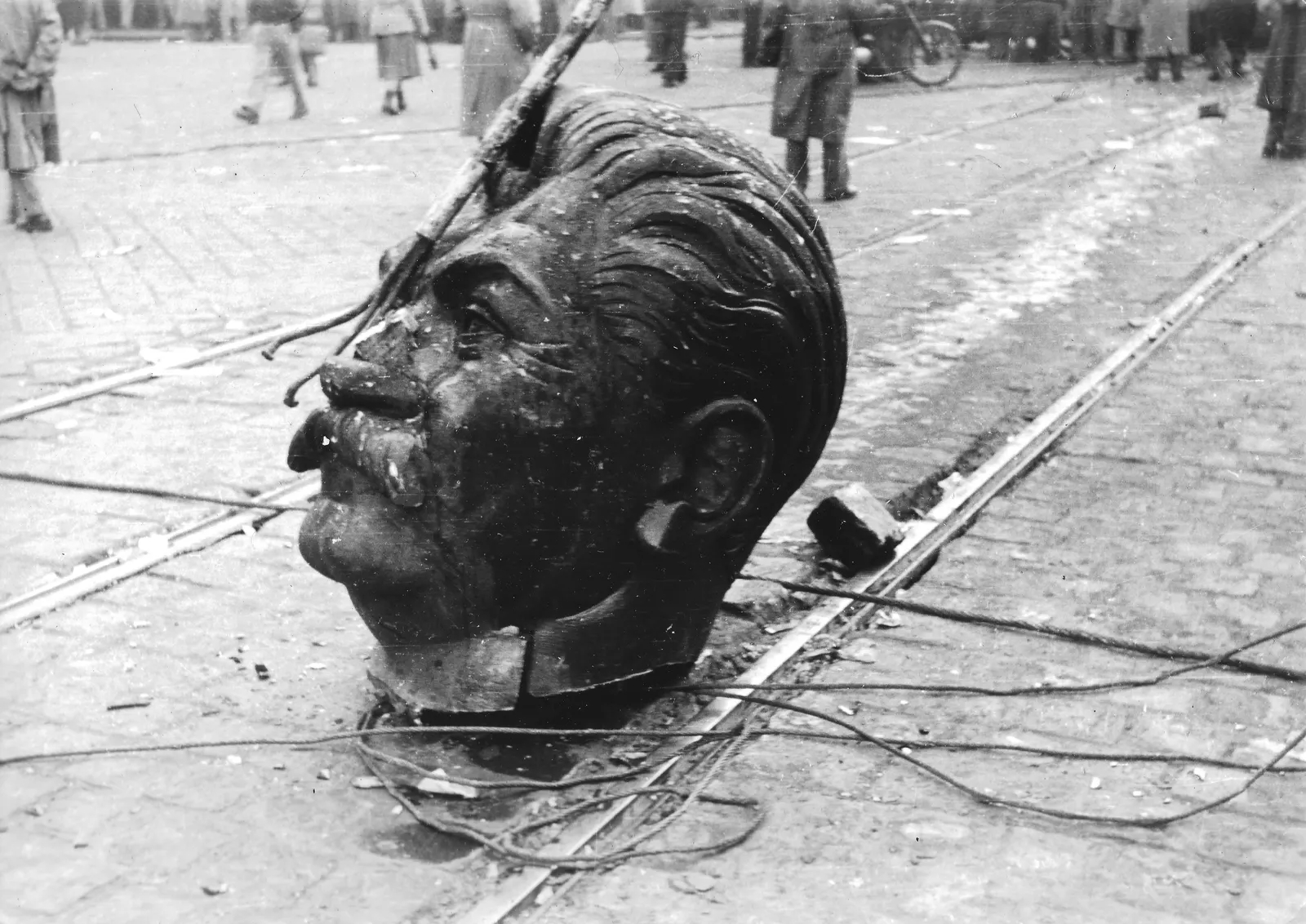
For a moment Moscow seemed ready to bend. On October 31 the party newspaper Pravda printed a declaration promising more equal relations with its allies and saying the Soviet government was prepared to negotiate over its troops in Hungary. That same day, according to documents published by the National Security Archive, the leadership reversed itself and decided to crush the revolt. The Archive lists four concerns behind the reversal. The uprising threatened communist rule in Hungary itself. The West, already watching the Suez attack that began on October 29, could read restraint as weakness. Anticommunist feeling might spread to neighboring states. And Soviet party members might not understand a failure to use force. On November 1 Nagy declared that Hungary was leaving the Warsaw Pact and appealed to the United Nations to recognize its neutrality.
The attack came at 4:15 a.m. on November 4. An hour later Nagy went on the radio for 35 seconds.
“Our troops are fighting. The Government is in its place.”
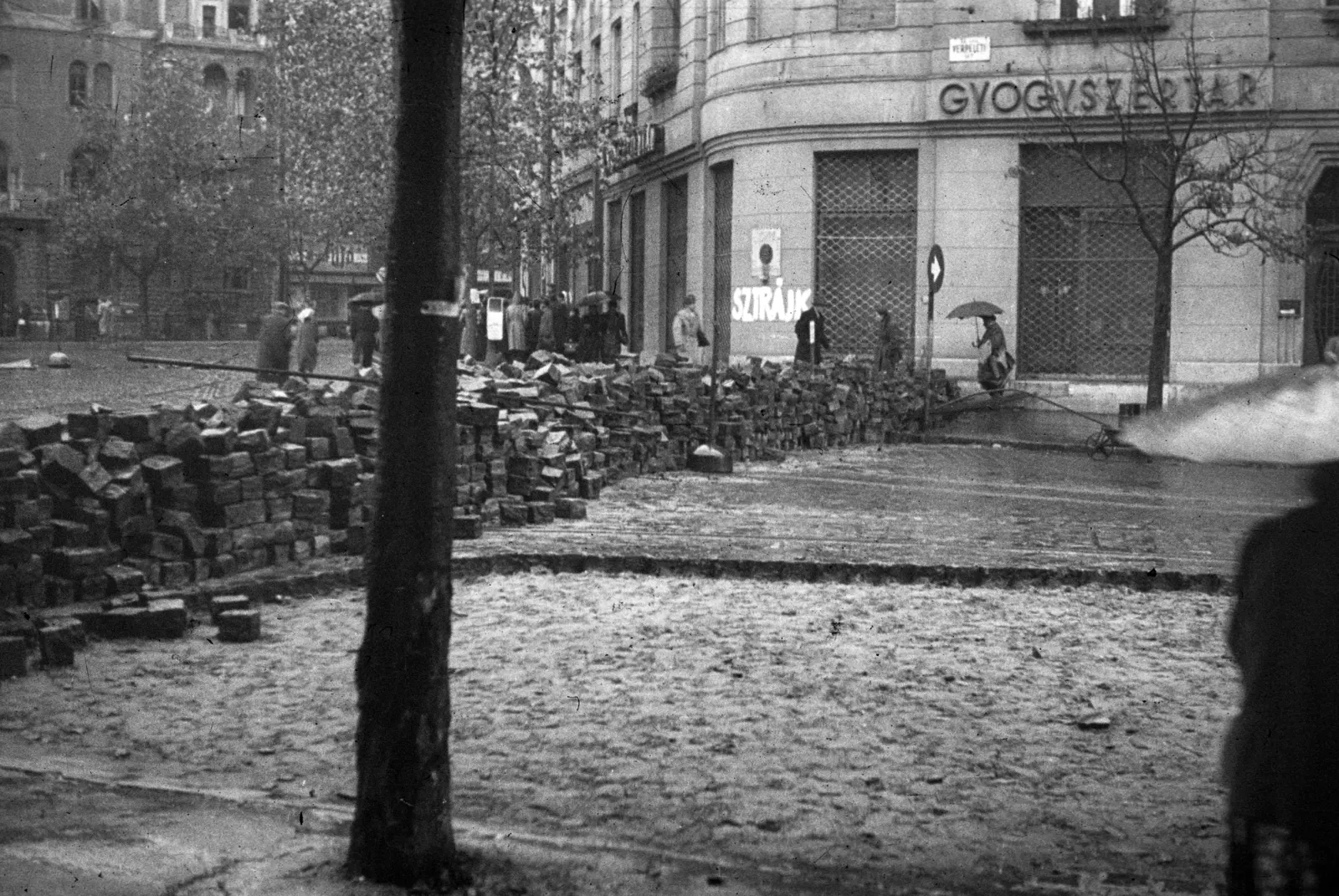
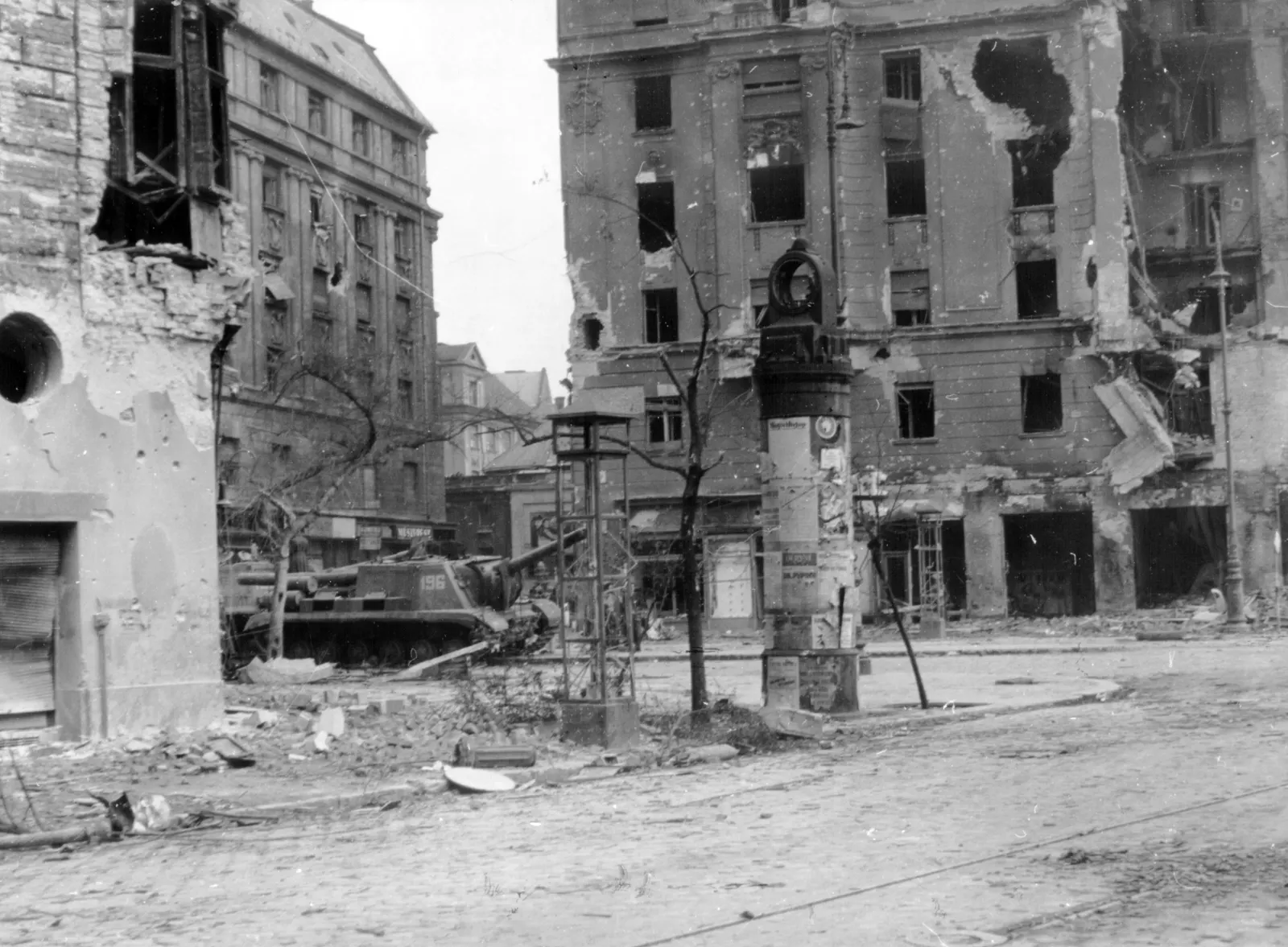
Within hours Nagy had taken refuge in the Yugoslav Embassy. Janos Kadar, flown in from Moscow by way of Szolnok, took the oath on November 7, and armed resistance in the capital ended on November 11. The Heinrich Boell Foundation's account puts Hungarian dead at about 2,500, mostly insurgents and civilians, with people under 30 making up about half the casualties, and Soviet dead at about 700. The United States condemned the invasion and did not use force inside the Soviet sphere, a limit that critics in Eastern Europe noted and that American officials defended as the price of avoiding a larger war.
Hungarians and their rulers did not even agree on what to call it. The country's statistical office today titles its summary the Revolution and Freedom Fight of 1956. In 1957 a party newspaper reported the official count of dead and wounded under the heading of the counter-revolution, the term the Kadar government used. Refugee figures shift with the date: the Hungarian Central Statistical Office counted about 150,000 people gone by the end of 1956, and later accounts generally say about 200,000.
The reprisals ran for years. The new government convicted about 22,000 people, imprisoned about 13,000 and executed at least 200. Nagy left the Yugoslav Embassy on November 22 after being promised safe passage, and Soviet security officers arrested him. In June 1958 the Hungarian Ministry of Justice announced that he and three close associates had been tried in secret and executed.
East Germany seals Berlin
November 1958 to October 1961
Five months after Nagy's execution was announced, Nikita Khrushchev turned to Berlin. On November 27, 1958, a Soviet note gave the Western powers six months to leave Berlin, whose Western sectors were to become a free, demilitarized city. The Western capitals disagreed about how to respond but agreed that withdrawing their troops was out of the question. The deadline passed without a settlement, and foreign ministers at Geneva in 1959 and a summit in Paris in 1960 failed to produce one.
Behind the note lay a loss East Germany could not sustain. The historian Hans-Hermann Hertle counts about 3.5 million people who fled the Soviet zone and the German Democratic Republic, or GDR, for the West between 1945 and 1961. The Berlin Wall Foundation counts at least 4 million who left between 1949 and 1989, close to a sixth of the population. The GDR had closed its frontier with West Germany in 1952, which left the open sector boundary in Berlin as the main way out.
Khrushchev and President John Kennedy met at Vienna on June 3 and 4, 1961, and the talks worsened relations. In July Khrushchev agreed to the barrier he had earlier rejected. In the early hours of Sunday, August 13, the ruling Socialist Unity Party, known by its German initials SED, closed the border. Erich Honecker, a member of the ruling Politburo, oversaw the operation, reportedly counting on a summer weekend to keep East Berliners off guard. More than 10,000 police and border troops went to work with several thousand members of the Kampfgruppen, the workers' militia. More than 7,000 soldiers of the National People's Army and several hundred tanks stood behind them, and Soviet forces formed a further ring around the city. Crossings shrank to 13 checkpoints. Barbed wire came first, and walls followed within days.
- Today's Germany
A simplified outline of West Berlin's boundary, which ran about 155 kilometers, or 96 miles. Modern national borders are shown; the line itself no longer exists and is drawn from approximate points, not survey data.
Over the years the barrier grew into a system of fence, brightly lit strip with dog runs, a second inner wall added in the 1970s and watchtowers about 250 meters apart. Border soldiers served under standing orders that allowed them to shoot, a practice the Foundation dates from 1952 until it was lifted in April 1989. West Berlin police recorded 5,075 successful escapes across the Wall and the strip, 574 of them desertions, and 1,709 shots fired at people trying to cross, wounding at least 119.
The count at the Berlin Wall, 1961 to 1989
- 140
- dead, at minimum
- Foundation and Center for Contemporary History research, revised 2017
- 101
- people trying to flee
- Shot, killed in accidents or dead by suicide
- 31
- others not fleeing
- 30 people from East and West and one Soviet soldier
- 8
- East German border soldiers
- Killed by deserters, comrades, a refugee, an escape helper or a West Berlin policeman
- 251
- deaths at crossing checkpoints
- Counted separately, not among the 140
A diplomat stopped at the line
Ten weeks after the border closed, an American diplomat set out for the opera. On the evening of October 22, 1961, Allan Lightner Jr., the senior State Department official at the U.S. mission in West Berlin, drove to the crossing on Friedrichstrasse on his way to a performance in the eastern half of the city. East German border police stopped his car and asked for identification. Lightner refused, because showing papers would concede that East Germany, and not the Soviet Union, controlled movement through a city still formally under four-power occupation. He sat at the line for nearly two hours and finally went through with an escort of two jeeps and eight armed American military policemen.
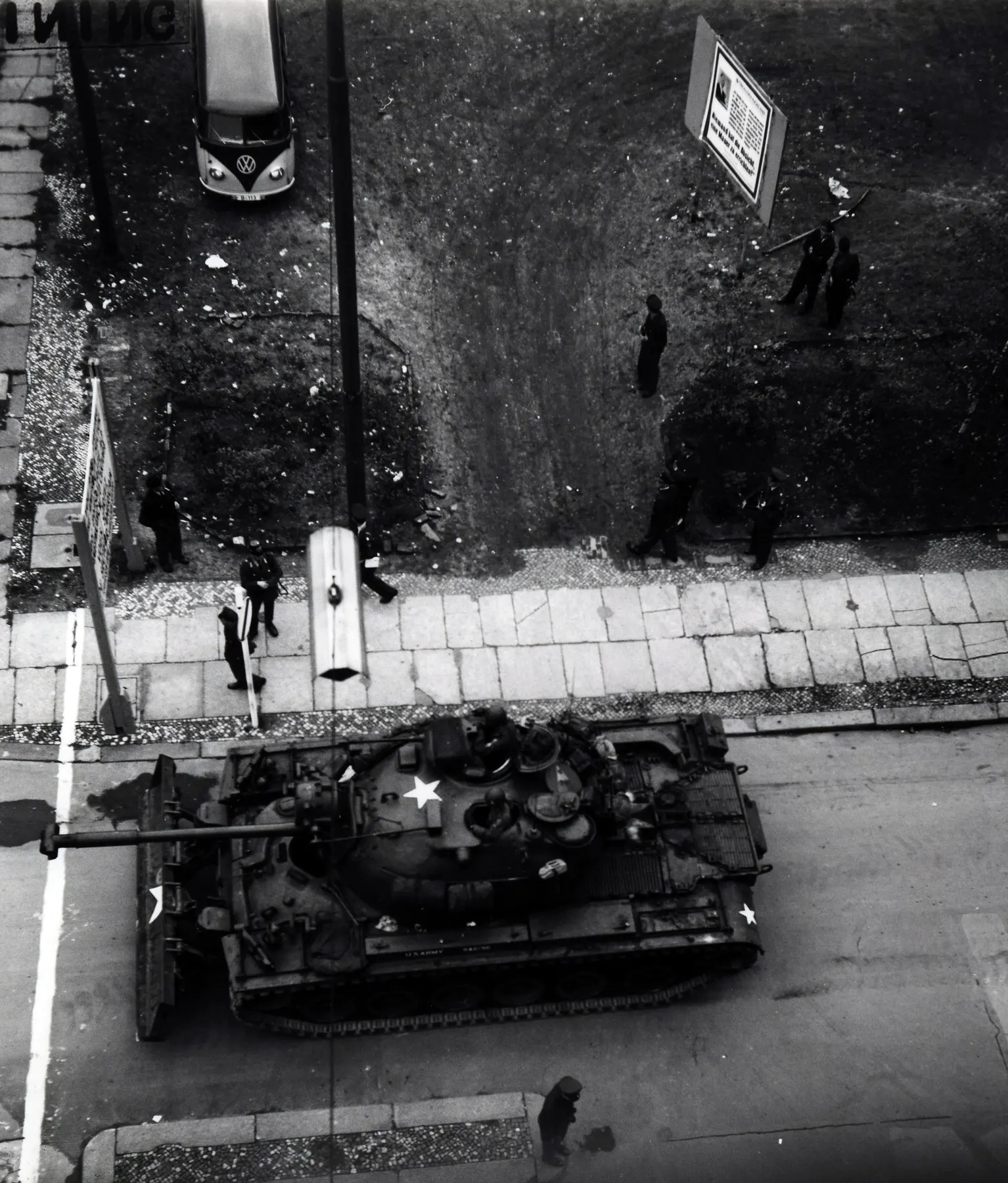
The scene repeated on October 23 and 24. On October 25 the Americans sent 10 tanks, three of them up to the border and seven to positions on either side of the street beside the Wall. They left that evening and came back the following afternoon for about an hour. The U.S. Army's account records 10 M-48A1 tanks and three M-59 armored personnel carriers moved to the crossing on October 26, at a post normally manned only by military police.
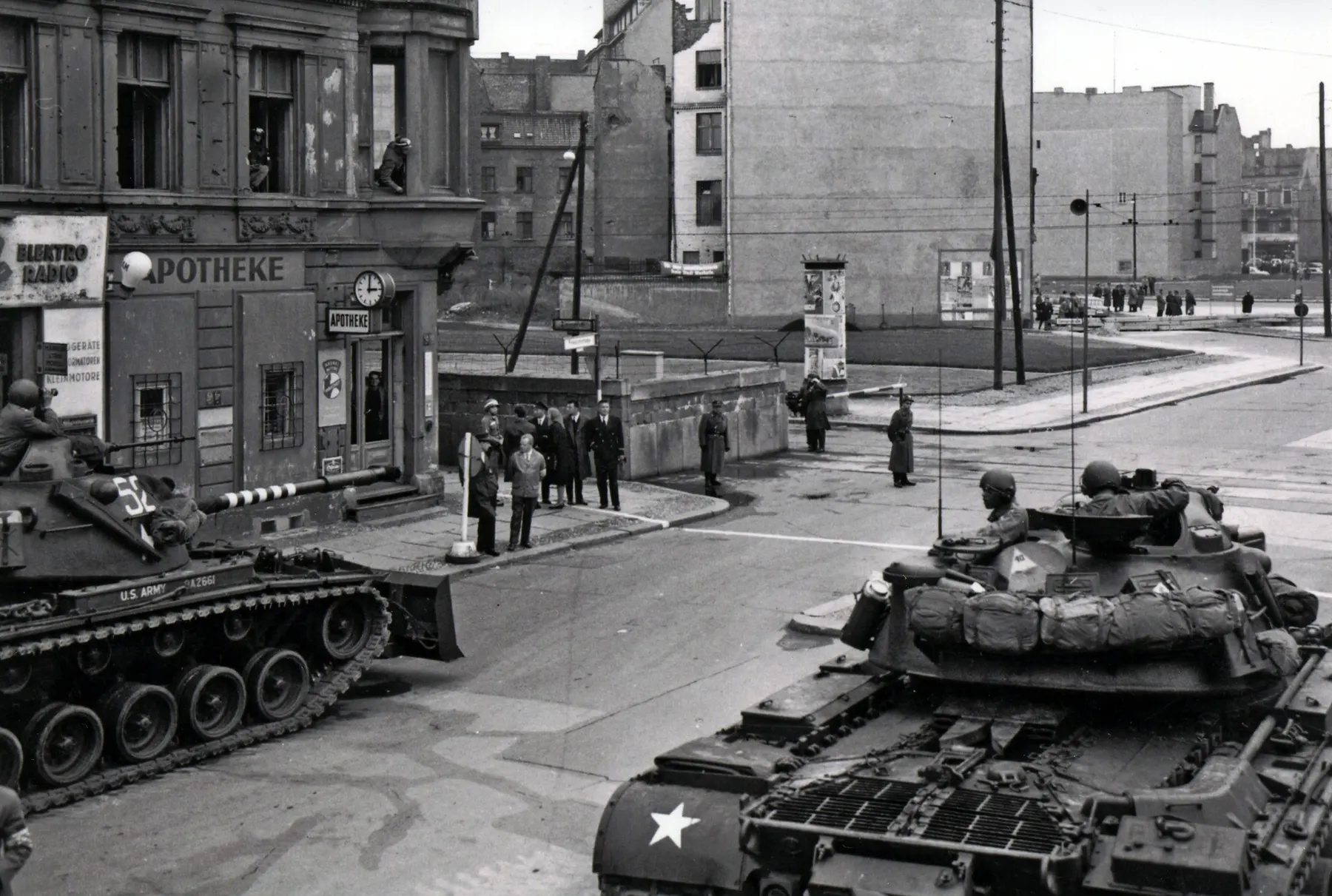
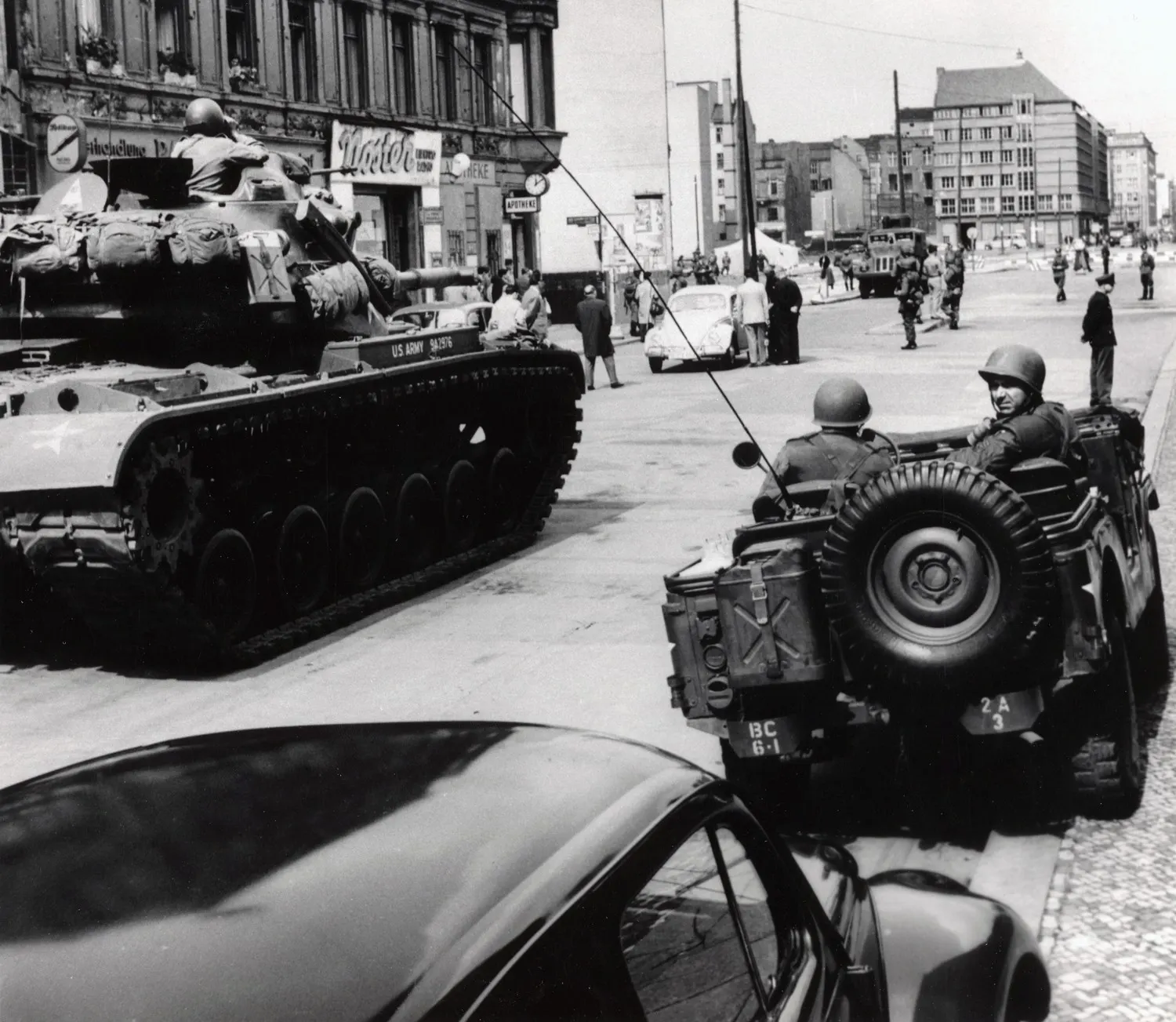
On October 27, 10 Soviet tanks appeared on the eastern side, the first time Moscow's armor had shown itself openly in the dispute. They pulled back after a few minutes, the American tanks returned and so did the Soviet ones. Shortly after 6 p.m., according to the Berlin Wall Foundation, the two lines settled into place facing each other. The Army's history puts them barely 100 yards apart, main guns trained across the white line painted on the pavement, with reporters and hundreds of onlookers watching from the Western side.
What each side thought it was defending
United States
Allied personnel had a right to move through all of Berlin under the occupation arrangements. Gen. Lucius Clay, back in the city as President Kennedy's envoy, and Maj. Gen. Albert Watson, the U.S. commander there, treated the document checks as an attempt to wear that right away.
East Germany and the Soviet Union
The GDR called the Wall the Anti-Fascist Protection Rampart and held that controlling its frontier was a sovereign state's right. Moscow's tanks answered American tanks at the edge of its sector, and withdrawing first, after private contact, closed the episode without giving up the Wall.
The Foundation says the standoff lasted about 16 hours and the Army says more than 24. Both agree that the Soviet tanks moved off on the morning of October 28 and the American tanks followed shortly after, and that no shot was fired. The Allied Museum in Berlin credits secret channels between Washington and Moscow with defusing it. A year later the two governments again settled a crisis through private contacts, over Cuba.
Soviet missiles reach Cuba
July to December 1962
In July 1962 Nikita Khrushchev and Fidel Castro reached a secret agreement to place Soviet nuclear missiles in Cuba. The State Department's history gives the purpose as deterring another attempt to invade the island, which Cuban exiles trained by the United States had tried at the Bay of Pigs the year before. By late October almost 43,000 Soviet troops were on the island. On October 14 an American U-2 reconnaissance aircraft photographed sites under construction for medium-range and intermediate-range missiles, and the next day the pictures reached the White House.
President Kennedy and his advisers argued for a week over an air strike. He chose a naval quarantine over an immediate strike and announced it on television on October 22. The crisis peaked on October 26 and 27. In a long private message on the evening of the 26th, Khrushchev proposed a way out.
“we and you ought not now to pull on the ends of the rope in which you have tied the knot of war”
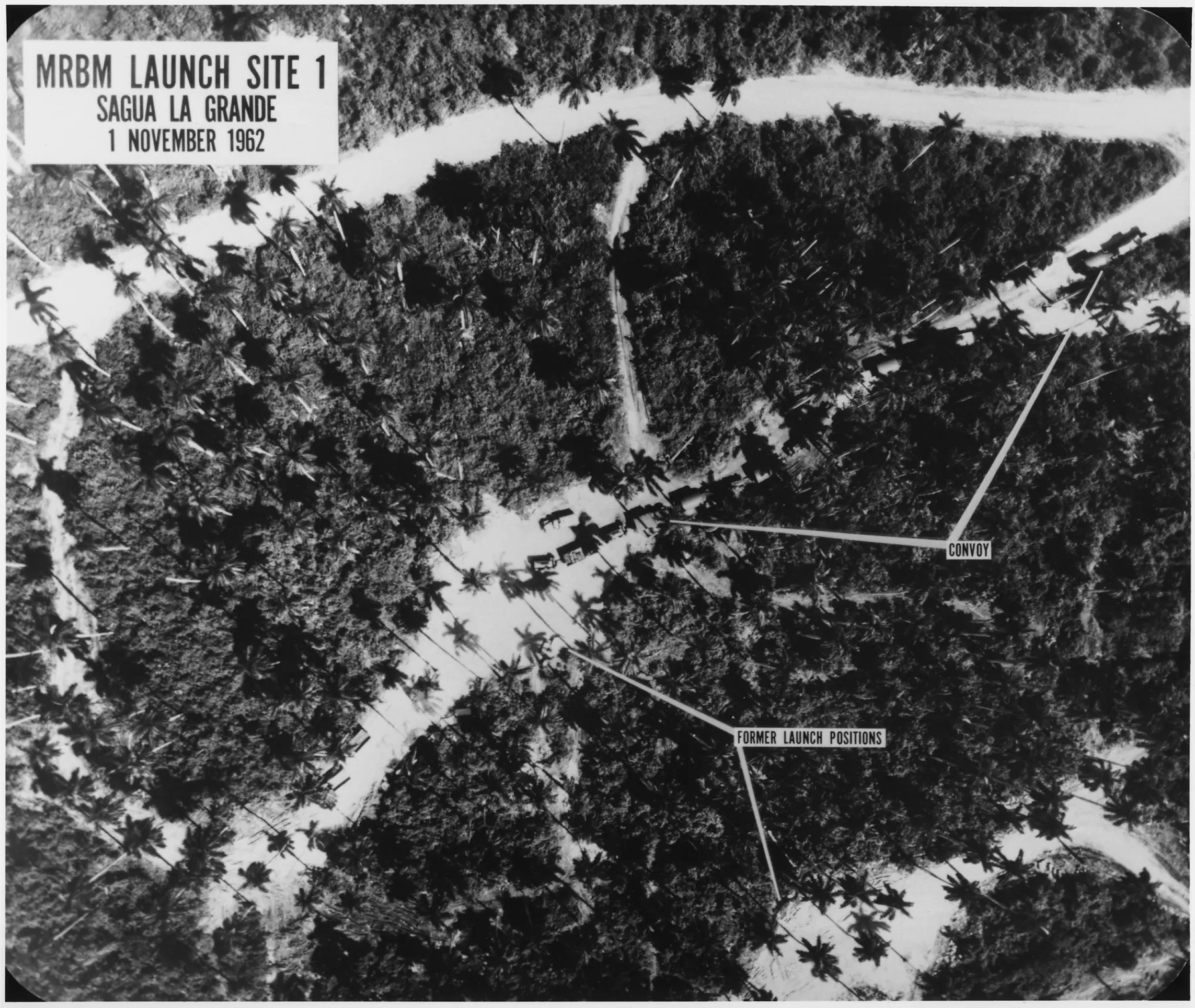
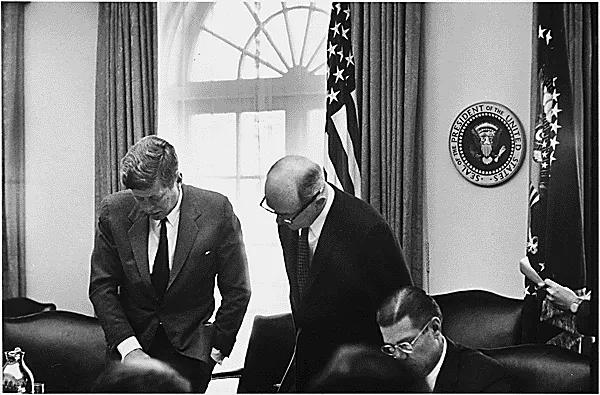
A second message the next day demanded the removal of American Jupiter missiles from Turkey, and a U-2 was shot down over Cuba the same day. Kennedy answered the first message. Through his brother Robert he told Soviet Ambassador Anatoly Dobrynin privately that the Jupiters would go, though not as part of any public bargain. On October 28 Khrushchev announced that the missiles would be dismantled. The quarantine ended on November 20 after Moscow agreed to remove its Il-28 bombers too, and the Jupiters left Turkey in April 1963.
Washington had seen only part of what was on the island. Soviet documents published by the National Security Archive show that Moscow had also sent 98 tactical nuclear warheads, 80 of them for cruise missiles, 12 for Luna launchers and six for Il-28 bombers. U.S. intelligence detected none of them during the crisis. They stayed in Cuba for 59 days, and the last left on December 1, 1962.
Prague under Warsaw Pact occupation
January 1968 to April 1969
The next challenge to Moscow in Eastern Europe came from inside a ruling party. In early 1968 Alexander Dubcek replaced Antonin Novotny as head of the Czechoslovak Communist Party, and his government ended censorship. A reform program followed in April. By its own account it stayed within Marxism-Leninism, and Czechoslovak reformers argued that they were improving socialism. Moscow and several neighboring governments saw a threat to communist rule across the alliance.
Just before midnight on August 20, forces from the Soviet Union, Poland, Hungary and Bulgaria crossed the frontier, while two East German divisions waited in reserve. Radio Prague's history puts them at about 250,000 soldiers, and larger figures also circulate. At 1:55 a.m. on August 21, Czechoslovak Radio began reading the party leadership's statement on the invasion. Unarmed people gathered at the radio building in central Prague and built barricades from trams and buses, and 17 people died there.
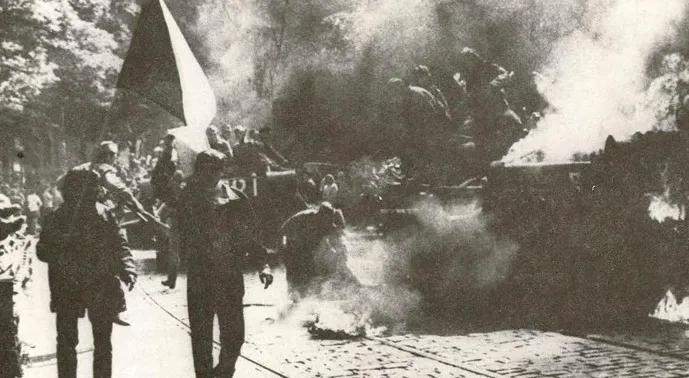
Dubcek and other leaders were arrested and flown to Moscow. All but one of them signed the Moscow Protocol, agreeing to restore censorship and suppress opposition, and Dubcek was forced from power in April 1969. The justification offered in Moscow, later known as the Brezhnev Doctrine, held that the Soviet Union could intervene wherever a communist government was threatened. The promise of noninterference in the Warsaw Treaty had now failed twice.
- Hungarians, 1956about 2,500
- Soviet soldiers, Hungary 1956about 700
- Inner German borderat least 260
- Berlin Wallat least 140
- Czechoslovaks, 1968up to 137
- Warsaw Pact soldiers, 1968116
Deaths only, by scope. Each bar counts a different thing, and several are minimums. Soviet dead in Hungary are soldiers; other Hungarian dead are chiefly insurgents and civilians. Source: Heinrich Boell Foundation; Radio Prague; Berlin Wall Foundation.
The count of the dead depends on who is counted and until when. The Czech Institute for the Study of Totalitarian Regimes gives 108 deaths through the end of 1968, with about 500 seriously injured. The historians Prokop Tomek and Ivan Pejcoch, using newly found archive material, put the 1968 figure at 137, and at more than 400 killed by occupying troops before they left in 1991. A Slovak newspaper reported that 116 Warsaw Pact soldiers died on Czechoslovak soil, the great majority in traffic accidents or weapons mishaps.
1956 and 1968, as each side described them
Hungarian insurgents and Czechoslovak reformers
Hungarians demanded national independence and an end to one-party repression. Czechoslovak reformers wanted a better socialism inside the alliance. Both found that the treaty's promise of noninterference did not protect them.
Moscow and its allies
Socialist governments were under threat from counter-revolution and hostile outside influence, and allies had a duty to protect the common system and the security of the bloc.
Moscow had guessed correctly, the State Department's history says, that the United States would condemn the invasion and stay out. The invasion did cost Moscow a meeting. President Lyndon Johnson put on hold a planned, unannounced summit with Soviet leaders in Leningrad, and arms talks between the two powers waited until the following year.
Arms talks during the buildup
November 1969 to December 1983
American and Soviet delegations opened the Strategic Arms Limitation Talks, known as SALT, in Helsinki in November 1969. They met to cap arsenals that were still growing. The United States had two warheads in 1945, more than 18,000 in 1960 and its highest total, 31,255, in 1967. The Soviet Union began later and climbed for longer, passing the American total by 1980 and peaking at about 40,159 in 1986. About 125,000 warheads have been built since 1945, some 97 percent of them by these two countries.
- U.S., 1950299
- USSR, 19505
- U.S., 196018,638
- USSR, 19601,627
- U.S., 197026,008
- USSR, 197011,736
- U.S., 198024,104
- USSR, 198030,665
- U.S., 198623,317
- USSR, 198640,159
- U.S., 199119,008
- USSR, 199129,154
Estimated total stockpiles. The dataset labels the Soviet Union as Russia throughout. Soviet numbers are estimates. Source: Our World in Data, nuclear warhead stockpiles.
The talks produced the Anti-Ballistic Missile Treaty and an interim agreement on offensive arms, both signed in Moscow on May 26, 1972. The treaty held each side to 200 interceptors at two sites, one protecting the capital and one protecting a field of intercontinental missiles. At Vladivostok in 1974 the two leaderships sketched ceilings of 2,400 delivery vehicles per side, 1,320 of them with multiple warheads. SALT II, signed in Vienna in June 1979, capped delivery vehicles at 2,250 per side. President Jimmy Carter withdrew it from Senate consideration after the invasion of Afghanistan, though both governments said they would observe it, and Washington stayed in technical compliance until late 1986.
On August 1, 1975, leaders of 35 nations, including every European state except Albania and Andorra, signed the Helsinki Final Act. Moscow had sought Western acceptance of Europe's postwar borders since 1954, and it got that. In return it accepted a section on emigration, family reunification, cultural exchange and press freedom. Dissidents in the East formed groups to hold their own governments to those words, and critics in the West complained that the agreement accepted Soviet control of Estonia, Latvia and Lithuania.
The inner German border
The frontier those agreements accepted stayed armed. Most of the line between the two German states ran through farmland and forest, and in the early 1950s the GDR had created a 500-meter protective strip and a restricted zone about 5 kilometers deep along it. The Point Alpha memorial foundation records that about 11,000 people were expelled from the zone and resettled by force, with some farms cleared and destroyed. By April 1962 the frontier carried more than 614 kilometers of minefields, and in the early 1970s fragmentation devices designed to fire automatically were fixed to the metal fence, where they caused serious and often fatal wounds. Honecker announced their removal in October 1983, and they were gone by the end of 1984. A signal fence stood about 500 meters inland.
Nobody has an exact toll for that line. The Berlin Wall Foundation cites at least 260 deaths at the inner German border, notes that a Free University of Berlin study counted 327 under a method others dispute, and gives its own broader estimate of about 650 victims of the whole border regime, including people lost in the Baltic Sea.
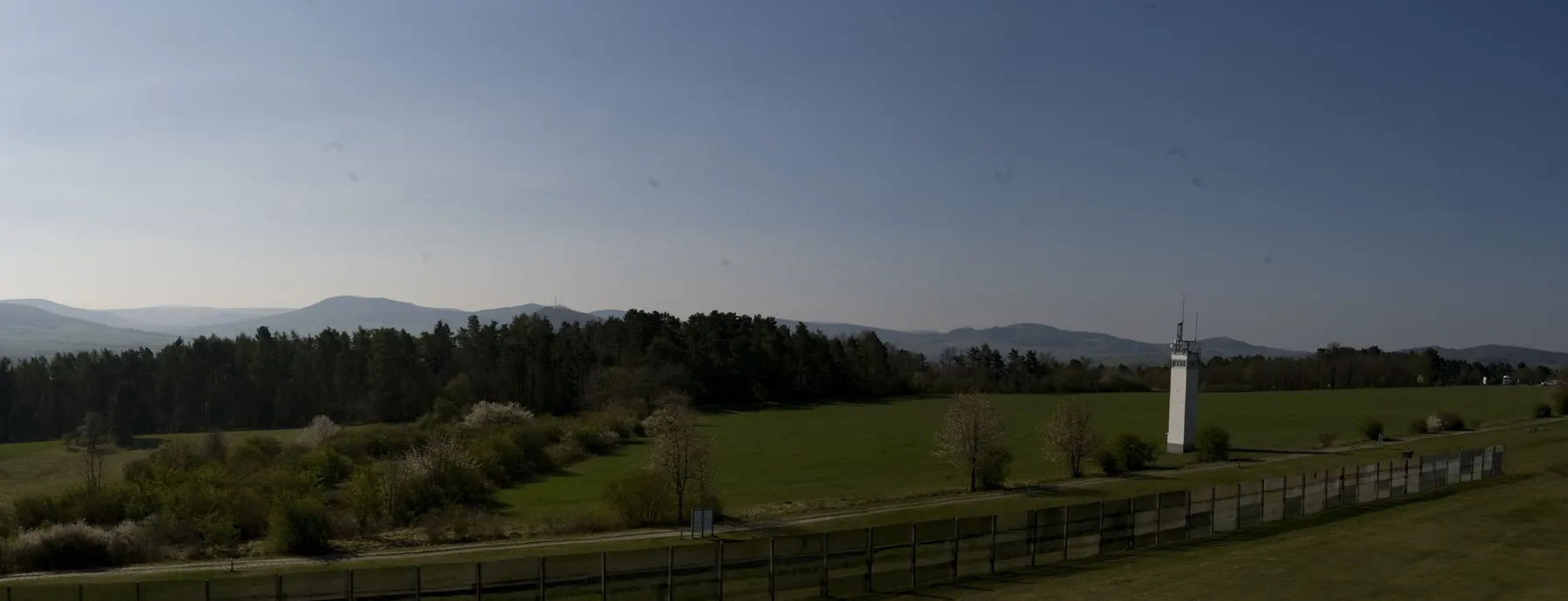
NATO's planners concentrated on the Fulda Gap, a corridor through the hills of Hesse that a U.S. Army account calls the most likely point of entry into West Germany for Warsaw Pact forces. Overlooking part of it, American soldiers manned Observation Post Alpha, where they could watch East German guards a few hundred meters away who watched them in return. The last patrol there took place in 1990.
- Today's Germany
- Warsaw Pact neighbors
- NATO neighbors
Today's Germany is shown whole. The line is a simplified trace of the former border between the two German states, and Berlin lay well inside East Germany.
The Pentagon's annual booklet Soviet Military Power reported in 1984 that the Warsaw Pact fielded 249 combat divisions, 55 of them from the non-Soviet members, and that more than 1,400 T-80 tanks had been deployed opposite NATO. It said modern T-64, T-72 and T-80 models made up about half the tanks facing NATO's central region.
REFORGER
American strength in Europe had hit a high of more than 450,000 troops in 1957, and in 1968 the United States pulled about 28,000 military personnel out of Germany. To reassure allies it adopted dual basing under a 1967 agreement with Britain and West Germany, which kept troops based in America committed to Europe and required them to rehearse coming back. REFORGER, short for Return of Forces to Germany, began in January 1969, when more than 12,000 soldiers flew over and drew equipment stored in advance.
Each exercise ran in three phases, according to the Congressional Research Service: units arrived and collected their stored vehicles, trained in the field with allied forces, then cleaned and stored the equipment and flew home. Women took part for the first time in 1977. American strength in Europe stood at nearly 350,000 in 1987, and REFORGER peaked the following year, when 125,000 troops deployed.
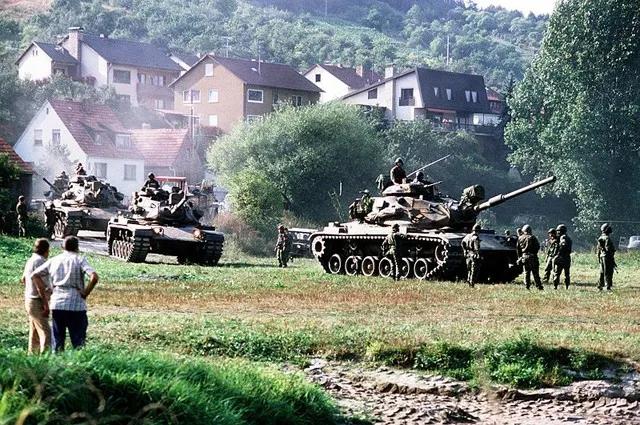
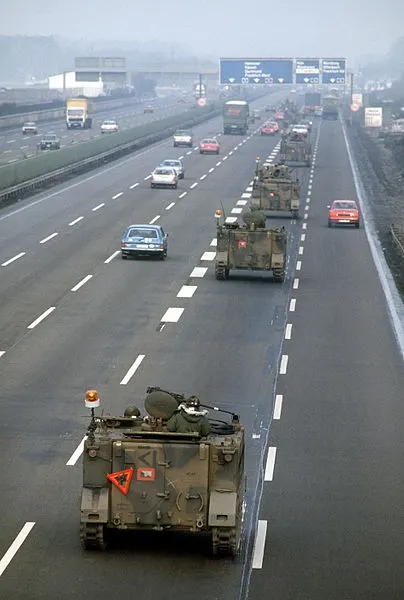
Armored columns moved through villages and across fields, and governments paid for the damage. Public opposition in Europe grew over the disruption and harm to the land, and rising costs drew more attention in Washington. A 1990 review by the General Accounting Office described tighter limits on free maneuver and fewer American troops, with more training of commanders and staffs by simulation. The last REFORGER took place in 1993.
New missiles and Able Archer
In March 1976 the Soviet Union began fielding the SS-20, a mobile missile that could carry three warheads and reach targets up to about 5,000 kilometers away. NATO answered in 1979 with a dual-track decision to negotiate while preparing to deploy new American weapons, and Pershing II missiles reached initial operational capability in Europe in December 1983.
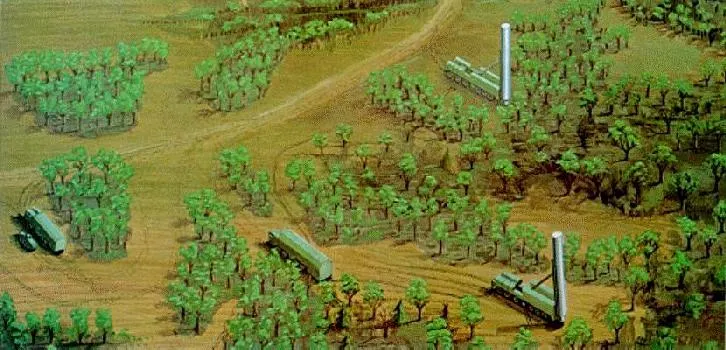
That autumn, with the missile dispute at its height, NATO ran Able Archer 83, a command drill simulating the step from conventional war to nuclear release, as part of its larger Autumn Forge maneuvers. New features that November included a radio-silent airlift of 19,000 American soldiers, a move to an alternate war headquarters and new release procedures.
A 1990 report by the President's Foreign Intelligence Advisory Board, declassified in 2015, described the Soviet response. More than 36 intelligence flights went out over the Norwegian, North, Baltic and Barents seas. Nuclear weapons moved from storage to delivery units by helicopter. Flights other than intelligence missions were suspended for about a week, from around November 4 to 10, apparently to have as many aircraft as possible ready. Lt. Gen. Leonard Perroots, the American general on the spot, chose not to raise alert levels in response, a decision the board called fortuitous, if ill-informed.
“may have inadvertently placed our relations with the Soviet Union on a hair trigger”
American intelligence had read the same events more calmly at the time. The 1990 report traced Soviet alarm back to 1981, through the forward deployment of nuclear-capable aircraft and artillery, briefings that told East European allies the world stood near the brink and a leadership letter, read at party meetings, declaring the homeland in danger. A 1984 estimate discounted all of it, and the State Department's intelligence bureau also doubted the alarm was real.
“We believe strongly that Soviet actions are not inspired by, and Soviet leaders do not perceive, a genuine danger of imminent conflict or confrontation with the United States.”
Others in Washington were less sure. In June 1984 William Casey, director of the Central Intelligence Agency (CIA), sent President Ronald Reagan a memo describing a rather stunning array of indicators that lent a dimension of genuineness to Soviet concerns. Reagan called the events really scary. His journal entry for November 18, 1983, had already recorded his sense that the Soviets were so paranoid about being attacked that Washington should tell them it had no such intention.
Far from the Central Front
1953 to 1989
A CIA internal history states that the agency planned and helped carry out the 1953 coup against Prime Minister Mohammad Mosaddeq of Iran. The next year a CIA operation helped drive President Jacobo Arbenz from power in Guatemala. Outside Europe the rivalry attached itself to civil wars, independence struggles and local feuds that had causes of their own, and both superpowers paid for the side they preferred.
In Chile, the Senate's Church Committee found American covert involvement from 1963 to 1973 extensive and continuous, aimed first at keeping Salvador Allende from the presidency and then at undermining his elected government before the 1973 coup. In Indonesia, U.S. officials supported the army as it and its allies killed up to 500,000 alleged Communist Party supporters between October 1965 and March 1966, according to embassy records published by the National Security Archive. The war in Vietnam, the largest of these conflicts for the United States, has its own history on this site.
Moscow and its partners fought the same contest with arms and advisers. In 1975, as Portugal left Angola, three movements fought for control. The Soviet Union trained and equipped the Marxist Popular Movement for the Liberation of Angola, or MPLA, and Cuba sent forces. The United States gave aid and training to the National Front for the Liberation of Angola, or FNLA, and the National Union for the Total Independence of Angola, or UNITA. China sent instructors to the FNLA, and South Africa's apartheid government sent troops into the south in October. Independence came on November 11 with the war already under way.
The historian Paul Thomas Chamberlin, in The Cold War's Killing Fields, argues that the long peace of the Cold War looked very different from Asia and the Middle East. Reviewers of his book report a toll of about 14 million in one account and more than 20 million in another. The Nation's summary of his work says seven of every 10 people killed in violent conflict between 1945 and 1990 died in a belt running from Lebanon through South and Southeast Asia to Korea. The superpowers did not start all of those wars, and the totals depend heavily on which wars are counted.
- South Korea, backed by the U.S. and UN
- North Korea and China in the Korean War
- Afghanistan, Soviet war 1979 to 1989
- Indochina wars
Modern borders are shown. Vietnam has its own history page on this site. Colors show the main alignments during each war, which did not all occur at once.
Afghanistan
A communist government took power in Kabul in April 1978 and soon faced a spreading insurgency. It imprisoned or made to disappear tens of thousands of real or imagined opponents, and a treaty signed with Moscow that year allowed direct Soviet military aid. In late December 1979 Soviet troops entered the country, killed the ruler, Hafizullah Amin, and installed Babrak Karmal. The State Department dates the start to December 24, and other accounts to the 25th. Its history describes the Soviet aims as keeping a friendly government on the border, preventing a hostile Islamic one and applying the Brezhnev Doctrine. Brezhnev wrote to Carter on December 29 that Afghanistan had repeatedly asked for military help and that a limited Soviet contingent would help repel external aggression.
Washington responded with sanctions and trade embargoes, a call to boycott the 1980 Moscow Olympics and the Carter Doctrine, which pledged to protect Middle Eastern oil supplies from Soviet power. Soviet strength reached about 81,000 by the spring of 1980 and roughly 120,000 by 1986. The West, most Islamic countries and China backed the fighters known as mujahidin, with Pakistan's intelligence service directing much of the aid and the CIA supporting it.
Human Rights Watch's predecessors, Asia Watch and Helsinki Watch, documented indiscriminate bombing, massacres, summary arrests and torture by Soviet and Afghan government forces. They also documented indiscriminate attacks on civilians and summary executions of prisoners by mujahidin groups, and reported that all parties laid mines without adequate marking. The Afghan government's secret police, KhAD, carried out widespread detention, torture and execution, and the Afghanistan Justice Project concluded that indiscriminate bombing of the countryside killed tens of thousands.
Afghanistan, 1979 to 1989
- About 15,051
- Soviet dead
- Gorbachev-era figures
- 800,000 to 2 million
- Afghan dead, mostly civilians
- Estimates for the Soviet phase
- 5 to 6.4 million
- refugees
- Range across cited estimates
- About 2 million
- displaced inside the country
Soviet authorities first acknowledged a toll of 12,000 to 15,000 dead in May 1988, and Gorbachev-era sources later gave about 15,051 dead and 54,000 wounded. Estimates of Afghan dead for the Soviet period run from about 800,000 to 2 million, with the scholar Barnett Rubin's figure of nearly 1 million often treated as the most realistic. Between 5 million and more than 6 million people became refugees.
The Geneva agreement of April 1988 set the terms of the Soviet departure, and the pullout began on May 15, 1988, with about 103,000 soldiers in the country. On February 15, 1989, Lt. Gen. Boris Gromov, commander of the Soviet force, crossed the steel bridge over the Amu Darya into Soviet territory, the last Soviet soldier to leave.
“In spite of losses and sacrifices, we have fulfilled our duty.”
Soviet and then Russian support kept the Kabul government alive until early 1992, and the fighting continued without the superpowers.
The bloc comes apart
March 1985 to August 1994
Mikhail Gorbachev became Soviet leader in 1985, inheriting an economy that the CIA believed was spending 15 to 17 percent of its output on defense. He pursued reform at home and agreements abroad, and his summits with Reagan changed the tone between the two capitals without settling the argument over Europe. The contest at sea went on, and in October 1986 a Soviet ballistic missile submarine sank off Bermuda after missile propellant exploded aboard. In June 1987 Reagan stood before the Brandenburg Gate and made a public demand.
“Mr. Gorbachev, open this gate! Mr. Gorbachev, tear down this wall!”
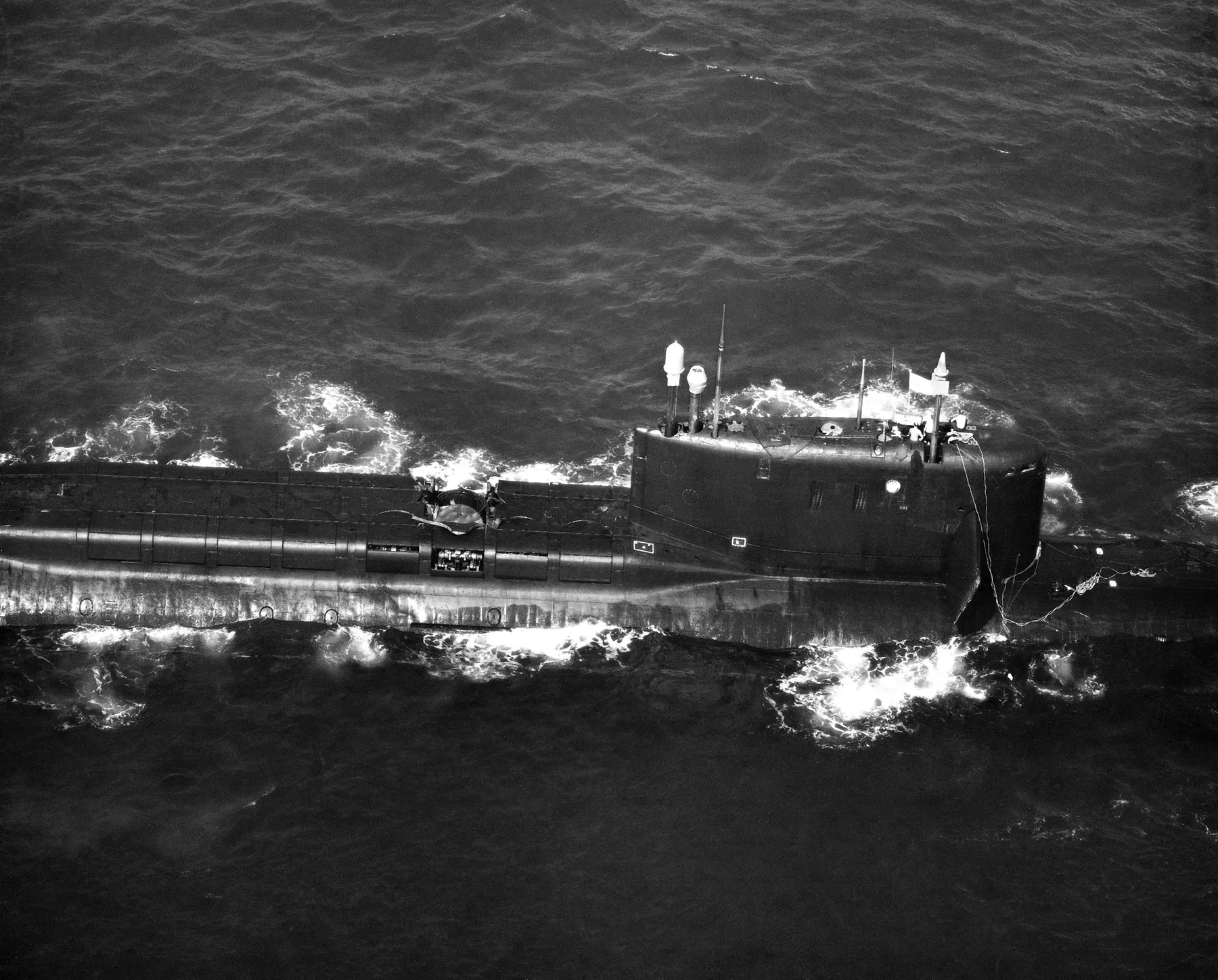
Six months later the two leaders signed the Intermediate-Range Nuclear Forces Treaty, known as INF, committing both sides to destroy the whole class of missiles that had caused the crisis of the early 1980s. By June 1, 1991, they had eliminated 2,692 of them, including 430 American and 979 Soviet missiles held in storage or otherwise not deployed, and the treaty stopped a planned deployment of 208 additional American ground-launched cruise missiles in five European countries. On December 7, 1988, Gorbachev went to the United Nations and announced unilateral cuts of 500,000 soldiers, with thousands of tanks and tens of thousands of troops to leave Eastern Europe. In the same speech he declared the compelling necessity of freedom of choice, which the National Security Archive reads as especially significant for Eastern Europe. He called it:
“a universal principle to which there should be no exceptions”
On May 2, 1989, Hungary began taking down its fence along the Austrian border. On June 16, 31 years after his execution, Imre Nagy was reburied in a ceremony the government and the opposition organized together, and Prime Minister Miklos Nemeth later called it a day of the nation's reconciliation with its past. Through the summer East Germans traveled to Hungary hoping to get out, and thousands crowded into the West German embassy in Prague until special trains carried them west. On October 7, as the GDR marked its 40th anniversary, police attacked demonstrators in East Berlin and other cities and made mass arrests. Two days later about 70,000 people marched peacefully in Leipzig. Honecker was removed on October 17 and replaced by Egon Krenz, and on November 4 hundreds of thousands rallied in East Berlin.
The Wall opened through a misunderstanding. Shortly before 7 p.m. on November 9, the Politburo member Guenter Schabowski told a press conference about new travel rules, announcing them prematurely and in terms that sounded as though they applied at once. By 8 p.m. the West German evening news was reporting that the GDR had opened its border. East Berliners went to the crossings, where the guards had no instructions.
At Bornholmer Strasse the guards let a few people through at 9:20 p.m., stamping their passports invalid in the hope of easing the pressure, but the crowd kept growing. At about 11:30 p.m., still without orders, the head of passport control raised the barrier, and about 20,000 people crossed the bridge within the hour without being checked. Other crossings opened through the night.
German unity came within 11 months, and its terms produced an argument that outlived the Cold War. In Moscow on February 9, 1990, Secretary of State James Baker told Gorbachev, in the American record, that if the United States kept a presence in a Germany inside NATO there would be "no extension of NATO's jurisdiction for forces of NATO one inch to the east." The Allied guard booth at Checkpoint Charlie was lifted away on June 22. The Two Plus Four treaty among the two German states and the four wartime powers followed in September, and Germany was reunited on October 3. The National Security Archive reads Baker's words and others like them as a cascade of assurances that led Gorbachev to accept a united Germany in NATO. Mark Kramer of Harvard calls the idea of a pledge against NATO enlargement a myth.
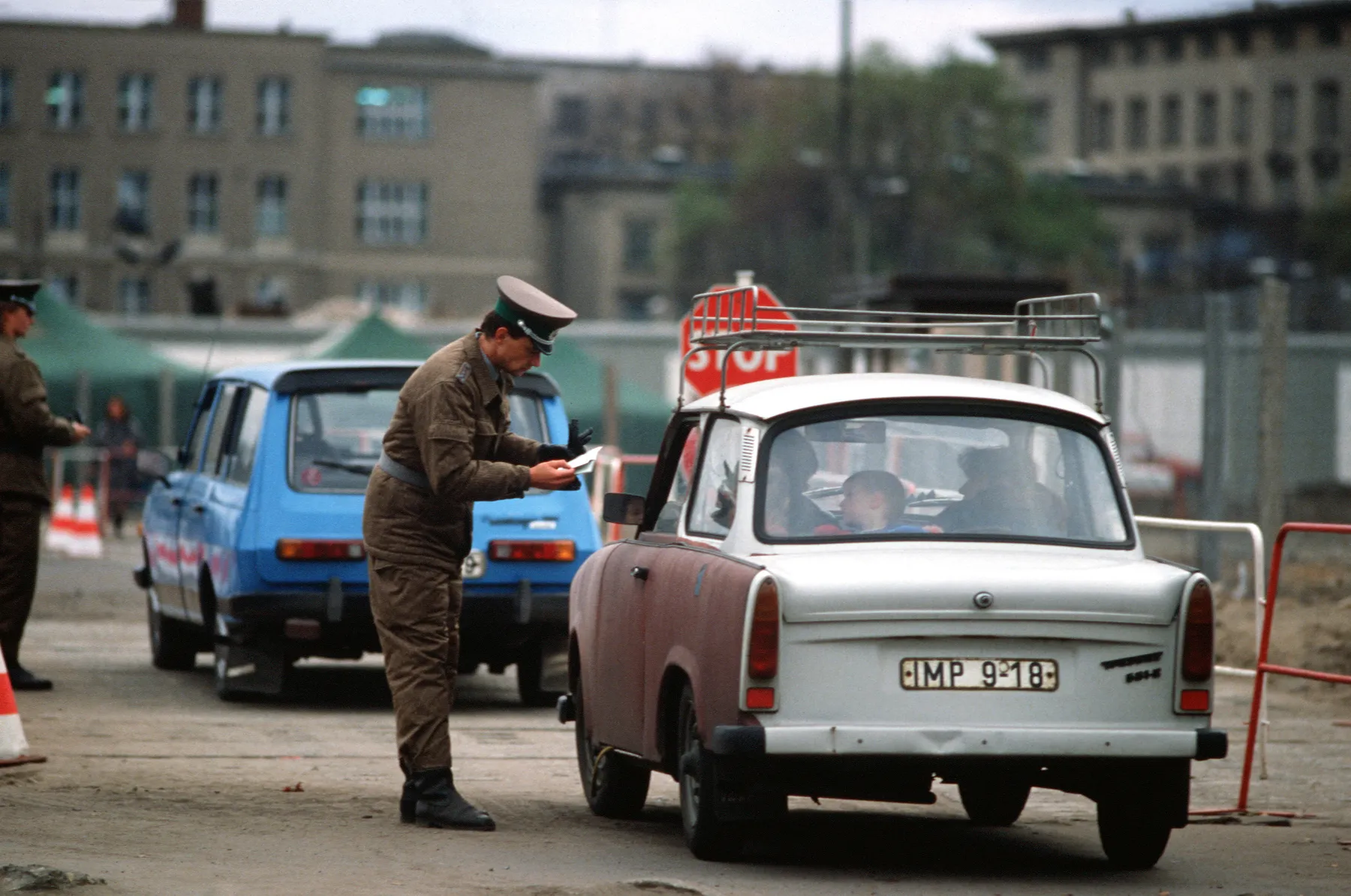
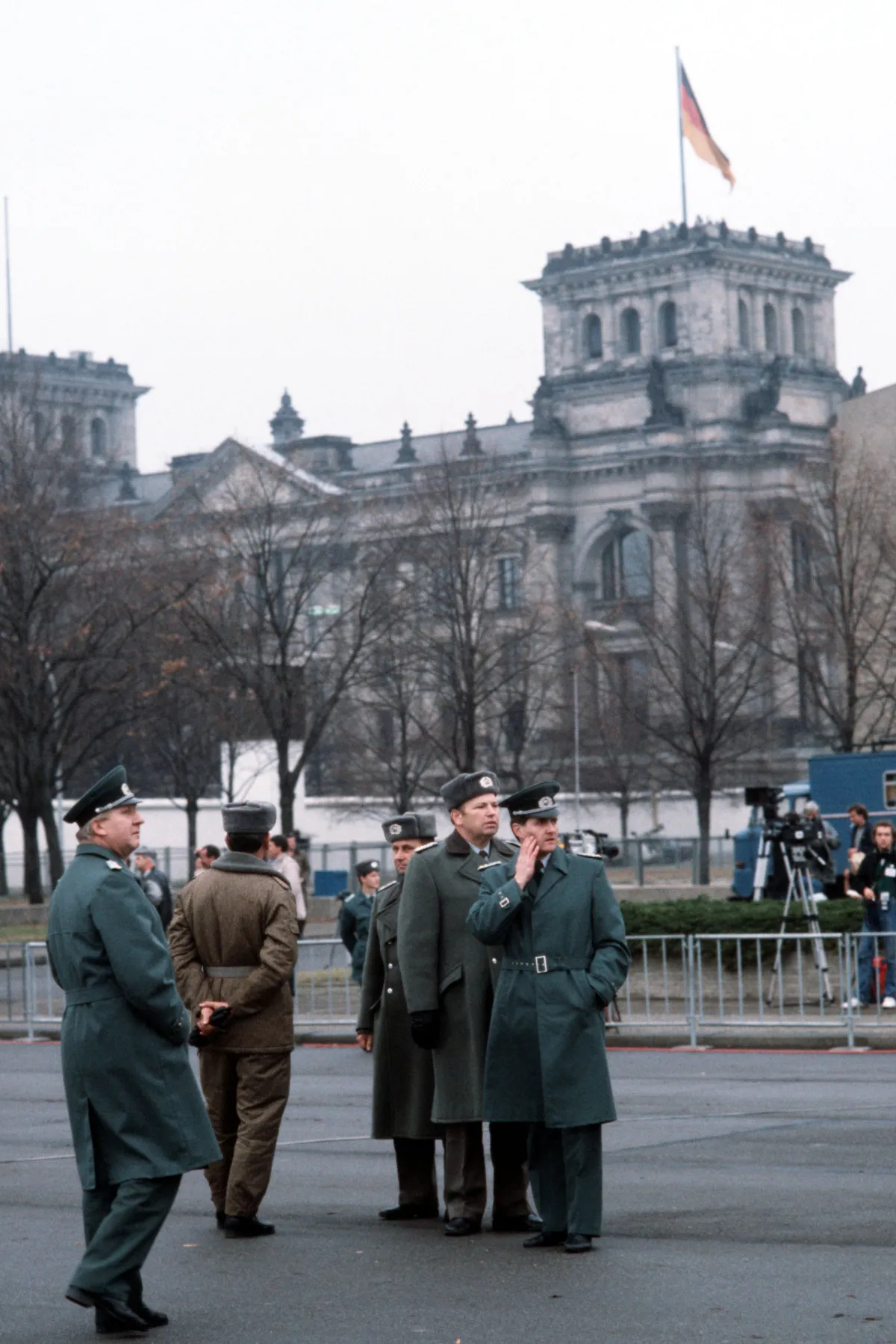
In January 1991 Soviet forces moved against independence movements in Lithuania and Latvia. The Warsaw Pact disbanded in stages in March and July. That July, Presidents George H. W. Bush and Gorbachev signed the Strategic Arms Reduction Treaty, or START, in Moscow. A failed hard-line coup against Gorbachev in August accelerated the departure of the republics, and Ukraine and Belarus declared independence within days. In November the U.S. Congress created a program to help pay for dismantling Soviet weapons. In early December the leaders of Russia, Ukraine and Belarus formed the Commonwealth of Independent States, and on December 25 Gorbachev resigned and the Soviet flag came down over the Kremlin.
Why it ended
Western pressure
Writers such as Peter Schweizer and Paul Kengor, and officials such as Kenneth Adelman, argue that Reagan's buildup, missile defense plans and ideological campaign pushed a weakened Soviet system past what it could bear.
Soviet decline and Soviet choices
Gorbachev, Anatoly Chernyaev and Anatoly Dobrynin said American missile defense plans counted for little and that low investment, isolation and weak innovation mattered more. Melvyn Leffler calls Gorbachev the principal agent and Reagan his minor, yet indispensable, partner.
The army the Soviet state had kept in Germany outlasted that state by nearly three years. On August 31, 1994, in Berlin, Gen. Matvei Burlakov surrendered command of the Western Group of Forces to President Boris Yeltsin with Chancellor Helmut Kohl present. That force once had more than half a million soldiers, and by that day it was down to fewer than 3,000.
The arsenal
The soldier
Infantry weapons split along alliance lines. NATO first standardized on a heavy 7.62 mm cartridge and the United States then moved to a light 5.56 mm round, while the Soviet bloc built its arsenal around the Kalashnikov and an intermediate 7.62 x 39 mm cartridge from the start. The Soviet cartridge served across the Warsaw Pact, while Western armies carried several different rifles until the Cold War ended.
United States and NATO
M16
assault rifle. U.S. forces
Developed from the ArmaLite AR-15, it took the U.S. Army from the NATO 7.62 mm round to 5.56 mm. About 3,690,000 were made of the design that became the Army's standard rifle.
FN FAL and L1A1
battle rifle. Britain and other Western armies
A Belgian design in the NATO heavy caliber. The British L1A1 version carried the Army through nearly the whole Cold War, from 1954 until the L85A1 replaced it from 1985.
G3
battle rifle. West German Bundeswehr
Procured in 1959, only a few years after the Bundeswehr was founded, and kept for nearly 40 years, so West German conscripts trained on it for the rest of the Cold War. The G36 replaced it in 1996.
M60 machine gun
general purpose machine gun. U.S. forces
Fired the NATO 7.62 mm round from a bipod or tripod and went aboard helicopters such as the UH-1 and CH-47, which made one weapon serve both the infantry squad and the aircraft carrying it.
Soviet Union and Warsaw Pact
AK-47 and AKM
assault rifle. Soviet Army, Warsaw Pact and many others
The AKM, a lighter version with a pressed receiver, entered service in 1959. It fires the 7.62 x 39 mm round from a 30-round magazine at about 600 rounds per minute.
Land
Both alliances massed armor in Central Europe. The Warsaw Pact relied on numbers, with the Pentagon counting 249 combat divisions in 1984 and modern T-64, T-72 and T-80 tanks making up about half of those facing NATO's central region. NATO's plans depended on tanks stored in advance for units flown from America. Neither force was tested against the other in war.
United States and NATO
M60
main battle tank. U.S. Army
Entered service in 1961 with a 105 mm gun. More than 15,000 were built, and 5,400 older tanks were converted to the M60A3 standard.
U.S. Army. Public domain. SourceM1 Abrams
main battle tank. U.S. Army
First delivered on February 28, 1980, with a 105 mm gun; later versions carried a 120 mm smoothbore, the caliber of the West German Leopard 2.
Leopard 2
main battle tank. West German Bundeswehr
First series vehicle handed over on October 25, 1979. The Bundeswehr received 2,125 by March 1992, armed with a 120 mm smoothbore gun, as West Germany's main tank in the last decade of the Cold War.
M2 Bradley
infantry fighting vehicle. U.S. Army
Armed with a 25 mm cannon and TOW antitank missiles, it gave U.S. infantry a vehicle to fight from as well as ride in. By the end of 1994, 6,724 had been built in infantry and cavalry versions.
Soviet Union and Warsaw Pact
T-54 and T-55
main battle tank. Soviet Army, Warsaw Pact and other recipients
The T-54 appeared in 1949 and the T-55 in 1958. The Federation of American Scientists says the series was built in greater numbers than any other tank, and Moscow supplied it across the bloc and beyond.
T-72
main battle tank. Soviet Army and Warsaw Pact
Production began in 1971. A 125 mm smoothbore gun and automatic loader cut the crew to three, and factories in Czechoslovakia and Poland also built it for the alliance.
T-80
main battle tank. Soviet Army
The first Soviet operational tank driven by a gas turbine. A 1984 U.S. assessment put more than 1,400 opposite NATO, which is where Moscow chose to send its newest armor.
BMP-1
infantry fighting vehicle. Soviet Army and Warsaw Pact
Shown publicly in Red Square in 1967, it combined a 73 mm gun and antitank missile rail with room for eight soldiers who could fire from inside.
Air
Korea produced large jet battles in which American pilots met Soviet ones, and later studies cut down the kill claims from them. Afterward both sides prepared for a short, intense fight over Central Europe, and the Soviet Union built and exported fighters on a very large scale.
United States and NATO
F-86 Sabre
jet fighter. U.S. Air Force
Credited during the Korean War with 792 MiGs for 78 Sabres lost, a claim later studies reduced to about 7 to 1.
F-15 Eagle
air superiority fighter. U.S. Air Force
First flew on July 27, 1972, and reached its first combat wing in January 1976.
Tornado
strike aircraft. Britain, West Germany and Italy
A swing-wing design built jointly by three NATO members, it first flew in 1974. About 350 served with the West German air force and navy at the height of the Cold War.
Soviet Union and Warsaw Pact
MiG-21
jet fighter. Soviet Air Force and more than 30 countries
The prototype flew in 1955, estimates put production at more than 8,000, and it equipped air forces in more than 30 countries.
MiG-29
fighter. Soviet Air Force and allies
An all-weather counter-air fighter with attack capability. A reunified Germany inherited East German examples and flew them inside NATO.
Sea
American carriers gave the United States air power on every ocean, and the Soviet Navy built nuclear cruisers and carriers of its own. Ballistic missile submarines on both sides made each nuclear force harder to destroy in a first strike, which was the point of building them.
United States and NATO
Nimitz class
nuclear aircraft carrier. U.S. Navy
USS Nimitz was commissioned on May 3, 1975. Each ship displaces about 97,000 tons and carries more than 80 aircraft.
Ohio class
ballistic missile submarine. U.S. Navy
USS Ohio was commissioned on November 11, 1981. Each boat carries 24 ballistic missiles, and 18 were eventually built as the sea leg of the American deterrent.
Soviet Union and Warsaw Pact
Typhoon class
ballistic missile submarine. Soviet Navy
Six entered service between 1981 and 1989, each with 20 R-39 missiles and displacing up to 48,000 tons submerged, the Soviet counterpart to the Ohio.
Kirov class
nuclear guided missile cruiser. Soviet Navy
A 1984 U.S. assessment reported the lead ship in service and a second on sea trials, part of the Pentagon's case for a growing Soviet fleet.
Kiev class
aircraft carrier. Soviet Navy
A 1984 U.S. assessment reported that the third ship had sailed for the Pacific Fleet by way of the Indian Ocean in late 1983.
Support and strategic
Nuclear weapons and the systems built to deliver or stop them shaped every other calculation. The United States led in warheads until the Soviet Union passed it by 1980, and the contest over intermediate-range missiles in Europe produced both the worst tension of the 1980s and the first treaty to destroy a whole class of weapons. Air defense missiles were the other half of that contest.
United States and NATO
U.S. nuclear stockpile
strategic and tactical warheads. United States
Peaked at 31,255 warheads in 1967, 19 years before the Soviet peak. The United States carried out 1,030 nuclear tests.
Pershing II
intermediate-range ballistic missile. U.S. Army in Europe
NATO's answer to the SS-20, it reached initial capability on December 15, 1983. The INF Treaty covered 234 missiles, all eliminated by May 1991.
Nike Hercules
surface-to-air missile. U.S. Army
Entered service on June 30, 1958, with a range over 75 miles and an optional nuclear warhead. The Army fielded 145 batteries.
Soviet Union and Warsaw Pact
Soviet nuclear stockpile
strategic and tactical warheads. Soviet Union
Peaked at about 40,159 warheads in 1986, the year after Gorbachev took office and began seeking cuts.
SS-20
mobile intermediate-range ballistic missile. Soviet strategic rocket forces
Deployment began on March 11, 1976, and led directly to NATO's 1979 dual-track decision. Under the INF Treaty, 654 missiles and 499 launchers were eliminated.
U.S. Department of Defense, Soviet Military Power 1984. Public domain. SourceSA-2 Guideline
surface-to-air missile. Soviet air defense, East Germany and others
Introduced in 1959. About 1,000 sites were eventually deployed in the Soviet Union, and East Germany had the heaviest concentration in the Warsaw Pact.
Timeline
1945
July 24. Truman tells Stalin
At Potsdam the president mentions a new weapon to a Soviet leader whose spies have been reporting on the American bomb program since 1941.
1946
February 22. The Long Telegram
George Kennan cables Washington from Moscow that Soviet conduct grows from a traditional Russian sense of insecurity.
March 5. Iron Curtain speech
Winston Churchill, out of office, describes a line across Europe from Stettin to Trieste in a speech at Fulton, Missouri.
1947
March 12. Truman Doctrine
The president asks Congress for aid to Greece and Turkey and states a broad policy of support against outside pressure.
June 5. Marshall proposal
The secretary of state calls for a European recovery program, which grows to more than $12 billion.
1948
June 24. Berlin Blockade
After a Western currency reform, Soviet forces cut road, rail and canal links to the Western sectors of the city.
1949
April 4. NATO founded
Twelve nations sign the North Atlantic Treaty in Washington while the airlift is still flying.
May. Blockade lifted
Moscow ends the blockade, and flights continue into the autumn to build reserves.
1950
June 25. War in Korea
North Korea attacks the South after Stalin secretly approves the plan that spring.
1953
July 27. Korean armistice
Fighting stops at Panmunjom with no peace treaty signed.
1955
May 14. Warsaw Pact
The Soviet Union and seven allies sign a treaty in the month West Germany joins NATO.
1956
October 23. Hungarian uprising
Crowds gather in Budapest, and Soviet forces launch their decisive attack on November 4.
1958
November 27. Berlin ultimatum
Moscow gives the Western powers six months to leave a West Berlin it proposes to make a free, demilitarized city.
1961
August 13. Berlin sealed
East German forces close the sector border with barbed wire, and walls follow within days.
October 27. Tanks at Checkpoint Charlie
American and Soviet tanks face each other on Friedrichstrasse until the next morning.
1962
October 22. Cuban quarantine announced
Kennedy tells the country about the missile sites and orders a naval quarantine instead of an immediate strike.
1968
August 20. Invasion of Czechoslovakia
Soviet, Polish, Hungarian and Bulgarian forces end the Prague Spring.
1969
January. First REFORGER
More than 12,000 American soldiers fly to Germany and draw equipment stored there in advance.
1972
May 26. First arms limits
Nixon and Brezhnev sign the Anti-Ballistic Missile Treaty and an interim agreement on offensive arms in Moscow.
1975
August 1. Helsinki Final Act
Thirty-five nations accept Europe's postwar borders and commit themselves on human rights.
1976
March 11. SS-20 deployment begins
The Soviet Union starts fielding a mobile intermediate-range missile that prompts NATO's dual-track decision.
1979
December. Soviet forces enter Afghanistan
Soviet troops kill Hafizullah Amin and install Babrak Karmal, opening a war of nearly 10 years.
1983
November. Able Archer 83
A NATO nuclear release exercise coincides with an unusual Soviet military response.
1987
June 12. Reagan at the Brandenburg Gate
The president publicly challenges Mikhail Gorbachev to open the Wall.
December 8. INF Treaty
The superpowers agree to eliminate a whole class of missiles, and 2,692 are destroyed by 1991.
1989
February 15. Soviet exit from Afghanistan
Lt. Gen. Boris Gromov crosses the bridge at the Amu Darya as the last Soviet soldier to leave.
November 9. The Wall opens
A confused announcement brings crowds to the crossings, and guards at Bornholmer Strasse raise the barrier.
1990
October 3. German unity
The two German states become one, inside NATO.
1991
July. Warsaw Pact ends
The alliance completes the dissolution it began that spring.
December 25. Gorbachev resigns
The Soviet flag comes down over the Kremlin, and Boris Yeltsin leads the new Russian state.
After action report
The Western alliance outlasted its Soviet rival.
The Warsaw Pact dissolved and the Soviet Union ended in 1991 while NATO survived. That describes the outcome. Writers who credit Reagan and writers who credit Gorbachev explain it differently.
- On the battlefield
- The two main alliances never fought a declared war, so no battlefield decided anything between them. Soviet forces withdrew from Afghanistan in 1989, and the Warsaw Pact ceased to exist in 1991 with NATO intact.
- In the political outcome
- The Western position prevailed in Europe: Germany reunited inside NATO and Eastern European states ended communist rule. Results outside Europe were mixed, and in several countries wars continued after the rivalry that had fed them was over.
- How it ended
- No peace treaty ended the Cold War as a whole. It closed through arms agreements, the opening of the Berlin Wall on November 9, 1989, the Two Plus Four settlement and German unity in 1990, the dissolution of the Warsaw Pact in 1991 and Mikhail Gorbachev's resignation on December 25, 1991.
The Cold War set the United States and its allies against the Soviet Union and its allies from the end of the Second World War to 1991, in a contest of alliances, economies and ideas.
In Europe it produced a fortified border, repeated crises and Soviet-led invasions of Hungary and Czechoslovakia, with no open war between the two blocs.
Outside Europe it fed wars that killed about 14 million to more than 20 million people by the estimates cited here, most of them civilians.
The Soviet bloc came apart between 1989 and 1991, largely without fighting in Central Europe. Writers such as Peter Schweizer credit Western pressure; Melvyn Leffler and Soviet participants credit Gorbachev's choices and Soviet decline.
Objectives, side by side
United States and NATO
Achieved
Contain Soviet expansion and deter an attack on Western Europe
No Warsaw Pact attack on NATO took place. Whether one was ever likely depends on Soviet intentions that Western estimates read in different ways.
Achieved
Keep West Berlin outside Soviet control
The airlift and the 1961 standoff preserved the Western presence. The Wall still cut the city for 28 years.
Partly achieved
Prevent communist gains in contested wars abroad
South Korea survived. The outcome in Vietnam is covered on its own page, and Angola and Afghanistan went on fighting after the superpowers stepped back.
Soviet Union and Warsaw Pact
Not achieved
Secure a buffer of allied governments in Eastern Europe
The buffer held by force in 1956 and 1968 and collapsed in 1989.
Achieved
Reach strategic parity with the United States
Its stockpile passed the American total by 1980, and arms talks treated the two as equals. The CIA put the defense burden at 15 to 17 percent of output in the mid-1980s.
Not achieved
Preserve a friendly government in Afghanistan
Soviet forces withdrew in 1989. Moscow's support kept the Kabul government alive until early 1992.
Partly achieved
Stop the loss of its population and secure the state
The Wall slowed the flight for 28 years. The state ended within a year of its opening.
Estimated deaths
- Military
- No reliable single figure exists. The best-documented rows here are national counts such as 36,574 Americans in Korea and about 15,051 Soviet dead in Afghanistan.
- Civilian
- Estimates for all related conflicts run from about 14 million to more than 20 million dead, soldiers included, with civilians the majority by those accounts.
The Cold War was many separate events. Rows must not be added together: scopes overlap, some mix soldiers and civilians, and the Vietnam War appears here only through its American dead, with the full account on its own page. Each bar spans the low and high estimates on a logarithmic scale, where every step is ten times the last, so small and very large losses fit one chart.
Military
United States and NATO
Berlin Airlift crew and support dead
78 to 86
How this was counted
The Tempelhof memorial lists at least 78 who died in airlift accidents; a U.S. Army fact sheet gives 86. Some of the dead were civilians.
U.S. military, Korean War
36,574 in theater
103,284 wounded
How this was counted
33,739 battle deaths and 2,835 other deaths. A separate worldwide figure of 54,246 counts deaths everywhere during those years.
British military, Korean War
more than 1,100
How this was counted
The National Army Museum's figure for British dead in the war.
U.S. military, Vietnam War
58,220
47,434 hostile deaths and 10,786 non-hostile
How this was counted
Individual records in the Defense Casualty Analysis System. The war's other casualties are on this site's Vietnam page.
Soviet Union and Warsaw Pact
GDR border soldiers killed at the Berlin Wall
8
How this was counted
Killed by deserters, comrades, a refugee, an escape helper or a West Berlin policeman.
Soviet soldiers in Hungary, 1956
about 700
About 1,500 wounded
How this was counted
Rounded figure.
Warsaw Pact soldiers in Czechoslovakia, 1968
116
How this was counted
Most died in traffic accidents or from mishandled weapons. One was reported killed by a local protester.
Soviet military, Afghanistan
12,000 to about 15,051
About 54,000 wounded
How this was counted
Soviet officials endorsed 12,000 to 15,000 in May 1988. Gorbachev-era sources later gave 15,051.
Also involved
Chinese military, Korean War
about 110,000 to 197,653
About 380,000 wounded
How this was counted
The higher figure is China's official count, as reported by its state media. North and South Korean forces each lost at least half a million killed or wounded, with the two categories not separated in this source.
Civilian
People killed at the Berlin Wall, other than GDR border soldiers
at least 132
At least 119 wounded by gunfire in escape attempts, per West Berlin police
How this was counted
101 people trying to flee and 30 people not fleeing, plus one Soviet soldier. Includes accidents and suicides linked to escape attempts. Scope: 1961 to 1989.
Deaths at Berlin border crossing controls
at least 251
How this was counted
Travelers who died during or after checks. Not included in the 140.
Deaths at the inner German border
at least 260, up to about 650 by the broadest count
How this was counted
Current research suggests at least 260. A Free University of Berlin study counted 327, and its categories are disputed. The 650 figure is the Foundation's estimate for the whole border regime and includes the Baltic Sea.
Hungarians, 1956, insurgents and civilians
about 2,500
About 20,000 wounded by one account; hospitals treated about 13,000 by the end of November 1956
How this was counted
Mostly insurgents and civilians, with people under 30 about half the casualties. The wounded figures differ by source and date.
Heinrich Boell Foundation; Hungarian Central Statistical Office
Executed after the Hungarian uprising
at least 200
About 22,000 convicted, about 13,000 imprisoned
How this was counted
Sentences carried out by the Kadar government after the fighting.
Czechoslovaks, invasion of 1968
108 to 137 by the end of 1968
About 500 seriously injured; more than 400 killed by occupying troops by 1991
How this was counted
The Institute for the Study of Totalitarian Regimes gives 108. Prokop Tomek and Ivan Pejcoch give 137 from newly found archive material.
Institute for the Study of Totalitarian Regimes; Radio Prague
Korean civilians
about 2 million
How this was counted
An estimate for North and South together. Another teaching source says more than two million people died in all, up to 70 percent of them civilians.
Afghans, 1979 to 1989
about 800,000 to 2 million
About 3 million wounded, mainly civilians
How this was counted
Mostly civilians, with some fighters included. Human Rights Watch reported in 1991 that over one million civilians were believed killed. Barnett Rubin's figure of nearly one million is widely used.
All wars linked to the Cold War, combined and mostly civilian
about 14 million to more than 20 million
How this was counted
Figures attributed to Paul Thomas Chamberlin by Kirkus Reviews and The Nation. Soldiers and civilians are mixed, and they overlap the rows above and the Vietnam page. The boundaries of what counts vary.
Kill and loss ratios
A ratio compares reported losses. It depends on who did the counting, it does not measure who was right, and it often says little about who won.
About 14 to 1
Published figure
U.S. fighters, all air combat in Korea, early postwar claim
Enemy aircraft claimed by the U.S. Air Force for each of its own lost in air combat.
The figure the Air Force believed after the war, as reported by Air Force historian William T. Y'Blood.
Caution: Based on pilot claims. Claims in air combat are routinely too high, and this figure was later reduced. It says nothing about which side's pilots were better.
About 10 to 1
Published figure
F-86 Sabre against MiG fighters, Korea, official tally
MiGs claimed by Sabre pilots for each Sabre lost.
792 MiGs claimed against 78 Sabres lost.
Caution: Claims were not checked against enemy records, which were closed at the time.
About 7 to 1
Published figure
F-86 Sabre against MiG fighters, Korea, later study
MiGs destroyed by Sabres for each Sabre lost, as later studies suggested.
Y'Blood reports that later studies pointed to 7 to 1. China acknowledged losing 224 MiG-15s, while Russian losses were not fully disclosed in that account.
Caution: Without full Soviet loss figures in this account, the ratio cannot be confirmed. It should not be read as a score of pilot quality.
About 3.6 to 1
Calculated here
Hungary, 1956
Hungarian dead for each Soviet soldier killed.
2,500 divided by 700 is about 3.6, using the rounded figures in the casualty table.
Caution: This measures a popular uprising against a regular army and includes civilians. It is not a measure of fighting ability.
About 53 to 133 for 1
Calculated here
Afghanistan, 1979 to 1989
Afghan dead for each Soviet death.
800,000 divided by 15,051 is about 53; 2,000,000 divided by 15,051 is about 133.
Caution: The Afghan figures are mostly civilians and include deaths at the hands of Afghan forces and from hunger and displacement. This describes the war's human cost, not combat exchange.
No meaningful ratio
Calculated here
United States against the Soviet Union, whole Cold War
No ratio can be given, because the two powers did not fight each other in open war.
No division was performed. The nearest case, Soviet pilots flying over Korea, covers one theater of one war.
Caution: Any single figure would combine unrelated proxy wars, in which most of the dead were neither American nor Soviet.
What it cost
- About 125,000
- Nuclear warheads built worldwide since 1945
- About 97 percent by the United States and Soviet Union or Russia.
- 1,030
- U.S. nuclear tests
- Before testing ended in 1992.
- 15 to 17 percent of GNP
- Soviet defense share of output
- CIA estimate for the mid-1980s. The method and the size of the Soviet economy have both been disputed.
- More than $12 billion
- Marshall Plan
- Aid to Western Europe.
- At least 4 million, 1949 to 1989
- Flight from East Germany
- About a sixth of the population.
- About 150,000 to 200,000
- Refugees from Hungary
- About 5 to 6.4 million
- Refugees from Afghanistan
- 2,692
- Missiles destroyed under the INF Treaty
Lessons drawn
- Reinforcement has to be rehearsed
- REFORGER tested whether American units could cross an ocean, draw stored equipment and fight beside allies. It also showed Western planners the political cost of training on inhabited land.
- Read the other side's fear
- The 1990 review of Able Archer faulted American intelligence as overconfident after an exercise that seemed routine to NATO drew an unusual Soviet military response.
- Force held the bloc without winning consent
- Moscow brought Hungary and Czechoslovakia back into line by invasion. It did not apply the Brezhnev Doctrine in 1989, and the governments that had depended on it fell within months.
- Afghanistan and the limits of occupation
- Soviet commanders spent a decade against a dispersed insurgency with outside support and ended in withdrawal, at a heavy cost to their soldiers and a far heavier one to Afghans.
- A crisis needs a private way out
- The Berlin standoff of 1961 and the Cuban settlement of 1962 both relied on secret channels, and the Cuban deal on a concession kept out of public view. Later arms agreements built more regular ways to limit the danger.
Still disputed
- Who or what ended the Cold War?
- Peter Schweizer, Paul Kengor and Kenneth Adelman credit Reagan's buildup and pressure. George Shultz, Jack Matlock and Melvyn Leffler hold that American aims were agreements, and Leffler calls Gorbachev the principal agent. Gorbachev, Anatoly Chernyaev and Anatoly Dobrynin pointed to low investment, isolation and weak innovation inside the Soviet Union.
- Did the West promise not to enlarge NATO?
- The National Security Archive holds that Baker and other Western leaders gave Gorbachev a cascade of assurances in 1990 and that Soviet complaints rest on written records of those talks. Mark Kramer of Harvard calls a no-enlargement pledge a myth, and the Two Plus Four treaty itself covers only the military status of the former East Germany.
- What did Stalin intend in Korea?
- Kim Donggil argues that Stalin expected a wider war and made Chinese intervention a precondition of his approval. William Stueck argues that Stalin wanted a quick victory before the United States could respond.
- How close was war in 1983?
- The President's Foreign Intelligence Advisory Board found in 1990 that the danger was real. The 1984 Special National Intelligence Estimate and analysts at the State Department's intelligence bureau doubted that Soviet leaders truly feared an attack.
- How many died at the German borders?
- The Berlin Wall Foundation's figure of at least 140 at the Wall comes from case-by-case research. For the inner German border it cites at least 260, a Free University of Berlin study counted 327, and the Foundation's estimate for the whole border regime is about 650.
- How long did the Checkpoint Charlie standoff last?
- The Berlin Wall Foundation says about 16 hours. The U.S. Army's account says more than 24.
- How many Czechoslovaks died in 1968?
- The Institute for the Study of Totalitarian Regimes gives 108 through the end of that year. The historians Prokop Tomek and Ivan Pejcoch give 137.
- How large was the Soviet defense burden?
- The CIA estimated 15 to 17 percent of gross national product in the 1980s. Critics of the agency's record argue that it misjudged the size of the Soviet economy, which changes the share.
- What should the events be called?
- Hungary's statistical office calls 1956 a revolution and freedom fight, and the Kadar government called it a counter-revolution. Moscow described its 1968 action as protection of a threatened communist government, and the United States and most of the world called it an invasion.
Sources
Figures for wars are estimates, and many are disputed. Where credible sources differ, this page gives the range and says who counts what. Maps are drawn from Natural Earth country shapes, which show today's borders.
- Victims at the Berlin Wall and the border regime, Berlin Wall Foundation
- The Berlin Wall, Berlin Wall Foundation
- Theater of the Cold War: Checkpoint Charlie, Berlin Wall Foundation
- The victims at the Berlin Wall, Chronik der Mauer
- The Wall: 1961 to 2021, part one, Federal Agency for Civic Education (bpb), Hans-Hermann Hertle
- House on the Border, Point Alpha Foundation
- Point Alpha: 25 years after the last patrol, U.S. Army
- Standoff in Berlin, October 1961, U.S. Army
- The Berlin Airlift, AlliiertenMuseum
- Berlin Airlift 75 fact sheet, U.S. Army Garrison Wiesbaden
- Berlin Airlift, U.S. Office of the Historian
- Marshall Plan, U.S. Office of the Historian
- Kennan and Containment, U.S. Office of the Historian
- North Atlantic Treaty Organization, U.S. Office of the Historian
- The Warsaw Treaty Organization, U.S. Office of the Historian
- The Sinews of Peace, International Churchill Society
- Truman Doctrine; North Atlantic Treaty; Warsaw Treaty texts, Yale Law School, Avalon Project
- Introduction: The 1956 Hungarian uprising, Heinrich Boell Foundation
- The Hungarian Revolution and Freedom Fight of 1956, Hungarian Central Statistical Office
- The 1956 Hungarian Revolution, National Security Archive
- August 1968: Victims of the Occupation, Institute for the Study of Totalitarian Regimes
- New evidence numbers victims of 1968 invasion, Radio Prague International
- Some 116 Warsaw Pact soldiers died in 1968 invasion, Radio Prague International
- Soviet Invasion of Czechoslovakia, U.S. Office of the Historian
- The Cuban Missile Crisis, U.S. Office of the Historian
- Khrushchev letter to Kennedy, October 26, 1962, Foreign Relations of the United States
- The 1983 War Scare Declassified and For Real, National Security Archive
- Exercise REFORGER and U.S. force posture, Congressional Research Service
- U.S. Army Europe and REFORGER, U.S. Army
- Strong Europe, U.S. Army
- REFORGER simulation review, U.S. General Accounting Office
- Soviet Military Power 1984, chapter 3, U.S. Department of Defense, via Federation of American Scientists
- Nuclear warhead stockpiles, Our World in Data
- 50 facts about U.S. nuclear weapons, Brookings Institution
- Global nuclear weapons inventories, 1945 to 2013, Bulletin of the Atomic Scientists
- SALT I and II, U.S. Office of the Historian
- Helsinki Final Act, U.S. Office of the Historian
- INF Treaty at a Glance, Arms Control Association
- American War and Military Operations Casualties, Congressional Research Service
- Korean War, National Army Museum
- Korean War 1950 simulation, Council on Foreign Relations
- MiG Alley, Air & Space Forces Magazine
- The Angola Crisis, U.S. Office of the Historian
- A Turning Point in World History, Afghanistan Analysts Network
- The Forgotten War, Human Rights Watch
- Soviet Invasion of Afghanistan, U.S. Office of the Historian
- Up to 15,000 soldiers died in war, Soviet says, Deseret News
- In the Cold War's Bloodlands, The Nation
- The Cold War's Killing Fields, review, Kirkus Reviews
- Opening and fall of the Berlin Wall, City of Berlin
- Remarks at the Brandenburg Gate, Ronald Reagan Presidential Library
- Collapse of the Soviet Union, U.S. Office of the Historian
- Interview with Miklos Nemeth, National Security Archive, Cold War series
- Foreign Relations of the United States, 1958 to 1960, volume XVIII, document 231, U.S. Office of the Historian
- Ronald Reagan and the Cold War: What Mattered Most, Texas National Security Review, Melvyn P. Leffler
- Maximum Pressure Brought Down the Soviet Union and Other Lies, War on the Rocks, Philip H. Gordon
- CIA Assessments of the Soviet Union, Central Intelligence Agency
- Arsenal entries: M1, M2, M16, M60, T-54/55, T-72, T-80, BMP-1, F-15, MiG-21, MiG-29, Tornado, Nimitz, Federation of American Scientists, Military Analysis Network
- Typhoon, Ohio, SS-20 and SA-2 entries, Federation of American Scientists, Nuclear Forces Guide
- Pershing and Nike Hercules histories, U.S. Army Redstone Arsenal
- Kalashnikov AKM identification sheet, Small Arms Survey
- Leopard 1 and Leopard 2, Bundeswehr
- 50 years of the Tornado, Bundeswehr
- G36 background, including the G3, German Federal Ministry of Defence
- L1A1 self-loading rifle, National Army Museum
- Tensions ran high at Checkpoint Charlie in 1961, U.S. Army
- CIA Confirms Role in 1953 Iran Coup, National Security Archive
- CIA and Assassinations: The Guatemala 1954 Documents, National Security Archive
- Covert Action in Chile: The Significance of the Church Committee Report, National Security Archive
- Indonesia Mass Murder 1965: U.S. Embassy Files, National Security Archive
- South Korean inquiry into bloody hidden history ends, Associated Press, via Fox News
- The Korean War, PBS American Experience
- Burial ceremony held for remains of Korean War soldiers, Xinhua
- Chronicle of the Berlin Wall, October 1989, Chronik der Mauer
- Chronicle of the Berlin Wall, 5 October 1983, Chronik der Mauer
- June 26, 1948, Air & Space Forces Magazine
- Memorandum on SALT II observance, 1986, Foreign Relations of the United States
- Brezhnev message to Carter, December 29, 1979, Foreign Relations of the United States
- Combating Cold Korea, U.S. Army
- The Potsdam decision, U.S. Department of Energy, The Manhattan Project: An Interactive History
- The Cold War, 1945 to 1990, U.S. Department of Energy, The Manhattan Project: An Interactive History
- George Kennan's Long Telegram, National Security Archive
- Telegram Regarding American Postwar Behavior, Nikolai Novikov, Teaching American History
- 27 million lives lost, Meduza
- Did Stalin Lure the United States into the Korean War?, Wilson Center, Kim Donggil and William Stueck
- The North Atlantic Council appoints General Dwight D. Eisenhower, NATO
- A short history of NATO, NATO
- Marshal of the Soviet Union Ivan Stepanovich Konev, biography, Memory of Nations
- The Second Berlin Crisis, 1958 to 1962, AlliiertenMuseum
- Last Nuclear Weapons Left Cuba in December 1962, National Security Archive
- U.S. forces in Europe at a record high, Stars and Stripes
- Soviet commander bids farewell to Afghanistan, Deseret News
- Russia officially disbands troops in Germany, Baltics, Deseret News
- Reagan, Gorbachev and Bush at Governor's Island, National Security Archive
- NATO Expansion: What Gorbachev Heard, National Security Archive
- Vietnam War U.S. Military Fatal Casualty Statistics, U.S. National Archives
- Damaged Soviet Yankee class submarine off Bermuda, 1986, U.S. National Archives
- 21 August 1968: Einmarsch, kein Einmarsch, Bundesarchiv
- Editorial note on the currency reform letters, June 1948, Foreign Relations of the United States
- Murphy telegram on the Berlin currency, June 23, 1948, Foreign Relations of the United States
- Editorial note on the proposed Leningrad summit, 1968, Foreign Relations of the United States
- GDR Council of Ministers' Decision to Seal the Border, August 12, 1961, German History in Documents and Images
- Mauerbau und Staatssicherheit, Federal Agency for Civic Education (bpb)
- Helsinki Summit 1975, Organization for Security and Co-operation in Europe
- Andorra, Organization for Security and Co-operation in Europe