Articles & BlogBy Trapper W. Brown6 min read
For anyone who wants to know what the term means, and what it does not.
What do you picture when you hear the words human trafficking? Many people picture a stranger, a van and a border. That picture is wrong far more often than it is right, and it gets in the way. If you are watching for a kidnapping, you can look straight past the real thing.
This article gives you the definition in plain words, the difference between trafficking and smuggling, the myths that official sources correct, and the numbers we have, with an honest note on what those numbers can and cannot tell you. It ends with how to report a concern safely.
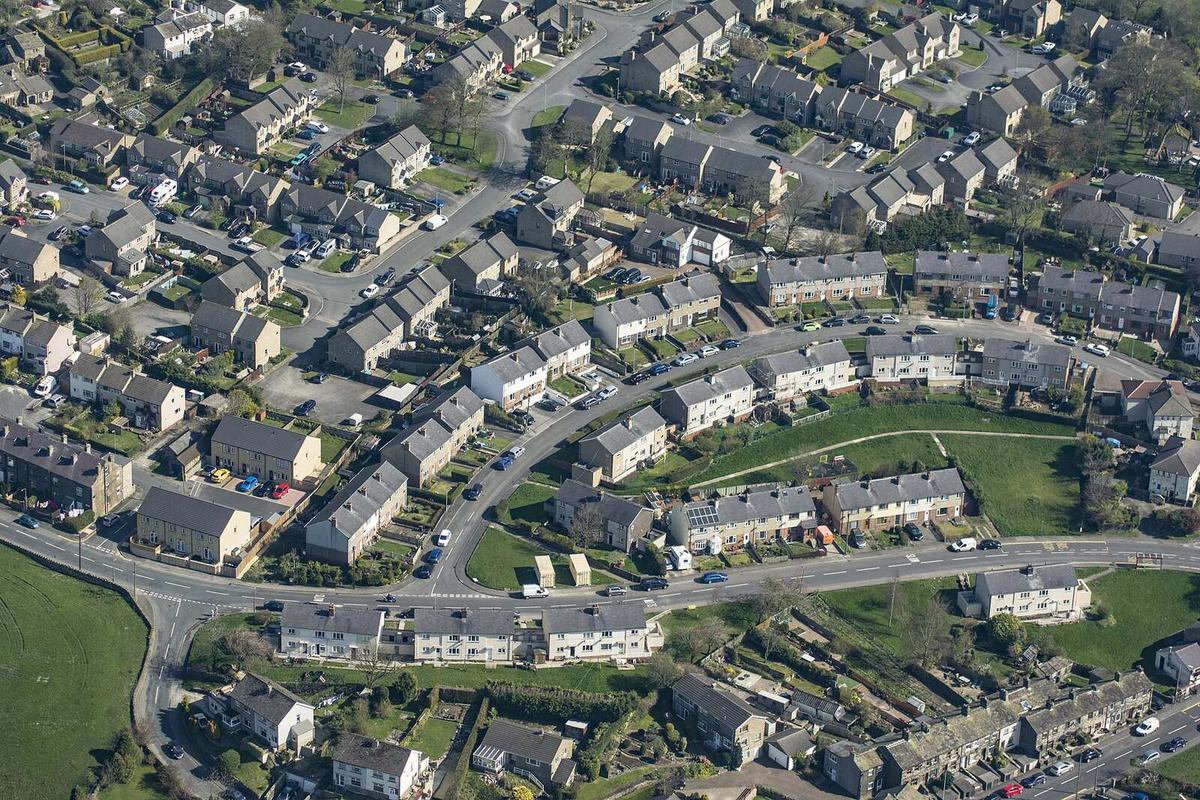 Trafficking needs no border and no travel, and it can happen in places that look like any other. Photo by Richard Horne, CC0 public domain dedication, via Wikimedia Commons.
What does the law mean by trafficking?
In the United States the definition comes from the Trafficking Victims Protection Act. The State Department's 2026 Trafficking in Persons Report restates it, and it turns on three words: force, fraud or coercion.
- Sex trafficking is a commercial sex act brought about by force, fraud or coercion, or any commercial sex act where the person is under 18.
- Labor trafficking is obtaining a person for labor through force, fraud or coercion.
Force is the one people expect. In everyday terms, fraud is a lie about the deal: a job, a wage or a relationship that turns out to be something else. Coercion is pressure that leaves a person feeling they have no real choice. The hotline's own list of warning signs shows what that pressure can look like: a debt owed to the employer, documents held by someone else, threats of deportation.
Two parts of the definition surprise people.
The first is the rule for children. For anyone under 18 in commercial sex, no force, fraud or coercion needs to be shown. Age alone settles it.
The second is movement. A victim does not need to be moved from one place to another. A person can be trafficked in the town where they grew up, and in the home where they live.
Is trafficking the same as smuggling?
No, and the two are mixed up all the time. The DHS Blue Campaign draws the line this way.
| Trafficking | Smuggling | |
|---|---|---|
| What it is based on | Exploitation of a person | Moving a person across a border |
| Does it need a border? | No | Yes |
| How they connect | May begin as smuggling | Can turn into trafficking |
So the word "trafficking" has nothing to do with traffic or travel. The question to ask is whether a person is being exploited through force, fraud or coercion. Where they are from, and how they got here, does not decide it.
Four myths, and what the sources say
The National Human Trafficking Hotline and DHS both spend a lot of effort correcting the same few beliefs.
| The myth | What the sources say |
|---|---|
| It starts with a kidnapping | Most traffickers use deception, manipulation or threats, not kidnapping (the hotline) |
| It means being taken somewhere | Trafficking needs no movement and no border crossing (the hotline and DHS) |
| The trafficker is a stranger | Many survivors were trafficked by partners or family members (the hotline) |
| A victim will ask for help | DHS calls it "often a silent crime" whose victims "may be afraid to come forward" |
I think the last one matters most for ordinary people. If you expect a victim to run toward you, silence looks like consent. It is more often fear.
Notice also what is missing from that table: any description of who traffickers or victims are. There is no nationality, job or background that marks either one. The signs are behaviors and conditions, and DHS itself says its indicators are "not necessarily proof".
Watch out
Knowing the definition does not make you an investigator. The DHS Blue Campaign's instruction is exact: "Do not at any time attempt to confront a suspected trafficker directly or alert a victim to your suspicions." It is "up to law enforcement to investigate suspected cases." Your part is to notice and to report.
What can the numbers tell you?
Start close to home. The National Human Trafficking Hotline's statistics for 2025 show 52,664 signals received, meaning contacts such as calls, texts, chats and tips. Of those, 10,971 came from victims or survivors themselves. From all of it the hotline identified 15,085 cases involving 21,457 victims.
By type, 6,201 cases were sex trafficking, 2,400 were labor trafficking and 1,607 were both. The rest were not specified.
| Sex trafficking | 6,201 |
|---|---|
| Labor trafficking | 2,400 |
| Both | 1,607 |
Read that chart with care. These figures count what was reported to one hotline, not all trafficking. A taller bar may mean a type is more common, or only that people recognize it and report it more readily. The chart cannot tell you which.
The global sources each measure something different, so name the source and the year whenever you repeat one.
| Source and year | What it reports |
|---|---|
| State Department, 2026 Trafficking in Persons Report (data for 2025) | 156,912 victims identified worldwide, 24,254 prosecutions, 7,576 convictions. Estimates from data governments supplied |
| UN Office on Drugs and Crime, Global Report on Trafficking in Persons 2024 | Detected victims rose 25 per cent in 2022 compared with 2019. Of detected victims, 42% were trafficked for forced labour and 36% for sexual exploitation; 61% were female and 38% were children |
| International Labour Organization, 2022 estimates (for 2021) | 50 million people in modern slavery: 28 million in forced labour and 22 million in forced marriage |
The first two rows count people who were found. The third is an estimate of how many people live in these conditions, and it uses a wider term, modern slavery. Do not add these figures together or set them against each other as if they measured one thing. Taken together they point one way: what gets detected is far smaller than what is estimated to exist. That gap is the reason public awareness is worth your time.
What can you do today?
You do not need training to be useful. You need an accurate picture and the right phone numbers.
- Save the hotline in your phone: 1-888-373-7888, and 233733 for text.
- Drop the kidnapping picture. Watch for control, fear and isolation.
- Remember the rule for anyone under 18: no force, fraud or coercion needs to be shown.
- Decide now that you will report a concern and not act on it yourself.
- Share the four myths with one other person this week.
Tip
When you text the hotline, send your message to 233733 by itself. No keyword is needed.
How to report
If someone is in immediate danger, call 911.
For anything else, contact the National Human Trafficking Hotline: call 1-888-373-7888 or text 233733, 24 hours a day. There is also a live chat and a tip form at humantraffickinghotline.org, and the hotline works in more than 200 languages. You can also call the Homeland Security Investigations tip line at 866-347-2423.
From a safe distance, note what you can: the time, the place, descriptions of the people involved, and any vehicle with its license plate. Do not move closer to get a better look, and do not let anyone see you taking notes. You do not need to be sure. Indicators are not proof, and sorting out what happened is the job of the people you are calling.
What to remember
- Trafficking is exploitation through force, fraud or coercion. For anyone under 18 in commercial sex, none of the three needs to be shown.
- It needs no movement and no border. Smuggling is the one that crosses a border.
- Most traffickers use deception, manipulation or threats, not kidnapping, and many survivors were trafficked by partners or family members.
- Hotline figures count reports, not all trafficking.
- Never confront a suspected trafficker or alert a victim. Report from a safe distance.
Most of us will never see a case we can be sure about. What we can do is carry a more accurate picture than the one from the movies, and know which number to call when something looks wrong.