Articles & BlogBy Trapper W. Brown7 min read
For travelers, hotel and transport staff, and anyone who works around other people.
Would you know a sign of trafficking if you saw one? Most people would not, and that is no failing. The signs are quiet. They look like someone who is tired, or shy, or having a bad week.
That is why the agencies that work on this publish lists of indicators. This article walks through two of them, one from the DHS Blue Campaign and one from the National Human Trafficking Hotline, and then looks at the ordinary places where you might be the person who notices.
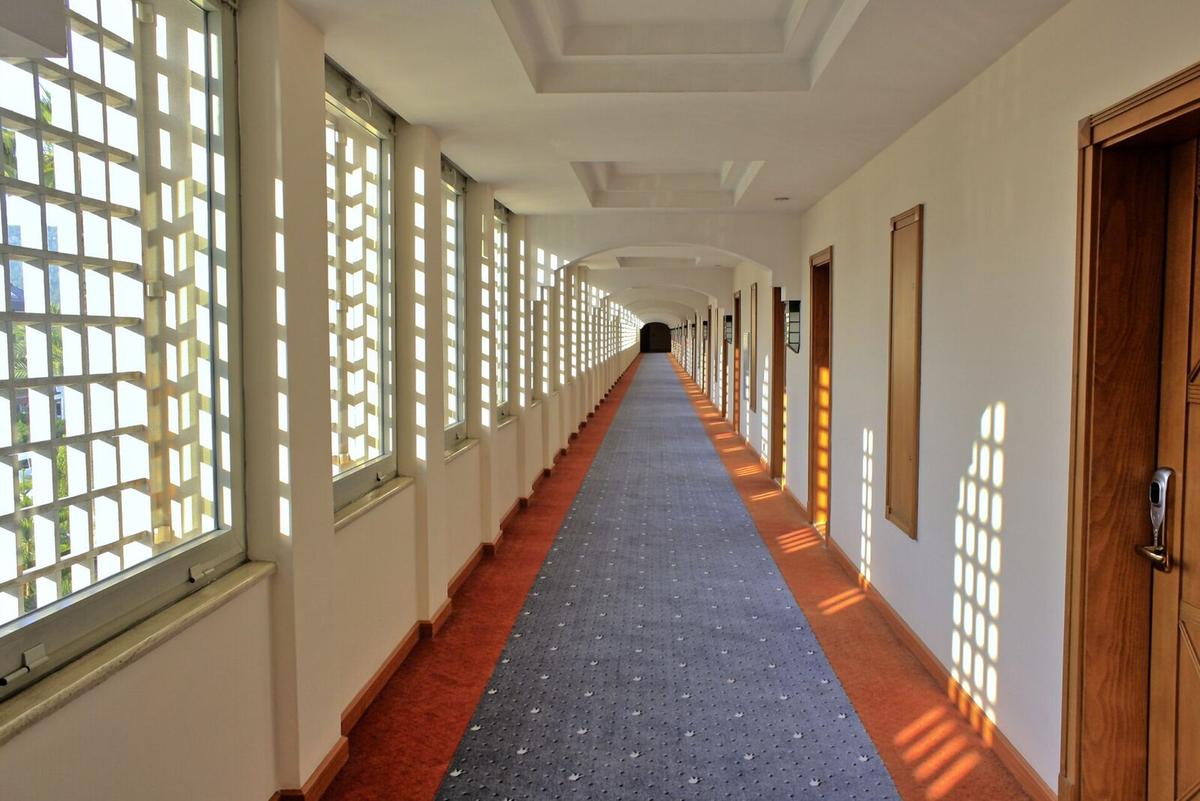 Hotels and motels are among the venues most often named in reports to the US hotline. Photo by Uwe Jelting, CC0 public domain dedication, via Wikimedia Commons.
One rule comes before any list. DHS says its indicators are "not necessarily proof". Every sign below has innocent explanations. A sign is a reason to pay attention and, if it adds up, to report. It is never a reason to accuse anyone.
What does DHS tell you to look for?
The DHS list is about a person's condition and freedom. I find it easiest to remember as four questions, plus one fact that needs no question.
| Ask yourself | What DHS lists |
|---|---|
| Is the person cut off? | Isolation from family and community, or a child who has stopped attending school |
| Has something changed? | Sudden changes in behavior, fearfulness, signs of abuse, or signs of being denied food, sleep or care |
| Who is in control? | Someone else controlling where the person goes and who they talk to, or answers that sound coached |
| Could they leave? | Poor living conditions, few possessions, no freedom to leave |
| Is a child involved? | A juvenile in commercial sex |
That last row is different from the others. Under United States law, for anyone under 18 in commercial sex, no force, fraud or coercion needs to be shown. It is not a hint that something may be wrong. It is the thing itself.
Look at what the list leaves out. It says nothing about nationality, ethnicity, religion, the kind of job a person does or their immigration status. Hold yourself to the same rule. Indicators are behaviors and conditions. A person's background is not an indicator.
What does the hotline add?
The National Human Trafficking Hotline groups its indicators by situation, which helps because labor trafficking and sex trafficking can look quite different from the outside.
| Situation | What the hotline lists |
|---|---|
| Recruitment | No contract, or one in a language the person cannot read; fees charged for the job; an offer that is too good; sudden gifts; a relationship that exists only online; a vague job far away |
| Labor | A debt owed to the employer; documents held by someone else; isolation; monitoring; threats of deportation; unsafe conditions |
| Sex trafficking | Wanting to stop but being afraid to; being pressured in; living at the workplace; a controlling partner or "manager" |
Two threads run through both lists. One is control: over movement, over documents, over money, over who a person may speak to. The other is fear. If you remember only two words from this article, make them those.
The hotline also corrects the picture many of us carry. Most traffickers use deception, manipulation or threats, not kidnapping. Trafficking needs no movement from one place to another. Many survivors were trafficked by partners or family members. So do not wait to see a stranger and a locked door. In DHS's words this is "often a silent crime", and its victims "may be afraid to come forward".
Where might you notice?
The hotline's 2025 statistics name the venues that came up most often in the cases it identified.
| Illicit massage businesses (sex) | 649 |
|---|---|
| Residences (sex) | 632 |
| Hotels and motels (sex) | 490 |
| Domestic work (labor) | 617 |
The first three bars are the top venues for sex trafficking cases. The fourth is the top setting for labor trafficking cases. These figures count what was reported to the hotline, not all trafficking, so read them as where people noticed and called, not as a map of where it happens.
Even so, the chart says something useful. These are ordinary places, and plenty of ordinary people pass through them.
| Place | Who is well placed to notice | Indicators that fit the setting |
|---|---|---|
| Hotels and motels | Front desk, housekeeping and maintenance staff, other guests | Someone else speaking for a person and controlling where they go; few possessions; fearfulness; a juvenile in commercial sex |
| Buses, trains, airports, rideshares | Drivers, crew, station staff, fellow passengers | Answers that sound coached; another person holding the documents; a traveler who cannot say where the vague, faraway job is |
| Private homes | Neighbors, delivery drivers, visiting tradespeople | A worker who is isolated and monitored, lives in poor conditions, and seems to have no freedom to leave |
| Workplaces | Coworkers, customers, suppliers, inspectors | A debt owed to the employer; unsafe conditions; threats of deportation; documents held by someone else |
The hotline's top lists do not name buses, airports or everyday workplaces, and I have no figure to give you for them. They are in the table for a plainer reason: the indicators describe things that show up wherever people travel and work. Who holds the tickets and the identity documents. Who answers when a question is put to someone else. Whether a worker mentions a debt owed to the employer.
A word about homes. Domestic work heads the hotline's labor list partly because of where it happens: behind a front door, with no coworkers and no customers. That is a fact about the setting. It says nothing about the people who do the work or the families who employ them.
Tip
If you work in a hotel, in transport or in any job with the public, ask your manager today what the procedure is for reporting a concern. Knowing the answer before you need it saves you from deciding alone in the moment.
One sign or several?
One sign on its own means little. A guest with a single small bag is a guest who packs light. What deserves a report is a pattern: several indicators together, above all the ones about control and fear.
You do not have to work out whether it is trafficking. That is not your job, and you could not do it from the outside anyway. Your job is to describe what you saw to the people whose job it is to sort it out.
Watch out
Do not test your suspicion by asking questions or stepping in. The DHS Blue Campaign is direct about this: "Do not at any time attempt to confront a suspected trafficker directly or alert a victim to your suspicions." It is "up to law enforcement to investigate suspected cases." A confrontation can put the victim, and you, in danger.
A checklist for today
- Save the hotline in your phone: 1-888-373-7888 to call, 233733 to text.
- Reread the four DHS questions: cut off, changed, controlled, unable to leave.
- Learn the two threads that run through every list: control and fear.
- If you work with the public, find out your workplace's reporting procedure.
- Practice noting details from a distance: time, place, descriptions, vehicle and plate.
How to report
If someone is in immediate danger, call 911.
Otherwise, contact the National Human Trafficking Hotline: call 1-888-373-7888 or text 233733, 24 hours a day. You can also use the live chat or the tip form at humantraffickinghotline.org. The Homeland Security Investigations tip line is 866-347-2423.
Note what you can from a safe distance, without drawing attention to yourself: the time, the place, descriptions of the people, and any vehicle with its license plate. Then make the call from somewhere you cannot be overheard.
What to remember
- Indicators are behaviors and conditions. DHS says they are "not necessarily proof".
- No nationality, job or background is an indicator.
- Watch for control and fear, and for several signs together.
- A juvenile in commercial sex is trafficking under United States law, with nothing more to show.
- Do not confront, question or step in. Note the details from a distance and report.
Noticing is a skill, and like most skills it is mostly attention. You are not asked to be suspicious of the people around you. You are asked to see them, and to know what to do on the rare day when something does not add up.