Articles & BlogBy Trapper W. Brown6 min read
For anyone abroad on the day the plan stops working, and anyone who would like to be ready for it.
What do you do in the first ten minutes after you realize your bag is gone? Most people do the same thing: check every pocket three times and feel their stomach drop. That is normal. This article is for the minute after that.
Very few trips go wrong in any serious way. When one does, it is usually one of three things: a passport is lost, something is stolen, or someone gets sick or hurt. Each has a known set of steps, and other travelers have walked through them many times before you. None of them is the end of the trip unless you want it to be.
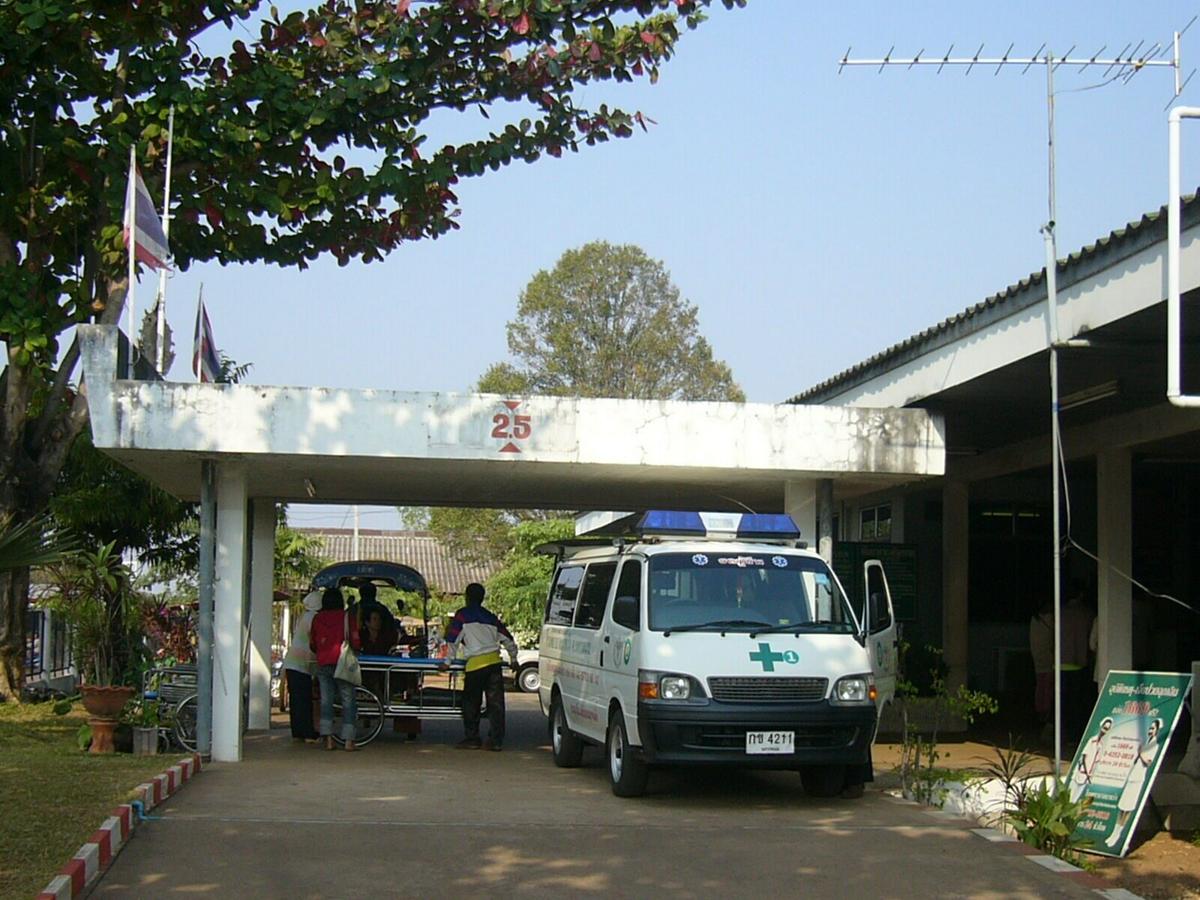 The emergency room entrance of a public hospital in Thailand: help abroad may look different from home, and it is there. Photo by Mattes, public domain, via Wikimedia Commons.
I wrote this for US travelers abroad, so the passport steps and phone numbers are the State Department's. If you hold another passport, your own embassy will have its own version, and the rest applies to you as written.
First, are you safe?
Before any paperwork, ask one question: is anyone in danger right now? If so, deal with that first. Get to a busy, well-lit place such as a hotel lobby, a shop or a station office. Call the local emergency number if you need police or an ambulance. In many countries that number is not 911, so it belongs in your phone before you need it.
Things can be replaced. If someone is demanding your bag or your phone, let it go. Nothing in it is worth being hurt for, and everything in the sections below still works after it is gone.
| What happened | First call | Then |
|---|---|---|
| Someone is hurt or in danger | The local emergency number | Your insurer, then the embassy if you need help finding care |
| Passport lost or stolen | Report it online to the State Department | The nearest US embassy or consulate, in person |
| Cards or phone stolen | Your bank and your mobile carrier | The local police |
| Bag or other property stolen | The local police | Your insurer and your hotel |
Lost or stolen passport
Can you get home without it? Yes. The State Department has a set process for a passport lost or stolen abroad, and it goes like this.
Report it online first. Then apply in person at a US embassy or consulate. Bring these:
| Bring | Notes |
|---|---|
| A photo | Passport style |
| Identification | A driver's license, for example |
| Proof of citizenship | A photocopy of the missing passport counts |
| Your itinerary | So they know when you need to travel |
| Form DS-11 | The passport application |
Two details in the State Department's guidance surprise people. A police report is not mandatory, so do not lose a day waiting for one if the embassy is ready to see you. And the replacement may be an emergency passport, which is valid for up to one year. It will get you home, and you can replace it with a full passport afterward.
This is where your copies pay off. The set you kept in a separate bag, or the one your friend at home can send, covers the proof of citizenship. If you have no copy at all, go anyway and bring whatever identification you still have.
Tip
Search properly before you report: every pocket, the room safe, the hotel desk, the last taxi or restaurant. Give it an honest hour. If the passport does turn up after you have reported it, tell the embassy before you try to travel on it and follow their instructions.
Theft: the police and your bank
Which comes first, the police or the bank? The bank, if cards or a phone are missing, because that is where the loss can keep growing.
Call the number for each card and have it blocked. If you saved those numbers on paper or with someone at home, this takes minutes. If your phone is gone, call your carrier to suspend the line, use the find-my-device feature from another device to lock it, and change the password on your email account first, since email is how every other password gets reset.
Then report the theft to the local police. You may not need the report for your passport, but your insurer will almost certainly ask for one, and your bank may too. Get a copy of the report or at least its reference number, and take a photo of it.
Watch out
After a theft, be wary of calls or messages from someone who says they found your phone or your wallet and needs a code, a password or a payment to return it. Give them nothing. Real recovery goes through the police, your carrier or your bank.
A medical emergency
What if it is your health and not your luggage? The order matters, and it starts with care.
If it is urgent, call the local emergency number or get to the nearest emergency room. Hotel staff can call for you, tell you which hospital visitors use, and write the address down for a driver.
As soon as someone is able to, call your travel insurer's emergency line. Insurers that cover travelers usually have people whose whole job is this call. They can tell you which hospitals they work with, arrange payment, and plan a transfer if the local hospital cannot treat you. Call early. Some policies expect to be told before large costs are run up.
The US embassy or consulate can help too. Consular staff can help you locate medical care. Expect to pay for treatment yourself or through your insurance.
At the hospital, keep copies of everything: the diagnosis, the names of any drugs you were given, and every receipt.
Who to tell at home
Who needs to know? Fewer people than you think, but one of them matters a great deal.
Call your emergency contact, the person who holds your itinerary and copies. Tell them what happened, where you are, what you are doing next, and when you will call again.
That person can also do real work for you: send the passport copy, call the bank from a number the bank recognizes, talk to the insurer during business hours at home. If they need to reach the State Department on your behalf, the number from the US and Canada is 888-407-4747.
For you, abroad, the first stop is the nearest US embassy or consulate. If you cannot reach it, the State Department's number from anywhere else is 202-501-4444.
Set this up before you need it
- Save the address and phone number of the US embassy or consulate for each country you will visit
- Save 888-407-4747 and 202-501-4444, and give both to your emergency contact
- Save the local emergency number for each country
- Put a passport copy in a separate bag, a set with a trusted friend, and photos on your phone
- Pack a couple of spare passport photos
- Write the phone numbers for your bank, card companies, carrier and insurer on paper
- Write down your conditions, allergies and medication by generic name
What to remember
- Safety first, paperwork second. Let the bag go.
- Lost passport: report it online, then go to the embassy or consulate in person.
- Bring a photo, identification, proof of citizenship, your itinerary and form DS-11.
- A police report is not mandatory for the passport, but your insurer will want one.
- Block cards and secure your email before anything else after a theft.
- In a medical emergency: care first, then the insurer, then the embassy.
- One person at home gets the full story and a time for the next call.
On the bad day everything feels urgent. In practice only one or two things are, and the rest is a list you can work through over an afternoon. Many travelers have done it, and a year later most of them describe it as an inconvenience more than a disaster.