Articles & BlogBy Trapper W. Brown6 min read
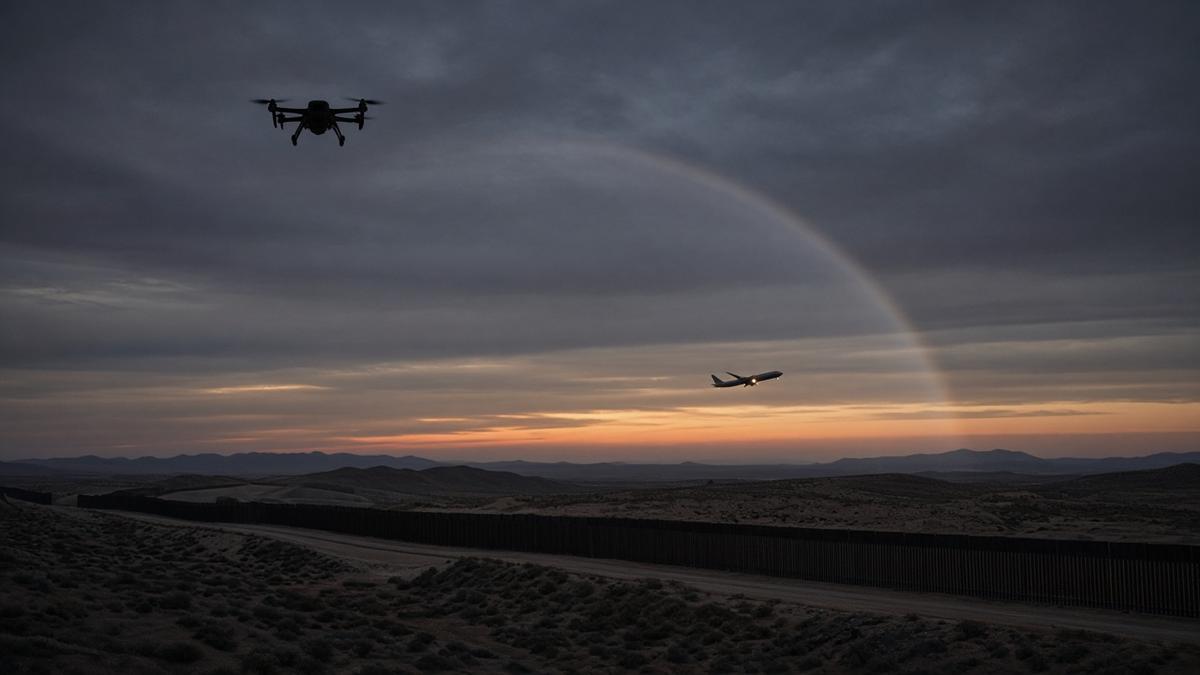 Illustration generated for Warhawk Division.
On 9 November 2026, the Departments of Homeland Security, Transportation, War, Energy and Justice announced a memorandum of understanding on counter-drone operations. The goal is to "detect, track, and safely address threats from unauthorized or dangerous drones" without interfering with aircraft or navigation equipment. Under the agreement, the Federal Aviation Administration (FAA) reviews proposed systems for safety and can restrict airspace if it is not satisfied. It is an agreement between agencies, not a new law or regulation, and the agencies have not released its text.
What was announced?
The announcement came as a joint release, posted on the DHS and FAA websites. It describes "an expanded interagency effort to further coordinate counter-unmanned aircraft systems (CUAS), or counter-drone, operations."
A memorandum of understanding, or MOU, is a written agreement between agencies about how they will work together. It is not a statute passed by Congress, and it is not a regulation that the public must follow. It sets out a process inside the government.
The release says the MOU "was led by the White House Task Force to Restore American Airspace Sovereignty" and "establishes an interagency process to evaluate counter-drone technologies and deploy them to protect aviation safety and advance national security."
What does the agreement actually do?
The release lists three commitments. Paraphrasing closely:
- Coordinate with regulators early. The parties "will work closely with the FAA and Federal Communications Commission (FCC) when developing new systems that detect, track, stop, or take control of dangerous or unauthorized drones." The FCC is involved because many counter-drone tools work by jamming or taking over radio signals.
- Test together. The parties "will collaborate on technical requirements, field testing, and data sharing." The FAA "may provide technical requirements, standards, and guidance," and the Transportation Department may advise on how these tools fit into civilian transportation.
- FAA safety review. "The FAA will quickly review and conduct safety risk assessments of proposed systems." If it finds problems, it "will provide any technical data showing unsafe conditions, along with recommended ways to reduce risk."
The last sentence of the release carries the most weight: "If the FAA believes additional risk mitigation is needed it can implement its own protective measures, including restricting airspace."
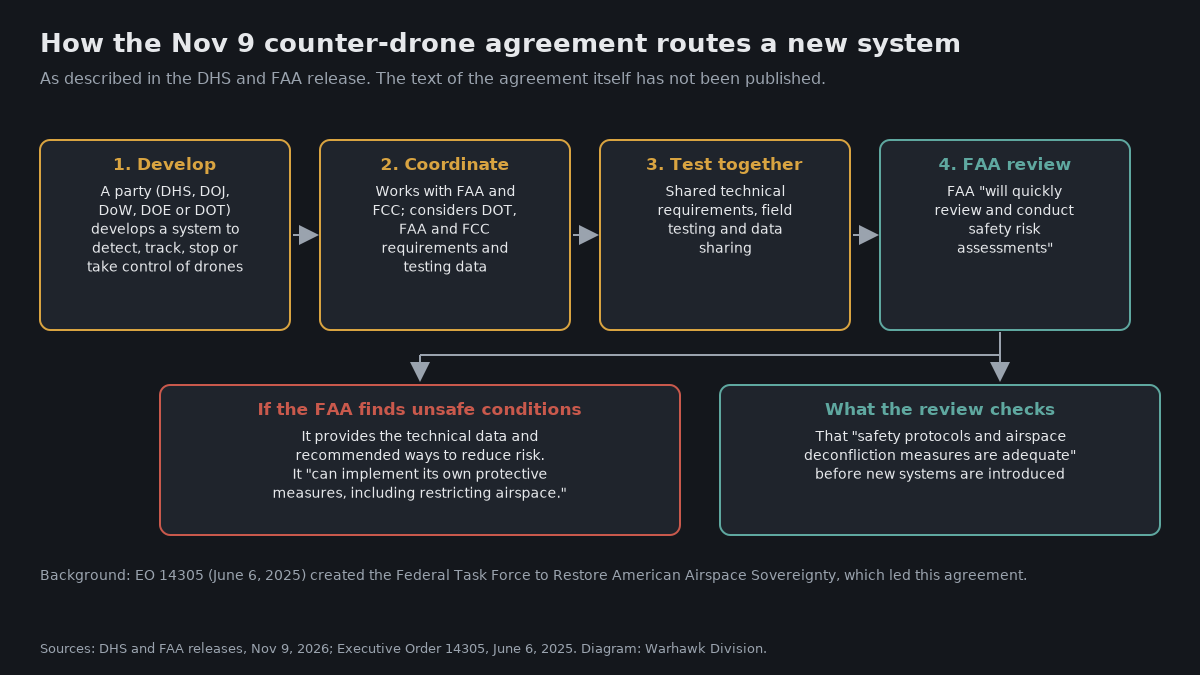 The process as the 9 November 2026 release describes it. Data: DHS and FAA releases; Executive Order 14305. Diagram by Warhawk Division.
Why is aviation safety the center of it?
Because a tool built to stop a drone has to work in the same sky as everything else. The release says the agencies want these technologies to "not adversely affect aircraft operations or navigation equipment."
The release points to two earlier steps the agreement builds on: "a temporary flight restriction along the southern U.S. border" and "a comprehensive safety assessment of DoW's high-energy laser counter-drone system." DoW is the Department of War, the name the release uses for the Defense Department.
FAA Administrator Bryan Bedford said the agreement "establishes a consistent process to ensure counter-drone technologies can be used without compromising aviation safety."
Where did this come from?
The task force behind it was created by Executive Order 14305, "Restoring American Airspace Sovereignty," signed 6 June 2025. The order states it is US policy "to protect the public, critical infrastructure, mass gathering events, and military and sensitive government installations and operations from threats posed by the careless or unlawful use of UAS." UAS stands for unmanned aircraft systems, which means drones.
The order also directed agencies to build counter-drone training capacity ahead of events such as "the FIFA World Cup 2026 and the 2028 Summer Olympics." In the 9 November release, FBI Director Kash Patel said the FBI worked with state and local officers trained at its National Counter-UAS Training Center, "seizing over 700 drones during the World Cup."
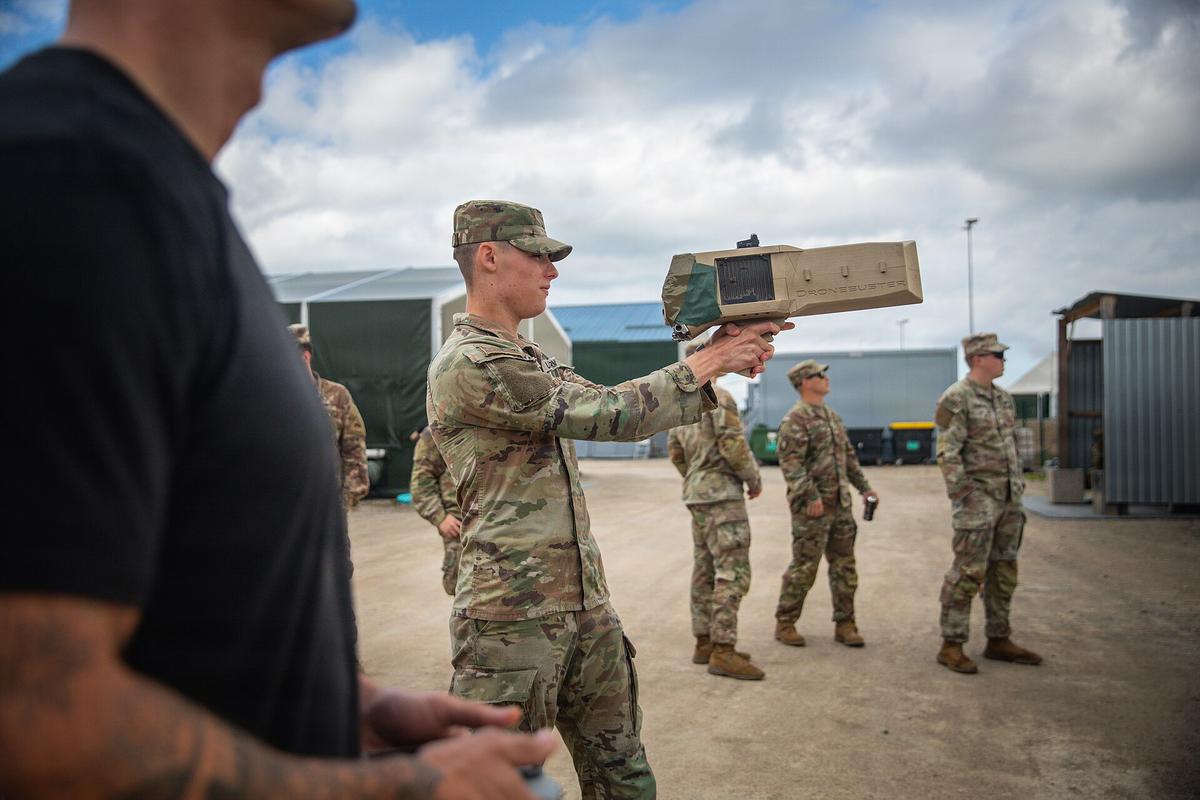 A U.S. Army soldier handles a handheld counter-drone device during training at Pabradė Training Area, Lithuania, 22 May 2026. U.S. Army photo by Sgt. Max Elliott, public domain, via Wikimedia Commons.
What does the release say each department wants?
Each secretary's quote shows a different priority. DHS Secretary Markwayne Mullin focused on the border, saying the action "will help counter cartel drone threats." Secretary of War Pete Hegseth spoke of hardening "critical military installations." Energy Secretary Chris Wright cited "American energy infrastructure." Transportation Secretary Sean P. Duffy said the effort would "keep the flying public safe."
These are the officials' own descriptions of their goals. The release gives no figures on how many systems will be reviewed, where they will be deployed, or what they will cost.
What do we not know?
Quite a lot, and I am not going to fill the gaps with guesses.
- The text. The agencies did not publish the MOU. DefenseScoop reported that when it asked for the document, a Pentagon spokesperson said the department had "nothing further to add beyond the release at this time."
- How fast "quickly" is. The release does not give a timeline for FAA reviews.
- Who wins a disagreement. The release says the FAA can restrict airspace. It does not say how disputes between the FAA and an operating agency get resolved.
- Legal authority. The release does not say whether the agreement changes which agencies may legally disable a drone. The executive order itself says it does not "impair or otherwise affect" any agency's legal authority. Without the MOU's text, I cannot say more.
What should change
- Publish the MOU, with any sensitive operational details redacted. A process meant to protect civilian aviation should be readable by the people who fly in it.
- Report outcomes. A yearly public count of systems reviewed, approved, restricted or rejected by the FAA would show whether the safety review has teeth.
- Spell out the tie-breaker. The public should know who has the final word when the safety regulator and an operating agency disagree.
For readers, the practical point is narrower. The executive order talks about helping private critical infrastructure operators "detect, track, and identify" drones. It does not talk about private parties stopping them. If you see a drone you believe is dangerous, call local law enforcement. The site's articles "Upcoming Drone Technology: What Is Arriving and What the Rules Say" and "Deter, Detect, Delay, Respond: Security in Layers" give more background.
Where I land
- This is a coordination agreement among five departments, not a new law, and it is not a license for anyone to shoot down drones.
- Its most concrete feature is a formal FAA safety review, backed by the FAA's power to restrict airspace.
- The text is unpublished, so the details that matter most are still unknown.
- Putting the aviation-safety regulator in the loop is the right instinct. Making the process public would make it believable.
A counter-drone system that knocks out a drone and also confuses an airliner's navigation has not made anyone safer. On paper, this agreement is built to prevent that. I would like to read the paper.
Sources (4)
- U.S. Department of Homeland Security, "Trump Administration Deepens Interagency Collaboration to Protect the Nation's Skies From Unmanned Threats," 9 November 2026: https://www.dhs.gov/news/2026/11/09/trump-administration-deepens-interagency-collaboration-protect-nations-skies
- Federal Aviation Administration, same release, 9 November 2026: https://www.faa.gov/newsroom/trump-administration-deepens-interagency-collaboration-protect-nations-skies-unmanned
- The White House, Executive Order 14305, "Restoring American Airspace Sovereignty," 6 June 2025: https://www.whitehouse.gov/presidential-actions/2025/06/restoring-american-airspace-sovereignty/
- DefenseScoop, "Agencies agree to counter unauthorized drones without compromising civilian safety, under new MOU," 9 November 2026: https://defensescoop.com/2026/11/09/agencies-agree-to-counter-unauthorized-drones-without-compromising-civilian-safety-under-new-mou/