Articles & BlogBy Trapper W. Brown6 min read
For anyone planning a trip abroad, first time or fiftieth.
What makes a bad day abroad into a manageable one? Most of the time it is something you did a week earlier, at home, with a printer and a cup of coffee.
A lost passport is a long afternoon if you have a copy of it and a real problem if you do not. A missed check-in is a shrug if someone at home knows where you were supposed to be, and a frightening few days if nobody does. None of the preparation in this article costs much, and almost all of it can be done in one sitting.
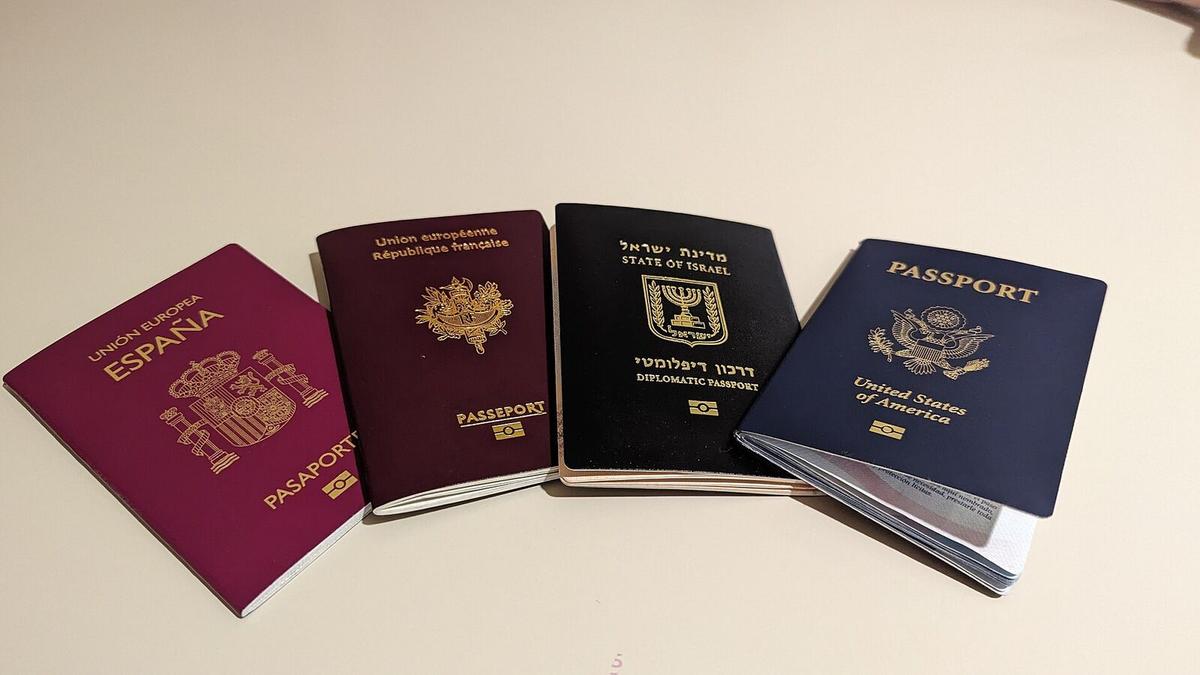 The passport is the one document a trip cannot do without, so it is the first thing to copy. Photo by Horizon206, CC0 public domain dedication, via Wikimedia Commons.
I wrote this for US travelers going abroad, so the programs and phone numbers are American ones. Most of the advice works for anyone. If you carry a different passport, your own government very likely runs its own versions of the same services.
Read the advisory before you book
Where do you start? With the State Department's travel advisory for your destination, at travel.state.gov. Every country gets one of four levels.
| Level | The State Department's wording | How I read it |
|---|---|---|
| Level 1 | Exercise normal precautions | The same care you would take in an unfamiliar city at home |
| Level 2 | Exercise increased caution | Read the reasons given and plan around them |
| Level 3 | Reconsider travel | Ask whether this trip needs to happen now |
| Level 4 | Do not travel | Take the words at face value |
The level is the headline, and the text under it is the part worth your time. An advisory usually says why a country sits where it does, and it often names particular regions. A country can be calm in the places visitors go and troubled along one border. Read the whole page, then read it again the week you leave, because advisories change.
Enroll in STEP
The Smart Traveler Enrollment Program, or STEP, is a free State Department service. You enroll at step.state.gov, tell it where you are going, and it sends email updates and alerts for that destination.
Why bother? Because news that matters to a visitor (a strike, a storm, a demonstration near the tourist district) rarely reaches you through the channels you follow at home. STEP puts it in your inbox. Enrolling takes a few minutes, and I think it is the best value on this whole list.
Tip
Enroll in STEP when you book, not the night before you fly. You will start getting updates for your destination while you can still change your plans.
Copy your passport the way the State Department says
The State Department's traveler checklist is specific about passport copies, and I would follow it exactly:
- Make several copies.
- Give a set to a trusted friend.
- Keep a set separate from the originals.
- Take photos on your phone.
Each of those covers a different bad day. The table shows which.
| Copy | Where it lives | The day it helps |
|---|---|---|
| Paper set with you | A different bag from the passport itself | Your day bag is taken but your suitcase is not |
| Paper set at home | With a trusted friend or relative | Everything you carried is gone |
| Photos on your phone | In your photo library | You need the passport number while standing at a counter |
The word that matters there is "separate". A copy folded inside the passport cover disappears along with the passport. While you are at the copier, do the same for your visa pages, your driver's license, the front and back of your payment cards, and your insurance card. If your passport is lost abroad, a photocopy of it counts as proof of citizenship when you apply for a replacement, so that piece of paper has a real job.
Watch out
A photo of your passport is a sensitive file. Keep it on a phone that locks, and do not send it over email or chat to anyone who has no need for it. Copies are for you and one trusted person at home.
Leave an itinerary with someone
Does anyone know where you will be on day four? Someone should. Pick one person at home and give them a single page:
- Flights, with airline and flight numbers
- Where you are staying each night, with the address and phone number
- Anyone you are traveling with or meeting, and how to reach them
- A plan for checking in, and what to do if you miss one
That last line is the one people skip. "I will message every evening" is only half a plan. The other half is what your contact does when the message does not come: how long they wait, who they call first, and where the copies are. Agree on it before you leave so nobody has to guess under stress.
Insurance and medication
Two questions are worth an honest answer before you go.
First, what happens if you need a doctor? Call your health insurer and ask plainly whether you are covered outside the country, and how payment works if you are. Many travelers find their home plan covers little or nothing abroad. Travel insurance can fill that gap. Read what a policy says about medical care, about being moved to a better hospital or flown home, and about conditions you already have. Save the insurer's emergency phone number and your policy number where you can find them without a data connection.
Second, what about medication? Bring enough for the whole trip plus a few days of delay. Keep it in the original labeled containers, and carry it in your hand luggage, never in a checked bag. Carry a copy of each prescription with the generic name of the drug, because brand names change from country to country. Some countries restrict medicines that are routine at home, so check the rules for your destination with its embassy before you pack.
The numbers to save
In an emergency abroad, your first call for consular help is the nearest US embassy or consulate. Look up its address and phone number before you leave and save both.
If you cannot reach the embassy, the State Department's lines for US citizens abroad are 888-407-4747 from the US and Canada and 202-501-4444 from anywhere else. Put both in your phone and on your paper copy.
Find out the local emergency number for each country on your route too. It is often not 911, and the moment you need it is the wrong moment to search for it.
Here is the whole list, in an order you can work through today.
- Read the travel advisory for each country on your route
- Enroll the trip in STEP at step.state.gov
- Make several copies of your passport and take photos on your phone
- Give one set of copies to a trusted friend and pack one apart from the original
- Write a one-page itinerary and agree on a check-in plan with someone at home
- Ask your health insurer whether you are covered abroad
- Pack medication in original containers, in your hand luggage, with copies of the prescriptions
- Save the embassy's contact details, 888-407-4747, 202-501-4444 and the local emergency number
What to remember
- Check the advisory level, then read the reasons behind it.
- STEP is free and sends alerts for your destination.
- Several passport copies: one with a friend, one apart from the original, photos on your phone.
- One person at home holds your itinerary and knows what to do if you go quiet.
- Know how you would pay for a doctor before you need one.
- Save the embassy and both State Department numbers before you leave.
Security people talk about preparing for the bad day while you are still calm, and this is the traveler's version of that habit. You will probably never use most of it. That is fine. An hour of preparation you never needed is a far better outcome than a week abroad spent wishing you had done it.